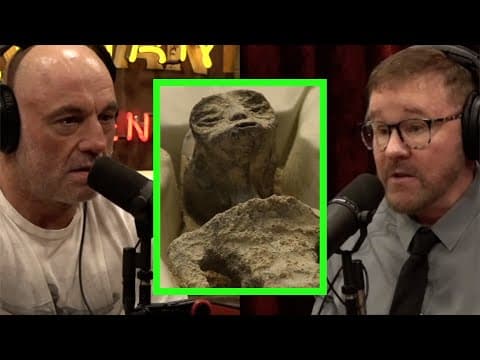
The debate surrounding tridactyl mummies raises questions about their origins, with some suggesting they may be genetic anomalies rather than extraterrestrial beings. Experts emphasize the need for rigorous scientific analysis to uncover the truth behind these intriguing remains.
The discovery of tridactyl mummies has sparked intense debate and speculation about their origins. While some claim these remains could be evidence of extraterrestrial life, others argue they may simply represent a unique genetic anomaly. This blog post delves into the scientific analysis of these mummies, the implications of their findings, and the importance of respectful research practices.
One of the most discussed mummies is the Atacama mummy, which has been subjected to extensive genetic analysis. An expert in South American indigenous genetics confirmed that the genetic mutations found in the Atacama mummy matched those typical of the Chilean population. This suggests that the mummy is indeed human, albeit potentially a different kind of human than we are familiar with today. The conclusion drawn from this analysis is that the Atacama mummy deserves a proper burial, as it is a genetic anomaly rather than an alien being.
The tridactyl mummies, characterized by their three fingers, have been the subject of much fascination. It is estimated that there are around 60 such mummies, and while some may be hoaxes or constructed artifacts, others warrant serious scientific inquiry. The initial skepticism surrounding these mummies has shifted with the advent of advanced imaging techniques, such as MRIs, which have revealed intriguing details about their bone structure and ligature.
Despite the fascinating findings, the sensationalism surrounding the tridactyl mummies has deterred reputable scientists from engaging with the research. Many scientists have been approached to study these mummies but have declined due to the conditions imposed by media outlets seeking to sensationalize the findings. A prominent scientist emphasized the need for a rigorous, camera-free analysis, conducted by qualified South American experts who respect the rights of indigenous peoples.
The scientific community has raised concerns about the quality of DNA analysis conducted on the tridactyl mummies. Given their age, the DNA is likely to be degraded, leading to erroneous conclusions about their origins. The scientist pointed out that many claims of non-human DNA could stem from contamination or chemical errors that occur over time. To address these issues, a more thorough approach is necessary, including bioinformatic corrections and targeted analysis of specific genes that evolve slowly.
The tridactyl mummies present an opportunity for groundbreaking research. By focusing on specific metabolic genes shared across species, researchers could potentially uncover valuable insights into the evolutionary history of these remains. This targeted approach could yield reproducible results that contribute to our understanding of human evolution and the genetic diversity of ancient populations.
Adding another layer to the mystery, ancient artwork from the region depicts beings with three fingers, raising questions about whether these representations are based on actual encounters with tridactyl beings or if they reflect cultural myths. The existence of such artwork suggests that these mummies may have held significance in the cultural narratives of the time, further complicating the scientific inquiry into their origins.
The debate surrounding the tridactyl mummies is far from settled. While some may be quick to label them as alien artifacts, the evidence points towards a more complex narrative involving genetic anomalies and cultural significance. Moving forward, it is crucial for researchers to approach these mummies with respect and rigor, ensuring that the rights of indigenous peoples are honored and that scientific integrity is maintained. Only through careful analysis and collaboration can we hope to uncover the truth behind these enigmatic remains.