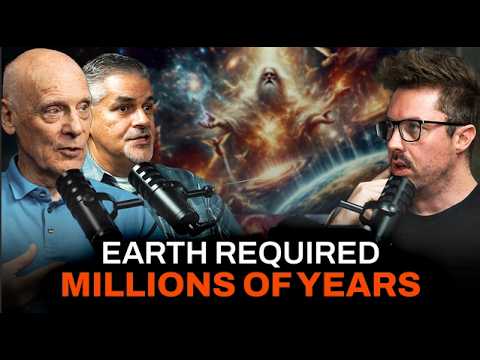
In this comprehensive discussion, astrophysicist Hugh Ross and biochemist Fuz Rana delve into the origins of the universe, the implications of mass extinction events, the flood narrative, and the intersection of science and faith. They explore the fine-tuning of the universe for human existence, the challenges of defining life, and the future of AI and transhumanism, emphasizing the importance of a Christian worldview in navigating these complex topics.
In a fascinating discussion, astrophysicist Hugh Ross and biochemist Fuz Rana explore the origins of the universe, the implications of mass extinction events, and the intersection of science and faith. They delve into the fine-tuning of the universe for human existence, the challenges of defining life, and the future of AI and transhumanism. This blog post summarizes their insights and reflections on these profound topics.
The fossil record reveals multiple mass extinction events, which are quickly followed by mass speciation events. These occurrences happen approximately every 30 to 35 million years, a frequency that aligns with the brightening of the sun. This cyclical pattern suggests a divine orchestration in the timing of life on Earth.
According to Ross, Adam was created from the dust of the earth, not in the Garden of Eden itself. The original Hebrew language indicates that God caused the garden to grow, suggesting a normative growth process. This perspective emphasizes that the creation narrative is not merely a historical account but also a reflection of God's ongoing creative work.
The flood narrative in Genesis is significant, particularly in the context of an ice age. Genesis 8 states that it took a year for the floodwaters to recede, indicating a prolonged event. Ross argues that the flood occurred during a time of significant climatic change, which would have influenced the duration and impact of the flood.
Ross highlights the fine-tuning of the universe as a critical factor in the emergence of human life. The precise conditions necessary for life, including the expansion rate of the universe and the properties of fundamental forces, suggest intentional design. The odds of such fine-tuning occurring by chance are astronomically low, akin to winning the California lottery 200 consecutive times.
A significant challenge in biology is the inability to define life comprehensively. While scientists can describe characteristics common to living systems, a workable definition remains elusive. This ambiguity raises questions about the nature of life and its origins, further complicating discussions around evolution and creation.
In the biblical narrative, God commands Adam and Eve to multiply and fill the earth. This command is reiterated after the flood, emphasizing humanity's role in populating the planet. However, the story of Genesis 10 and 11 illustrates humanity's rebellion against this command, leading to God's intervention to scatter people across the earth.
As technology advances, the implications of AI and transhumanism become increasingly relevant. Ross and Rana discuss the potential risks and ethical considerations surrounding AI development. While AI can serve as a powerful tool, there is concern that it may lead to a diminished understanding of human exceptionalism and identity.
Both Ross and Rana emphasize the need for a Christian worldview in navigating the complexities of science and technology. They argue that a robust ethical framework rooted in Christian teachings can guide humanity in responsibly managing emerging technologies, ensuring that they serve to enhance human flourishing rather than undermine it.
The discussion between Hugh Ross and Fuz Rana offers profound insights into the origins of the universe, the nature of life, and the ethical implications of technological advancements. Their reflections encourage a deeper understanding of the interplay between science and faith, urging readers to consider the mysteries of creation and the responsibilities that come with knowledge. As we explore these topics, it is essential to approach them with humility, respect, and a commitment to truth.