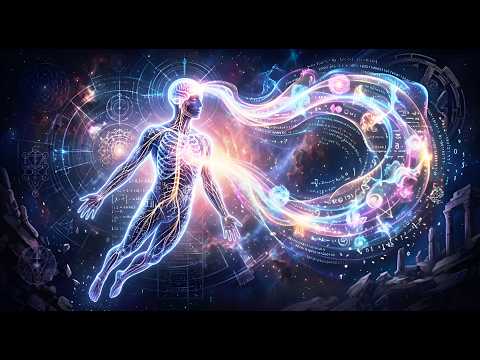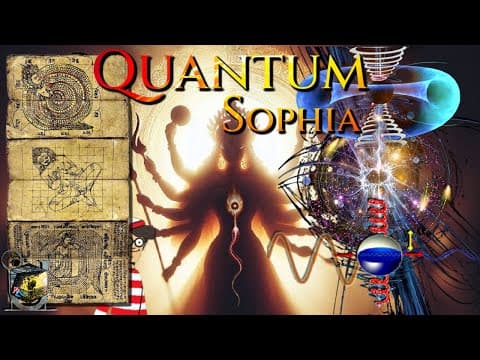
This blog post delves into the intriguing connections between modern quantum physics and ancient Eastern mysticism, highlighting how both realms explore the nature of reality, consciousness, and the interconnectedness of all things. It discusses concepts like the holographic principle, the observer effect, and the role of consciousness in shaping our experiences, drawing parallels with mystical traditions and philosophies.
When a stone falls, we instinctively ask why. This question suggests that all events have a cause. Ancient Eastern mystics were revered not only for their wisdom but also for their profound impact on the world around them. When asked how they manage to control the universe with such love, their answers often point to a direct communion with the causal realm, known as the Dao. This connection allows them to channel that sentience into our reality when the time is right.
Throughout history, figures like Hermes Trismegistus, Jesus Christ, and Arjuna from the Bhagavad Gita have claimed to interact with divine entities. Modern mystics, such as Don Juan and Zulu Shaman Credo Mutwa, echo similar sentiments. Interestingly, parallels emerge between these mystical experiences and the theories of great scientific minds like David Bohm, who proposed the implicate order, and Rupert Sheldrake, known for his morphogenetic fields. This convergence of thought invites us to explore the connections between mysticism, science, and philosophy.
To understand these concepts, we must first establish a foundation. Historically, it was believed that matter could be divided endlessly until reaching fundamental building blocks. However, advancements in technology revealed that matter behaves like fractals, where each part contains the essence of the whole. This holographic principle is exemplified by the Mandelbrot set. Quantum physics further complicates this notion with the discovery of the wave function, which suggests that particles and waves are two manifestations of the same reality, influenced by the observer's interaction.
In ancient tantra, the concepts of bindu (point) and nada (movement) illustrate a similar idea. In Hindu philosophy, the creation of matter begins with nada, a cosmic idea, followed by bindu, the tangible forms we perceive. This interplay between the visible and the invisible realms reflects a dance of yin and yang, where each depends on the other for existence.
Physicist John Wheeler's concept of quantum foam suggests that reality is interwoven, connecting all things. This idea resonates with ancient Eastern cosmology, which describes the hairs of Shiva as threads that weave the fabric of space, connecting all entities. The Buddhist concept of Indra's net further illustrates this interconnectedness, where each pearl reflects all others, symbolizing the unity of existence.
The notion of omnijectivity posits that there is no separation between the observer and the observed. This perspective aligns with the idea that mind and matter are interconnected, much like the elements of a dream. In dreams, all components are made of the same substance, reflecting the interconnected nature of reality.
Black holes, known for their ability to consume everything, including light, challenge our understanding of reality. They are not merely objects in space but represent a profound mystery. According to Vedic tradition, what disappears into a black hole is absorbed back into Shakti, the cosmic mother. This concept parallels the idea of the bindu, a point of creation that embodies both destruction and rebirth.
The ancient teachings suggest that our psychological state influences our physical reality. The placebo effect exemplifies this, where belief can lead to tangible healing. This connection between mind and matter is echoed in the practices of yogis who can generate heat and overcome physical limitations through mental focus.
The relationship between density and consciousness raises intriguing questions. Density, rather than weight, determines whether something floats. This principle applies to the states of matter—solid, liquid, gas, and plasma—suggesting that higher states of consciousness may correlate with less dense forms of matter.
Kundalini, the coiled energy within us, represents the potential for personal transformation. The process of awakening this energy involves meditation and self-discipline, allowing individuals to access higher states of consciousness and perceive the full wave function of reality.
The teachings of mystics emphasize that the macrocosmic phenomena observed in the universe also occur within us on a microcosmic level. This interconnectedness suggests that our individual experiences contribute to the collective reality we share.
The divergence between individual and collective realities raises questions about sanity and perception. Those who step outside societal norms may be viewed as mad, yet their experiences may reflect a different understanding of reality. This concept aligns with the teachings of Don Juan, who encourages awareness of both the tonal (the known) and the nagual (the unknown).
The Gnostic myth of Sophia presents a narrative that parallels the themes discussed. Sophia, in her quest for knowledge, creates a flawed world filled with imperfections. This narrative reflects the struggles of existence and the potential for redemption through awareness and understanding.
Sophia's division of herself into different aspects mirrors the three regions of existence—material, emotional, and spiritual—within humanity. Each aspect corresponds to different states of matter, emphasizing the interconnectedness of all things.
The exploration of quantum physics and ancient mysticism reveals profound insights into the nature of reality, consciousness, and our interconnected existence. Both realms invite us to reconsider our understanding of the universe and our place within it. As we navigate this complex landscape, we are reminded that our collective reality is shaped by our beliefs, perceptions, and interactions. Ultimately, the journey toward understanding the cosmos is a shared endeavor, urging us to serve one another and transcend the limitations of our individual experiences.