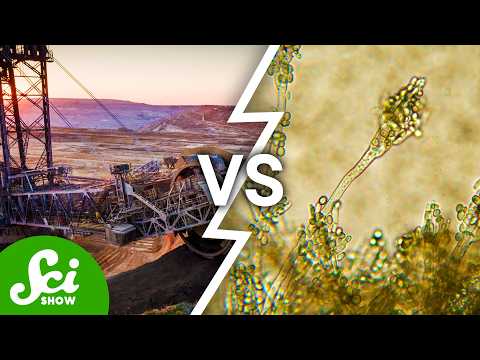
This article delves into the concept of using microbes for mining on the Moon, exploring the benefits and challenges of biomining, its current applications on Earth, and the feasibility of extraterrestrial mining operations.
In the realm of science fiction, the idea of mining the Moon has long captivated imaginations. In the 1898 novel Edison’s Conquest of Mars, astronauts discover mountains made of diamond-like "moon jewels," which could provide an inexhaustible source of wealth. Fast forward to today, and the concept of lunar mining has evolved significantly, focusing not on jewels but on extracting vital resources such as water, oxygen, helium-3, and various metals. This article explores the innovative technique of biomining, which could revolutionize how we think about mining on the Moon and beyond.
The Moon is rich in a variety of metals, including aluminum, iron, and rare earth elements essential for modern technology. As interest in space exploration grows, so does the potential for mining these resources. Some metals may be transported back to Earth, while others could be utilized in space to reduce the costs associated with launching materials from our planet.
Biomining is a method of extracting metals from ores using biological organisms, primarily microbes and fungi. This technique contrasts sharply with traditional mining methods, which often involve heavy machinery and toxic chemicals. Currently, biomining is not just a theoretical concept; it is actively used in industries on Earth. Approximately one-fifth of copper production comes from biomining, and it has also been successfully employed to extract metals like uranium, nickel, and gold.
Microbes and fungi do not mine metals for their own sake; instead, they derive energy from a chemical reaction known as oxidation. During this process, a chemical compound loses electrons, which the microbes utilize for energy. The oxidation of metals alters their properties, often making them more soluble in acidic environments. This solubility is crucial for biomining, as it allows the metals to dissolve into an acid solution, which can then be processed to extract the desired metals.
Several techniques exist within the realm of biomining, all involving the use of acid to facilitate the extraction of metals from ores. One common method is heap leaching, where crushed ore is stacked on an impermeable surface and treated with acid. The resulting solution, rich in dissolved metals, is collected and processed in a bioreactor to extract the metals through various chemical reactions.
Biomining offers several advantages over traditional mining methods:
While the prospects of biomining on the Moon are exciting, several challenges must be addressed:
Despite these challenges, initial tests have shown promise. Two successful biomining experiments have been conducted aboard the International Space Station, one utilizing actual asteroid material. Another study demonstrated the extraction of iron from rocks similar to those found on the Moon and Mars, which could potentially be 3D printed into structural materials for future space habitats.
Research has identified at least one species of biomining fungus that can thrive in the Moon's lower gravity, indicating that microbial mining could be feasible. However, lunar dust presents a significant challenge, as it is fine, clingy, and abrasive, potentially damaging equipment.
The prospect of mining in space raises ethical questions about humanity's tendency toward overconsumption and exploitation of resources. Current outer space treaties are not robust enough to prevent potential exploitation, leaving room for legal loopholes. Even if ethical concerns are addressed, the practicality of biomining in space remains uncertain.
Biomining presents a fascinating opportunity for resource extraction on the Moon and other celestial bodies. While there are significant challenges to overcome, the science suggests that microbial mining could become a reality in the not-so-distant future. With increasing investment and interest in space exploration, we may soon see the first steps toward harvesting rare metals from beyond our planet.