Consciousness, the subjective experience of awareness, remains one of the most profound mysteries in science. Michael Pollan explores its nature, from human experience to plant sentience, and the challenges of studying consciousness scientifically. He also discusses the ethical implications and skepticism about conscious AI, emphasizing the need to protect and appreciate our unique mental space.
Consciousness is a fundamental aspect of human experience. It is the internal lens through which we view the world, encompassing our thoughts, feelings, and awareness. But why do we have consciousness, and are humans the only beings that possess it? These questions are at the heart of Michael Pollan's new book, A World Appears: A Journey into Consciousness.
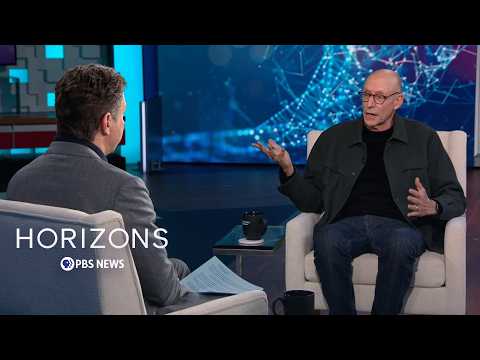
In this article, we explore the insights from Pollan's work and his conversation on PBS's "Horizons" with William Brangham, delving into the nature of consciousness, its presence in plants and animals, the scientific challenges in studying it, and the implications for artificial intelligence.
Consciousness can be described as subjective experience or awareness of one's internal self. Philosopher Thomas Nagel famously asked, "What is it like to be a bat?" to illustrate that consciousness involves a qualitative dimension of experience unique to each creature. For example, a bat perceives the world through echolocation, a sensory experience vastly different from human vision.
Consciousness is distinct from mere mechanical or automatic processes. For instance, a toaster is not conscious; it does not have experiences. Consciousness is the first-person perspective of existing.
Pollan recounts a personal experience under the influence of psychedelic mushrooms, where he felt that the plants around him were aware and watching him. This led him to investigate scientific research on plant sentience.
Plants exhibit remarkable behaviors:
While these behaviors indicate a form of awareness, they do not necessarily equate to consciousness as humans experience it. Plants respond to their environment and make decisions, such as a South American vine mimicking the leaf form of a plant it tries to colonize.
Experiments show that bean plants can sense and move toward poles they can grasp, suggesting a form of environmental awareness. Interestingly, anesthetics that knock humans unconscious also affect plants, indicating they have states of being akin to on and off.
Pollan suggests that sentience, defined as awareness of the environment and the ability to make intelligent decisions, may be a property of all life, including bacteria, which can distinguish between food and poison.
For a long time, consciousness was considered a taboo subject in science, often described as a "career killer" for researchers. This changed in the late 1980s when Nobel laureate Francis Crick sought to identify the neural correlates of consciousness—the specific neurons responsible for conscious experience.
However, consciousness is subjective and difficult to study objectively. Science traditionally relies on third-person perspectives and measurable phenomena, while consciousness is a first-person experience. This gap, known as the "hard problem" of consciousness, remains unresolved.
Galileo's historical decision to separate objective science from subjective experience (the soul) has influenced this divide. Modern science is still grappling with how to bridge this gap.
If consciousness extends beyond humans to animals, plants, or even machines, ethical considerations arise. For example, if animals can suffer, we may owe them moral consideration. However, despite knowing that cows and pigs are conscious, many continue to consume them.
The idea of plant sentience raises uncomfortable questions about our dietary choices. Some scientists argue plants feel pain, while others believe pain would not be adaptive for rooted organisms that cannot escape harm.
There are numerous theories of consciousness—estimates range from 22 to over 200—indicating the field is still searching for answers. One theory posits that consciousness begins with feelings generated by the body, such as hunger, rather than thoughts in the brain's cortex.
Feelings are inherently conscious because they must be felt by a subject. Yet, identifying the subject or the mechanism remains elusive.
A major limitation in studying consciousness is that the only tool we have is consciousness itself, making it difficult to achieve an objective understanding.
Despite the mystery, Pollan expresses a sense of wonder at the fact of consciousness—the private mental space where we can think freely. However, he warns that modern life, especially social media and AI, threatens this space by constantly capturing our attention and reducing opportunities for reflection, daydreaming, and boredom, which are essential for creativity.
He advocates for "consciousness hygiene," such as avoiding phone use while waiting in line, engaging with nature, and practicing meditation to protect our mental space.
Many in Silicon Valley believe that conscious AI will emerge, either intentionally or accidentally. However, Pollan is skeptical, emphasizing that consciousness and intelligence are not the same. A machine can be intelligent without being conscious.
The brain is not simply a computer; it lacks a clear separation between hardware and software. Memories and experiences physically rewire the brain, making each brain unique.
Feelings, which may be foundational to consciousness, depend on having a body and vulnerability. Machines lack these qualities, making true feelings unlikely.
Despite this, AI chatbots can simulate consciousness and emotions, fooling humans into believing they are conscious. This raises concerns about the nature of human relationships with AI and the potential for manipulation.
Consciousness remains one of the most profound and elusive phenomena. From the awareness of plants to the complexities of human experience and the challenges of artificial intelligence, understanding consciousness challenges our scientific methods and ethical frameworks.
Michael Pollan's exploration invites us to appreciate the wonder of consciousness and to protect this precious mental space in an increasingly distracted world.
This article is based on the conversation between William Brangham and Michael Pollan on PBS's "Horizons," discussing Pollan's book A World Appears: A Journey into Consciousness.