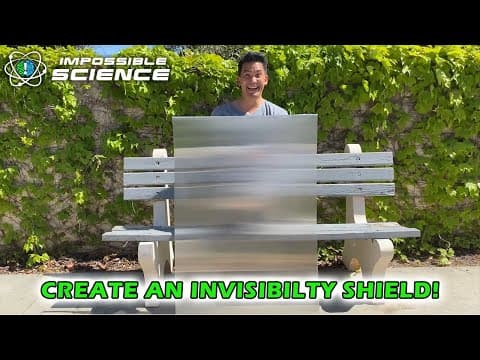
This blog post delves into the fascinating science of invisibility using lenticular lenses, explaining how these lenses work, their types, and how to create an invisibility shield. It covers the principles of light refraction, the mechanics of cylindrical and lenticular lenses, and practical tips for building an effective invisibility shield.
In this blog post, we will explore the intriguing concept of invisibility through the lens of science, specifically focusing on lenticular lenses. This technology has been utilized in various fields, from stealth technology to magic tricks, and today we will break down how these lenses work and how to create an invisibility shield.
Before we dive into invisibility, it is essential to understand the different types of lenses. The most common type of lens is the spherical lens. This lens has a surface that resembles a sphere. A typical example is a magnifying glass, which has a dome shape that is part of a larger sphere. When light passes through a spherical lens, it converges at a point known as the focal point. This is where all the light is focused, bending down from the top and up from the bottom towards the center.
Lenticular lenses are composed of many small cylindrical lenses arranged in an array. Each individual lens is called a lenticule. The effectiveness of lenticular lenses can vary based on the number of lenticules per inch, referred to as lpi. When light passes through a lenticular lens, it behaves similarly to a cylindrical lens, smearing light horizontally.
When using lenticular lenses, vertical lines can appear to be connected when viewed through the lens, creating an illusion of invisibility. This is because the lens smears the light from the vertical lines to the left and right, making them less visible. Conversely, if a horizontal line is viewed through the lens, it will appear more pronounced, demonstrating the lens's ability to manipulate light.
Now that we understand how lenticular lenses work, let’s discuss how to construct an invisibility shield. Here are the steps and considerations:
Choose the Right Size: Lenticular lenses come in various sizes, and larger lenses tend to be more effective but also more expensive. Avoid stitching smaller lenses together, as this will create visible lines.
Orientation of Lenticules: Ensure that the lenticules are oriented vertically. This orientation is crucial as it allows the lens to spread the light horizontally, enhancing the invisibility effect.
Shield Design: Instead of creating a traditional shield shape, consider mounting the lenticular lenses at the top and bottom. This prevents horizontal lines from becoming visible, which would otherwise detract from the invisibility effect.
Handle Placement: Position the handles vertically to maintain a more natural appearance. This helps in avoiding horizontal lines that could reveal the presence of the shield.
Camouflage: To enhance the invisibility effect, wear clothing that matches the background. This will help blend in with the surroundings, making the shield more effective.
After constructing the invisibility shield, it is essential to test its effectiveness. Observing how the shield interacts with different lighting conditions can provide insights into its performance. For instance, using colored lighting can create interesting effects, enhancing the invisibility illusion.
Invisibility may seem like a concept reserved for science fiction, but through the application of lenticular lenses, we can create a practical demonstration of this phenomenon. By understanding the science behind lenses and carefully constructing an invisibility shield, we can make the impossible possible. Stay curious and keep exploring the wonders of science!