
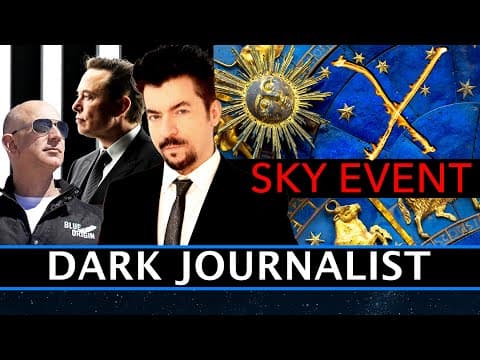
In this episode of Dark Journalist, the discussion revolves around the UFO threat narrative, the Sky Event, and the 3I/ATLAS operation. The hosts delve into the implications of recent documentaries and the involvement of key figures like Avi Loeb, Elon Musk, and Jeff Bezos in the aerospace sector. The conversation highlights the ongoing UFO discourse, the Age of Disclosure, and the financial aspects of UFO defense initiatives.
In a recent episode of Dark Journalist, host Daniel Liszt, alongside Olivia, delves into the intriguing and often controversial topics surrounding UFOs, cosmic events, and the implications of the 3I/ATLAS operation. The discussion is set against the backdrop of the ongoing narrative pushed by various intelligence agencies and the media regarding UFO threats and the Age of Disclosure.
The episode opens with Liszt acknowledging the overwhelming interest in the UFO phenomenon, particularly in light of the documentary titled "The Age of Disclosure." This documentary is seen as part of a broader narrative that suggests a looming UFO threat. Liszt emphasizes the importance of understanding the motivations behind this narrative and the players involved, including prominent figures in the aerospace industry.
Avi Loeb, a notable astrophysicist, is highlighted as a central figure in the current UFO discourse. His involvement, along with tech moguls like Elon Musk and Jeff Bezos, signifies a shift in how these topics are approached within the scientific and public domains. Liszt points out that these individuals are not just passive observers but are actively shaping the future of aerospace exploration and the narrative surrounding extraterrestrial life.
The discussion transitions to the 3I/ATLAS operation, which Liszt claims has been in the works for years, with its implications being felt across various sectors. The operation is described as a significant initiative that aims to address the challenges posed by unidentified aerial phenomena (UAP). Liszt raises questions about the timing of this operation and its alignment with the recent surge in UFO-related media coverage.
Liszt critiques the media's role in perpetuating the UFO threat narrative, suggesting that many outlets are acting as mouthpieces for intelligence agencies. He argues that this creates a skewed perception of the UFO phenomenon, which is often sensationalized without a thorough examination of the facts. The episode also touches on the viral response to Liszt's previous discussions with figures like Alex Jones, which garnered millions of views and sparked widespread interest in the subject.
A significant point of discussion is the financial backing for UFO defense initiatives. Liszt mentions that there are proposals for substantial funding, including a request for $50 billion for a UFO Defense office. This raises questions about the motivations behind such funding and the potential implications for public policy and scientific research.
As the episode progresses, Liszt invites questions from the audience, emphasizing the importance of community engagement in these discussions. He encourages viewers to share their thoughts and inquiries, fostering a collaborative environment for exploring these complex topics.
The episode concludes with a call to action for viewers to stay informed through the Dark Journalist newsletter. Liszt highlights the importance of independent research and critical thinking in navigating the often murky waters of UFO discourse. The conversation serves as a reminder of the ongoing intrigue surrounding cosmic events and the need for transparency in the narratives that shape public understanding of these phenomena.
In summary, this episode of Dark Journalist provides a comprehensive overview of the current state of UFO discussions, the key players involved, and the implications of the 3I/ATLAS operation. It encourages viewers to remain vigilant and informed as the narrative continues to evolve.



















