This article delves into the top 15 incredible natural phenomena, from mesmerizing murmurations of starlings to the breathtaking migrations of monarch butterflies, showcasing the wonders of our planet and the mysteries that continue to captivate scientists and nature enthusiasts alike.
Our world is filled with mysteries and strange phenomena that often defy explanation, even by the most knowledgeable scientists. From geological oddities to unusual animal behaviors, this article counts down the top 15 craziest natural phenomena that showcase the wonders of our planet.
Murmurations are mesmerizing aerial displays created by large flocks of birds, typically starlings, that come together in stunning formations. These intricate synchronized movements resemble a thick, living cloud in the sky. One of the most famous examples occurs in Europe, where millions of European starlings gather in the late afternoon during autumn and winter months. The timing of these gatherings is crucial for safety in numbers, helping the birds evade predators and conserve energy during colder months. The swirling patterns created by the flock are not only beautiful but also serve as a means for the birds to exchange information about food sources and potential mates.
Known as Salar de Uyuni, the Sky Mirror in Bolivia is the world's largest salt flat, covering approximately 4,000 square miles at an elevation of around 12,000 feet. This unique natural mirror effect is most striking during the rainy season when a thin layer of water covers the surface, blurring the line between the horizon and the sky. While the salt flats are mostly devoid of larger life forms, certain microorganisms thrive in the extreme conditions, creating a stunning landscape that attracts tourists and photographers alike.
Brine pools are fascinating underwater lakes formed by highly concentrated salt water, often found on the sea floor. These pools are denser than surrounding seawater, creating distinct boundaries known as haloclines. The extreme salinity prevents mixing with surrounding waters, leading to unique visual characteristics. While swimming in brine pools is not advisable due to potential toxic chemicals, these underwater features can be found in various locations, including the Gulf of Mexico and the Red Sea.
Foxfire, or bioluminescent fungi, is a captivating natural phenomenon that emits a soft glow due to a chemical reaction involving the enzyme luciferase and the molecule luciferin. This enchanting light is most visible in low light conditions, often found on decaying wood in dense forests. Foxfire plays a vital ecological role in decomposition, attracting insects that aid in the fungi's dispersal. Notable locations to witness this phenomenon include the Great Smoky Mountains National Park in the United States and the forests of Japan's Key Peninsula.
The rainbow eucalyptus (Eucalyptus deglupta) is a striking tree native to Southeast Asia and Northern Australia, known for its vibrant, multicolored bark. These trees thrive in humid tropical climates and can grow up to 250 feet tall. The spectacular colors result from the peeling bark, which reveals inner layers that reflect light differently. Birds and insects are known to feed on the tree's nectar-rich flowers, contributing to the tree's ecological significance.
The Marble Caves, or Cuevas de Marmol, located in Lago General Carrera on the border of Chile and Argentina, are stunning natural formations sculpted by the erosion of marble rock over millions of years. Visitors can explore these breathtaking caves through guided boat tours, witnessing the intricate patterns and colors created by the lake's waters.
Red tides, or harmful algal blooms, are characterized by the rapid growth of certain microscopic algae in coastal waters, leading to a reddish or brownish discoloration. These blooms can produce potent toxins that harm marine life and disrupt ecosystems. While the phenomenon can be visually striking, it poses significant risks to both marine organisms and humans, particularly through shellfish poisoning.
Sailing stones, found in Death Valley, California, are a geological mystery where rocks leave trails across a dry lake bed. Initially documented in the early 20th century, the movement of these stones was explained in the 21st century when researchers discovered that thin layers of ice formed during rare winter rains could push the rocks along the muddy surface.
Water spouts are tornado-like phenomena that occur over bodies of water, drawing water into the air. They can form during thunderstorms or calm weather conditions and vary in size and intensity. Tornadic water spouts can cause significant damage, while fair weather water spouts are less powerful but still fascinating to observe.
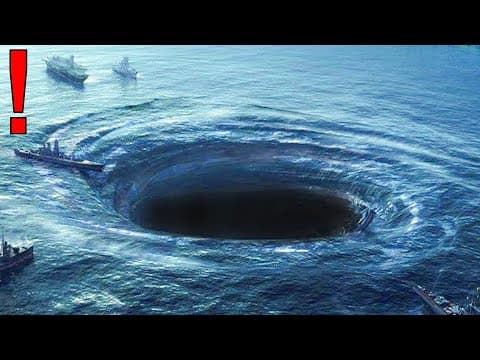
Maelstroms, or whirlpools, are powerful vortices of water found in various marine environments. The most famous maelstrom is the Moskstraumen in Norway, known for its immense size and turbulence. These whirlpools can pose significant threats to marine life and vessels caught in their currents, making them both awe-inspiring and dangerous.
The Pororoka is a tidal phenomenon that occurs along the Amazon River, characterized by a powerful tidal wave that travels upstream against the river's current. This event, which can reach heights of up to 40 feet, is caused by the gravitational pull of the moon and sun. The Pororoka attracts surfers and fishermen alike, but it also poses dangers due to its immense power.
Square waves, or cross seas, are a rare phenomenon where two wave systems intersect at nearly perpendicular angles, creating distinct square-like patterns on the ocean's surface. These waves can be challenging for sailors to navigate due to their unpredictable and turbulent conditions, showcasing nature's geometric wonders.
Located in British Columbia, Canada's Spotted Lake is a unique natural wonder characterized by mineral-rich pools that form striking patterns and colors. The lake holds cultural significance for indigenous peoples and has been a site of traditional healing practices. Its mineral content has led to both ecological and commercial interests, resulting in efforts to preserve its unique beauty.
Sakurajima, an active volcano in Japan, produces a unique phenomenon known as dirty thunderstorms during eruptions. The volcanic ash and smoke create electric charges that result in spectacular displays of thunder and lightning. These thunderstorms are both awe-inspiring and dangerous, reminding observers of the volcano's unpredictable nature.
Monarch migrations are one of the most remarkable natural phenomena, showcasing the incredible journey of these butterflies as they travel thousands of miles for survival and reproduction. The migration involves multiple generations, with the final generation undertaking a long journey back to specific forests in Mexico. The conservation of monarch butterflies has become a global concern due to habitat loss and climate change, highlighting the need to protect these iconic insects and their migratory routes.
In conclusion, these natural phenomena not only captivate our imagination but also remind us of the intricate and often mysterious workings of our planet. Each phenomenon tells a story of adaptation, survival, and the beauty of nature, encouraging us to explore and appreciate the world around us.