This blog post delves into some of the most intriguing unsolved mysteries in science, ranging from geological phenomena on Earth to cosmic enigmas in the universe. It covers topics such as unexplained geological formations, the mysteries of the Indian Ocean, the peculiarities of the moon, and the elusive nature of dark matter and dark energy, highlighting the ongoing quest for knowledge in the scientific community.
Our universe is full of mysteries, from the strange phenomena on Earth to the vast unknowns of space. Despite the advancements in science, many questions remain unanswered. This blog post delves into some of the most intriguing unsolved mysteries in science, ranging from geological phenomena on Earth to cosmic enigmas in the universe.
In parts of Siberia, massive craters have been appearing in the permafrost, with around 20 craters discovered so far, some reaching up to 90 meters in diameter. These explosions are believed to be caused by gas buildup, likely methane, beneath the surface. However, the exact source of this gas and the mechanism behind these explosions remain unclear. Researchers are concerned that as climate change warms the Arctic, more of these explosions could occur.
The Nostapoka Ark, a circular feature in Hudson Bay, Canada, has puzzled geologists for years. Initially thought to be an impact crater, it lacks the typical signs of such an event. Some scientists propose it may have formed from tectonic plate collisions, while others still suspect an ancient impact. The true origin of this massive geological feature remains a mystery.
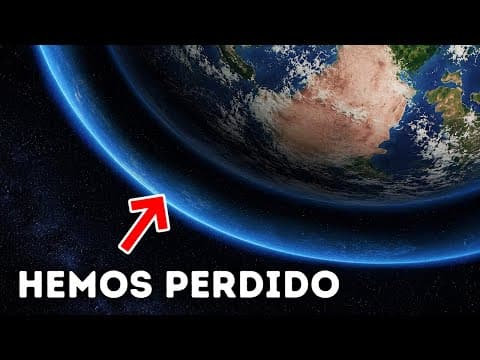
A significant area in the Indian Ocean exhibits a low gravity anomaly, baffling geophysicists. Theories suggest it could be due to variations in the Earth's mantle or the presence of ancient tectonic slabs. To understand this anomaly better, researchers have deployed seismometers in the ocean, hoping to uncover the underlying causes.
Anzuan Island, a volcanic island off Madagascar, features quartzite, a rock type that should not be present there. This raises questions about its origins, as quartzite typically forms from sedimentary processes on continents. Researchers hypothesize that the quartzite may have originated from the African continent, but the exact mechanism remains unknown.
Small mounds of sediment found in Washington State have puzzled scientists for nearly 200 years. Various theories have been proposed, including those involving pocket gophers, but no consensus has been reached. The true cause of these mounds remains elusive, highlighting the complexities of geological processes.
Every 26 seconds, a faint pulse known as microseisms is detected by seismometers around the world. While some theories suggest it may be related to volcanic activity or ocean waves, the exact source of these microseisms is still unknown, leaving scientists with more questions than answers.
Ball lightning is a phenomenon that has been reported for centuries, yet it remains poorly understood. Various hypotheses have been proposed, including the idea that it results from vaporized silicon or microwave energy. However, without direct observation, the true nature of ball lightning continues to elude scientists.
The Nazca Lines in Peru are massive geoglyphs etched into the desert floor, but their purpose and the methods used to create them remain a mystery. Various theories have been proposed, from astronomical calendars to religious rituals, but without written records from the Nazca people, the true significance of these lines is still debated.
Dark matter and dark energy are two of the most significant mysteries in modern physics. Dark matter makes up about 23% of the universe, yet its composition remains unknown. Similarly, dark energy, which drives the accelerated expansion of the universe, constitutes about 70% of the universe's energy content. Understanding these phenomena is crucial for a complete picture of the cosmos.
The moon presents a unique mystery with its two distinct faces: the near side, which is smooth and covered in maria, and the far side, which is rugged and cratered. The reasons behind this asymmetry are still debated, with hypotheses ranging from differences in crust thickness to the effects of ancient impacts. Future lunar missions may provide more insights into this enigma.
Despite the progress made in science, many mysteries remain unsolved, challenging our understanding of the world and the universe. Each unanswered question presents an opportunity for discovery, reminding us of the vastness of knowledge yet to be explored. As scientists continue to investigate these phenomena, we can only hope that one day, some of these mysteries will be unraveled, bringing us closer to understanding the complexities of our universe.