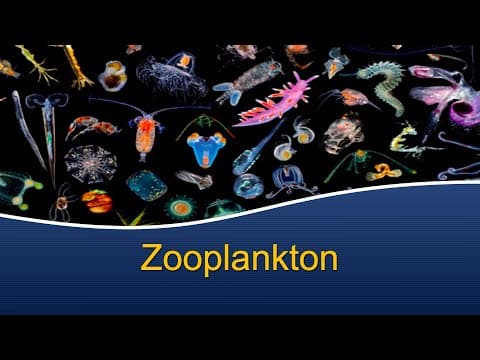
This blog post provides an in-depth overview of zooplankton, including their classification, feeding habits, migration patterns, and the latest research methods used to study these vital marine organisms. It highlights the importance of zooplankton in the marine food web and their diverse roles in ocean ecosystems.
Welcome to another lecture in the Marine Biology at Home series. Today, we will delve into the fascinating world of zooplankton, tiny yet crucial organisms that play a significant role in marine ecosystems. My name is Emma Tovar, and I am a staff research associate at the Scripps Institution of Oceanography in San Diego, California. My work primarily involves cataloging zooplankton samples collected from various research cruises.
Zooplankton are planktonic animals that inhabit all depths of the ocean. The term "zooplankton" comes from the Greek words "zune," meaning animal, and "planktoes," meaning to wander or drift. Thus, zooplankton are essentially wandering or drifting animals. While there are freshwater zooplankton, this lecture will focus specifically on marine zooplankton.
Zooplankton can be found in various marine habitats, from coastal waters to the deep sea. They thrive in the photic zone, where sunlight penetrates, allowing phytoplankton to photosynthesize. The depth of the photic zone can vary, typically ranging from 30 meters in coastal areas to 100-200 meters in open ocean environments.
Zooplankton exhibit diverse feeding strategies:
Zooplankton can be classified into two main categories:
Zooplankton can also be categorized by size:
One of the most intriguing behaviors of zooplankton is diel vertical migration (DVM), where they move up and down the water column in a daily cycle. This migration is believed to be the largest natural daily movement of biomass on Earth. Factors influencing DVM include light intensity, predation avoidance, and food availability.
Zooplankton can be classified into several taxonomic groups, including:
Studying zooplankton involves various methods:
Zooplankton are vital components of marine ecosystems, serving as a crucial link in the food web. Their diverse feeding strategies, migration patterns, and roles in nutrient cycling highlight their importance in ocean health. As research continues to evolve, our understanding of these fascinating organisms will deepen, revealing more about their contributions to marine life.
Thank you for joining this lecture on zooplankton. If you have any questions or would like to learn more, feel free to reach out. Let's continue to explore and appreciate the wonders of marine biology together!