This article delves into the groundbreaking and controversial work of Townsend Brown, a pioneer in anti-gravity and exotic propulsion research. It explores his theories on gravity manipulation, time travel, scalar waves, and the potential connections to UFO phenomena and secret space programs. The discussion also covers the implications for future space travel and the need for open scientific exploration of his discoveries.
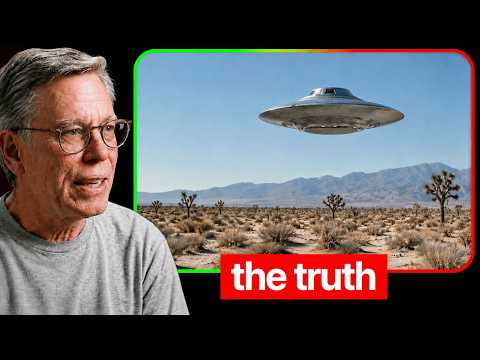
Are UFOs time travel machines, gravity control devices, extraterrestrial crafts, or perhaps all of the above? This question opens a fascinating discussion into the work of Townsend Brown, a pioneering physicist whose research into gravity, electromagnetism, and time travel continues to intrigue scientists and enthusiasts alike.
A conversation between Morgan and Townsend Brown reveals their belief in the possibility of time travel within their lifetime. Brown envisioned a list of people who could achieve this, with Morgan expressing a desire to be on that list. The motivation behind this was deeply personal, as Morgan wished to save his sister from a tragic drowning accident.
In 1929, Brown wrote a paper on the "minor quantum," which mysteriously disappeared and remains classified or lost. Later, while working at Martin Corporation in the early 1940s, he authored "The Structure of Space," a paper that introduced revolutionary ideas about gravity and space.
Brown proposed two types of gravities:
Most matter is weakly positively charged due to the proton-electron imbalance. Combining a gravity well and a gravity hill creates a wave that a craft like a UFO could ride, essentially surfing a wave across spacetime.
Brown was fascinated by "cedural radiation," a form of radiation from the solar system affecting gravity and causing gravitational anomalies. He built electrometers to detect these effects, which showed patterns correlating with the cedarial calendar—a star-based calendar rather than a solar one.
This concept, initially dismissed as quackery, has gained interest from some physicists, including a prominent Harvard physicist who remains anonymous due to the stigma around Brown's work.
Research indicates that the gravitational constant, known as big G, varies by more than 1.3% over time and location, challenging the assumption that it is a fixed value. This variability could be linked to the gravitational anomalies Brown studied.
Brown's work also attempts to revive the 19th-century concept of the ether—a substance filling empty space. Although early experiments failed to detect it, the absence of evidence is not evidence of absence. Even Einstein later considered the ether compatible with general relativity.
Brown postulated a dielectric vacuum whose properties could be manipulated, affecting the speed of light and potentially enabling control over gravitational and electromagnetic effects.
If empty space is filled with a medium, the most efficient communication over vast distances might involve tugging on the medium itself rather than sending signals through it. Brown's proposals include exotic propulsion and novel communication methods based on this principle.
One of the most bizarre aspects of Brown's work involves time travel, possibly akin to the legendary Nazi "Die Glocke" (The Bell). This bell-shaped machine allegedly manipulated magnetic fields and time under high voltages, slowing time inside the chamber to a fraction of the outside rate.
While this concept sounds incredible, it aligns with general relativity's prediction that time slows near gravitational sources. High energy could theoretically create such effects.
Ferris Williams' 5D dynamic theory, supported by figures like Oki Shannon of Los Alamos National Labs, suggests that a five-dimensional framework could unify electromagnetism and gravity, leading to novel propulsion methods.
The Air Force has studied these theories, indicating progress in understanding the Biefield-Brown effect—a phenomenon related to anti-gravity propulsion.
Extended electronamics revisits Maxwell's original 20 equations of electromagnetism, which were condensed to four by Oliver Heaviside. This condensation limited the types of electromagnetic waves considered.
By removing constraints imposed by the Lorentz equation, extended electronamics introduces scalar fields and new wave types: scalar, scalar longitudinal, and helicoidal waves. These waves interact differently with electrons and may couple more tightly with gravity, potentially explaining the Biefield-Brown effect.
These discoveries could unlock novel propulsion, improved communication, and clean energy.
Quantum potentials described by Brown may relate to phenomena like remote viewing, where information transfer transcends spacetime. Brown's foundation reportedly funded research at Stanford Research Institute related to this.
Scalar longitudinal waves might also explain signals sent to UFOs by nuclear detonations.
There is debate about whether reverse engineering programs have made progress in replicating Brown's work. Some believe these programs have only scratched the surface, as true mastery would grant control of the skies.
The compartmentalization and secrecy surrounding these programs hinder broader scientific understanding and application.
Current space propulsion relies heavily on brute force combustion rockets, which are inefficient for interstellar travel. Brown's work suggests manipulating spacetime itself could revolutionize space travel, making interstellar journeys feasible.
Geomagnetic anomalies on Earth might serve as natural portals, reducing the need for conventional propulsion.
Brown's influence extends into popular culture, with the character Doc Brown in "Back to the Future" possibly named as a nod to his work. The movie's themes resonate with Brown's vision of time travel and physics.
Despite the potential of Brown's discoveries, his work remains underappreciated and obscured. There is a call for open-source research and broader scientific engagement to explore and validate his theories.
A $50,000 bounty has been offered for anyone who can prove or disprove the Biefield-Brown effect under controlled conditions.
Brown was an unrefined but brilliant inventor whose work laid foundations for advanced propulsion and space exploration. His daughter, Linda, recalls his UFO encounter as a pivotal moment that inspired his life's work.
The hope is that Brown's legacy will inspire a return to the optimistic, utopian visions of the mid-20th century, where science fiction became science fact.
Townsend Brown's pioneering research into gravity manipulation, time travel, and exotic propulsion challenges conventional physics and offers tantalizing possibilities for the future of space exploration. Unlocking the secrets of his work could lead to breakthroughs in propulsion, communication, and our understanding of the universe.
As we stand at the crossroads of scientific discovery, embracing Brown's legacy may be key to humanity's next giant leap into the cosmos.
This exploration invites scientists, engineers, and enthusiasts to reconsider the boundaries of physics and to pursue the extraordinary potential hidden within Townsend Brown's visionary work.