Xenobots, the first AI-designed organisms, represent a groundbreaking advancement in biotechnology, allowing for the creation of living systems optimized for specific tasks. Originating from frog cells, these organisms exhibit unique capabilities and potential applications in environmental remediation, biosensing, and more, driven by their inherent biological intelligence and agency.
In recent years, the intersection of artificial intelligence and biology has led to the emergence of a new field: AI-designed organisms. This blog post delves into the fascinating world of xenobots, the first living organisms created through AI, their origins, capabilities, and potential applications.
Xenobots are living organisms designed using artificial intelligence, specifically optimized for certain functions. The concept originated in 2020 through the pioneering work of scientists Michael Levan from TS University and Josh Bongard from the University of Vermont. They successfully created the first AI-designed organism, demonstrating that genetics does not solely determine an organism's phenotype. Instead, the potential shapes and forms of organisms with the same genetic makeup are far more diverse than previously understood.
The creation of xenobots involves a process known as a morphological compiler. This innovative approach allows scientists to specify the desired shape of an organism, and the system then backtracks to determine the developmental stages necessary for that shape to be viable. This capability opens up new avenues for understanding and manipulating biological systems.
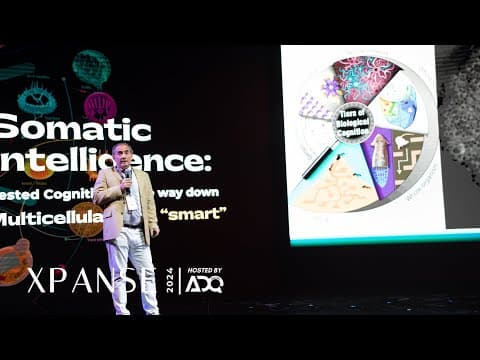
Interestingly, intelligence is not limited to brains. Multicellular organisms and tissues exhibit a form of semantic intelligence, allowing them to communicate and make decisions at various levels of complexity. This embedded intelligence, honed over billions of years of evolution, provides a foundation for developing practical applications of xenobots.
Xenobots operate at the mesoscale, a niche between microscopic organisms like bacteria and larger entities like insects. Their unique characteristics include:
The potential applications of xenobots are vast and varied. Here are a few notable examples:
One significant challenge facing our planet is the presence of pollutants, such as per- and polyfluoroalkyl substances (PFAS), often referred to as "forever chemicals." Xenobots can be engineered to detect these contaminants in water at incredibly low concentrations, enabling efficient cleanup efforts.
In the mining industry, xenobots could improve the yield of precious metals by locating and extracting them from water and other byproducts of mining operations. This capability could lead to more sustainable mining practices.
Xenobots can also be utilized to create advanced biosensors that monitor environmental conditions, such as nutrient levels in hydroponic systems. By measuring and responding to changes in their surroundings, these living sensors can optimize plant growth and yield.
To further explore the potential of xenobots, a company called Founder Systems was established in partnership with key researchers in the field. The company aims to develop a technological stack for commercial applications, including a grant-funded project for an automated laboratory known as the "robot scientist." This facility will facilitate the feedback loop between real biology and AI simulations, optimizing xenobots for specific purposes.
Founder Systems plans to operate on a B2B model, offering xenobots as a service to companies involved in environmental remediation and other fields. This innovative approach aims to provide tailored solutions to complex problems using living materials rather than traditional, non-living technologies.
Xenobots represent a remarkable advancement in biotechnology, merging the capabilities of artificial intelligence with the inherent intelligence of living organisms. As research continues and applications expand, these AI-designed organisms hold the promise of addressing some of the most pressing challenges facing our planet today. The future of xenobots is bright, and we can expect to see significant developments in this field in the near future.