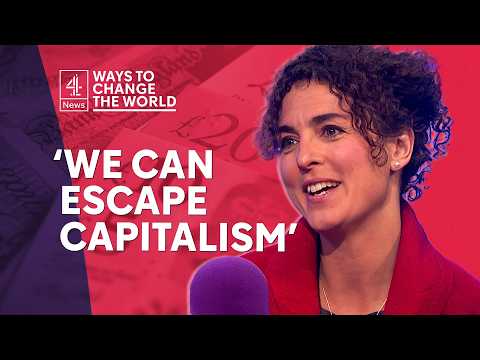
Gary Stevenson, a rising star in economic commentary, claims that growing inequality will lead to desperate poverty in the UK. This blog post fact-checks his assertions using data and academic research, revealing a mixed picture of inequality trends and their implications for the economy. While some of Gary's concerns about inequality are valid, his predictions of imminent collapse are not supported by the data. The post also discusses the complexities of wealth taxation and the broader economic
Gary Stevenson, known for his channel "Gary's Economics," has gained significant attention for his alarming predictions about the future of the UK economy. He argues that rising inequality will lead to a return to desperate poverty reminiscent of Charles Dickens' era. This blog post aims to fact-check Gary's claims, exploring the validity of his assertions about inequality and its implications for the economy.
Gary's central message is that the UK is facing an inequality crisis, which he believes is accelerating. He warns that if action is not taken, living standards will continue to decline. He attributes various economic issues, including the weak recovery from the 2008 financial crisis and the cost of living crisis during COVID-19, to growing inequality.
Interestingly, Gary criticizes academic economists, claiming they contribute to the problem by perpetuating a system that silences dissenting voices. He suggests that many economists are financially incentivized to conform to mainstream narratives, which he believes are misleading.
To assess the validity of Gary's statements, I examined the evidence he presents. Notably, Gary often refrains from using concrete data in his videos, which raises questions about the robustness of his arguments. He has dismissed many graphs and data sources as unreliable, particularly those produced by non-profits focused on fighting inequality.
Despite Gary's skepticism, research indicates that wealth and income inequality in the UK have indeed increased in recent years. The top 10% of households now own over 50% of total wealth, and income inequality has also risen. However, when comparing the UK to other countries, it is still relatively equal. For instance, the wealthiest 1% in the UK own about 21% of the total wealth, a figure that has remained stable since the 1980s.
While Gary's observations about rising inequality are accurate, his predictions of a societal collapse into poverty are not substantiated by the data. The trends do not support the notion that the UK is on the brink of a Dickensian future. In fact, the UK ranks as one of the more equal countries globally, particularly when compared to nations like South Africa and the United States.
Gary argues that inequality drives various economic issues, including low consumption power among ordinary people, which he believes stifles economic growth. He posits that the housing crisis is not merely about housing supply but rather about asset affordability driven by inequality.
Research from institutions like the IMF and World Bank supports some of Gary's assertions. Studies indicate that rising inequality can slow economic growth, contribute to asset bubbles, and even influence interest rates. Furthermore, increased inequality has been linked to social issues such as crime and poor health outcomes.
Given his focus on inequality, Gary advocates for a wealth tax as a solution to the economic problems facing the UK. However, there are significant challenges associated with implementing such a tax.
Scale of Wealth: The total wealth of billionaires in the UK is substantial, but it pales in comparison to the government's annual borrowing needs. A proposed 2% wealth tax would only cover a fraction of the government's budget deficit.
Mobility of Wealth: Wealthy individuals can relocate to avoid taxes, as evidenced by historical trends in countries with wealth taxes. This mobility poses a significant challenge to the effectiveness of a wealth tax in the UK.
While Gary's call for a wealth tax highlights the need for a fairer tax system, it is essential to recognize that simply taxing the wealthy will not resolve all economic issues. The current tax system does reduce inequality, but more comprehensive reforms are necessary to address the underlying problems.
In conclusion, Gary Stevenson raises important points about the dangers of rising inequality and the need for a fairer tax system. However, his predictions of imminent economic collapse are not supported by the data. While inequality is a significant issue, it is not the sole driver of economic problems in the UK.
To strengthen his arguments, Gary could benefit from incorporating more empirical evidence and engaging with existing research on inequality and taxation. By doing so, he could enhance his credibility and contribute more effectively to the discourse on economic reform.
If Gary is interested in discussing these findings further, I would welcome the opportunity to engage in a dialogue. The conversation around inequality and economic policy is crucial, and it is essential to base our discussions on accurate data and sound reasoning.