Federico Faggin presents a theory that the universe, or 'One,' is dynamic, holistic, and fundamentally driven by a desire to know itself. He argues that quantum physics reveals interconnectedness beyond classical physics but does not fully explain reality. He introduces the idea that we are fields, not bodies, and that spacetime emerges from these fields, challenging the scientism view that only spacetime reality exists.
Federico Faggin, a renowned physicist and thinker, shares his insights on the nature of reality, quantum physics, and the deeper truths that science has yet to fully grasp. Speaking in Trieste, Faggin discusses the ongoing quest to understand who we are and the fundamental properties of the universe.
Faggin begins by emphasizing that research and the pursuit of knowledge are never-ending processes. The ultimate goal is to understand the essence of existence and ourselves.
Faggin introduces his theory based on the concept of "One," representing the totality of all that exists — the universe. He identifies three fundamental properties:
Classical physics views objects as separate entities moving through space and time. However, quantum physics reveals that particles are entangled, sharing properties that transcend space-time separations. This interconnectedness points to a deeper reality where everything is unified.
Interestingly, ancient Vedic texts from 3500 years ago also described this interconnectedness, showing that this concept is not new but has been part of human philosophical thought for millennia.
Faggin highlights that the universe (One) is not omniscient; it is in a continuous process of self-discovery. This ongoing self-knowledge is fundamental and predates human beings or any living cells. The universe's desire to know itself is the root of all knowledge.
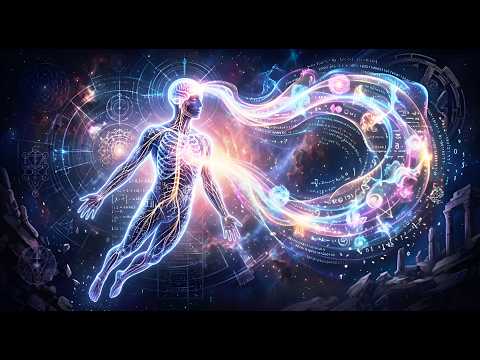
A profound aspect of Faggin's theory is the idea that humans are not merely physical bodies but fields — spaces that are not even within space-time. Space-time itself emerges from these fields.
The body is described as an instrument or tool of the field that we truly are. This challenges conventional views of identity and existence.
Faggin points out that while physicists have discovered and mathematically described the extraordinary properties of quantum physics, they often do not truly understand them. Many admit to not comprehending the full meaning behind quantum phenomena, despite being able to perform calculations.
This gap in understanding is partly due to a prevailing scientific attitude known as scientism, which holds that the only reality is that which exists within space-time.
Scientism limits the scope of reality to what can be observed and measured within space-time. Faggin argues that this view is incomplete because it ignores the deeper, holistic, and dynamic nature of the universe and its self-knowing property.
The universe's self-knowledge is a continuous process. As it learns about itself, it realizes there is always more to discover. This mirrors human experience, where the pursuit of knowledge is never-ending.
Science itself is driven by this need to understand not only the external world but also ourselves.
Federico Faggin's theory offers a compelling framework to understand the universe beyond the limitations of classical and even quantum physics. By viewing the universe as a dynamic, holistic, and self-knowing entity, and recognizing that we are fields from which space-time emerges, we gain a new perspective on reality.
This approach helps explain the enigmatic properties of quantum physics and challenges the dominant scientism paradigm. It invites us to reconsider our identity and the nature of existence, emphasizing the profound interconnectedness and continuous self-discovery at the heart of all that is.
Faggin's insights encourage deeper reflection on who we are and the universe we inhabit, suggesting that the journey of knowledge is as infinite as the universe itself.