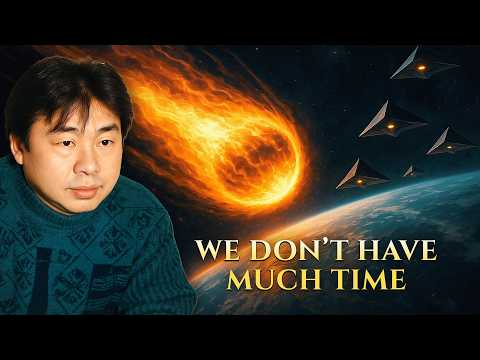
In 1977, Zuriko Kuji, a young Japanese astronomer, was clinically dead for 30 minutes and experienced a profound near-death experience (NDE). He described leaving his body, traveling through time, and visiting other realms. Remarkably, he brought back physical proof of his journey and insights into the universe's origins, challenging conventional scientific views and sparking debate about consciousness and reality.
In 1977, a 22-year-old Japanese man named Zuriko Kuji was pronounced dead in a hospital after suffering from a rare and fatal condition. Against all odds, he revived after 30 minutes of clinical death. What followed was an extraordinary account of near-death experiences (NDEs) that not only shook Japan but also challenged our understanding of consciousness, time, and the universe.
Zuriko Kuji was not just any individual; he was a respected astronomer and a prolific comet hunter who discovered four comets, even naming one after himself. He was also an officer in Japan's Air Self-Defense Force and later a university lecturer. His scientific background makes his incredible story even more compelling.
While working as a flight operations dispatcher, Zuriko was struck by severe abdominal pain and diagnosed with superior mesenteric artery obstruction, a condition considered fatal at the time. His heart stopped, and he was declared dead for 30 minutes.
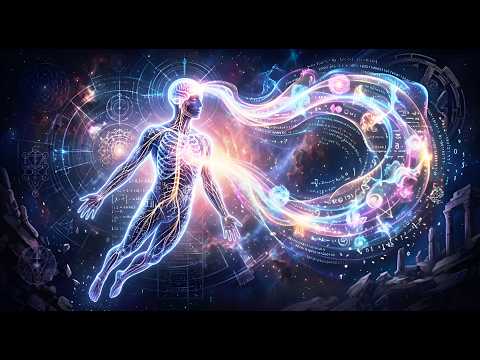
During this time, Zuriko described leaving his body and entering a realm of darkness, followed by a tunnel of light leading to a beautiful meadow. He felt solid, could walk barefoot, and experienced vivid sensations. He encountered five strangers, including deceased relatives and an aunt he had never met, who guided him up a mountain.
Zuriko then observed his own lifeless body and distraught family members, unable to communicate with them. Remarkably, he could teleport by thought, overhearing conversations his family had about his death, which he later recounted accurately after revival.
Zuriko's consciousness was not limited by space or time. He traveled back to a childhood memory where he realized he was the mysterious voice that saved him and his sister from a falling boulder. He also glimpsed his future as a university lecturer and educator in astronomy.
However, he also saw a disturbing vision of a possible future involving destruction and chaos, suggesting humanity's fate was not fixed.
In 2007, during an emergency surgery in China, Zuriko flatlined again. This time, he aimed to leave physical evidence of his journey. He traveled 500 years into the past to the late 16th century, to a Shinto shrine under construction called Tossa Shrine.
Zuriko claimed he influenced a carpenter to write the word "Turu" (part of his name and meaning "crane" in Japanese) on a wooden pillar. Upon recovery, he visited the shrine and found the faded inscription exactly where he remembered.
Historical records from the shrine mentioned the mysterious appearance of the word "Turu," baffling the clergy and the community, who believed it to be a divine message.
Zuriko used his ability to explore profound mysteries:
The Great Flood: He traveled 13,000 years into the past and witnessed a cataclysmic flood covering the Earth, caused by a comet whose gravity pulled ice from the poles, resulting in massive rainfall.
Atlantis and Dinosaurs: Zuriko claimed that 15,000 years ago, Earth was home to an advanced Atlantean civilization that domesticated dinosaurs for labor and transportation. Before the flood, many Atlanteans escaped Earth, some to Venus.
The Universe's Origin: Zuriko rejected the Big Bang theory, describing the universe's beginning as a vast nothingness containing a single great consciousness he called the "great universal mind." This mind willed the universe into existence, spawning matter from thought.
He concluded that individual consciousnesses are fragments of this universal mind, reuniting with it after death, echoing mystical and philosophical ideas like Brahman in Hinduism.
Zuriko's story, while fascinating, has faced skepticism:
Despite this, those who knew Zuriko attest to his sincerity and belief in his experiences.
Zuriko Kuji's near-death experiences offer a captivating narrative that blends science, spirituality, and mystery. Whether viewed as genuine out-of-body journeys or elaborate hallucinations, his story challenges us to reconsider the nature of consciousness, time, and reality.
His legacy continues to inspire debate and curiosity about what lies beyond life and the true fabric of the universe.
What do you think? Could Zuriko's experiences be real, or are they the product of a dying brain? The quest for answers continues.