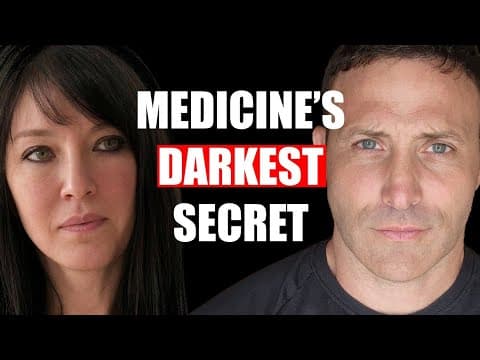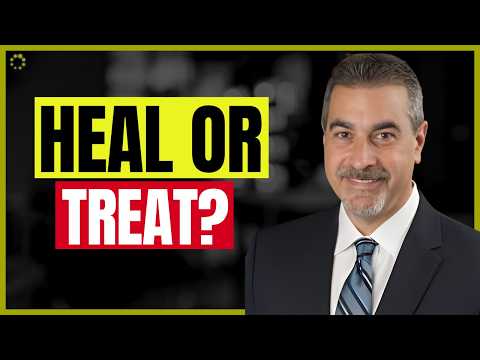
Dr. Elliot Lander, a board-certified urologist and regenerative medicine expert, discusses the evolving landscape of modern medicine. He explains the difference between healing and treatment, the role of stem cells and exosomes in regenerative medicine, the challenges of current medical education, and the promising future of precision medicine enhanced by AI. He also shares insights on aging, retirement, and the integration of traditional and modern therapies.
In a recent insightful discussion, Dr. Elliot Lander, a board-certified urologist with decades of experience, shares his journey and expertise in regenerative medicine. He explores the fundamental difference between healing and treatment, the role of stem cells, and the future of personalized medicine in transforming healthcare.
Dr. Lander has spent much of his career working with men, particularly those aged 45 to 85. One key observation he shares is the importance of purpose and passion in retirement. Men who retire without other interests or a stable relationship often struggle with their health and happiness. Successful retirement, he notes, involves continuing to work in some capacity or having meaningful pursuits beyond leisure activities like golf.
Regenerative medicine is a broad and evolving field focused on healing rather than merely treating symptoms. Dr. Lander explains that traditional medical education offers little insight into the science of healing. The core of regenerative medicine lies in harnessing the body's stem cells—our natural healing cells.
Stem cells have the unique ability to repair and regenerate damaged tissues. Regenerative medicine also includes supporting factors such as hormones, peptides, diet, and mental outlook, all of which create an environment conducive to healing.
Our bodies are constantly under assault from various damaging factors like repetitive injuries, processed foods, radiation, stress, medications, and aging. Stem cells respond to these damages by migrating to affected areas and repairing tissues. However, the body's natural healing capacity diminishes with age, especially in bone marrow stem cells.
Interestingly, fat tissue contains a high concentration of younger, more potent stem cells that do not diminish significantly with age. These fat-derived stem cells are locked in a collagen matrix but can be released and used therapeutically to accelerate healing.
Exosomes are tiny vesicles released by stem cells that carry signaling molecules such as mRNA and proteins. They act as the communication system of stem cells, instructing damaged tissues to heal. Stem cells can heal by directly differentiating into needed cell types or by releasing exosomes to stimulate repair.
While there are no FDA-approved stem cell or exosome products yet, these therapies represent a paradigm shift from traditional drug-based treatments to harnessing the body's own healing mechanisms.
Dr. Lander emphasizes the benefits of using a patient's own stem cells over donor cells. Autologous stem cells provide a perfect genetic match, reducing risks of immune rejection and exposure to pathogens. Moreover, fat-derived stem cells maintain their function well even in older individuals, making them a valuable resource for regenerative therapies.
The field faces regulatory challenges, with ongoing legal battles over the classification and use of stem cell therapies. Additionally, there is debate over the efficacy of using younger donor stem cells versus one's own cells. Dr. Lander advocates for the natural and personalized approach of using autologous cells.
Dr. Lander highlights the potential of artificial intelligence (AI) to revolutionize medicine by integrating traditional knowledge, such as Chinese herbal medicine, with modern pharmacology. AI can rapidly analyze vast amounts of data to identify effective combinations of natural compounds, exemplified by research on nitric oxide production from herbal blends.
Erectile dysfunction (ED) is a common reason men visit urologists. Traditional treatments often mask symptoms by improving blood flow temporarily. Regenerative medicine aims to address the underlying vascular damage through stem cell therapies, although ED is complex and multifactorial, involving both physical and psychological components.
The future lies in precision medicine—tailoring treatments based on an individual's genetic, epigenetic, and physiological profile. This approach moves away from one-size-fits-all prescriptions to personalized protocols that optimize health outcomes.
However, the current healthcare system, heavily influenced by pharmaceutical companies and insurance models, is not fully aligned with this vision. Dr. Lander believes parallel paths will exist for some time: traditional medicine and the emerging personalized, regenerative approach.
AI will become an indispensable tool for physicians, providing real-time access to vast medical knowledge and patient data. This will allow doctors to focus more on wisdom, compassion, and judgment—the human elements of care that AI cannot replicate.
Medical education needs reform to incorporate nutrition, exercise, healing sciences, and personalized medicine, moving beyond the current pharma-driven curriculum.
While medical advances have extended life expectancy, Dr. Lander stresses the importance of healthspan—the period of life spent in good health. He envisions a future where humans could live significantly longer, supported by regenerative therapies and technology.
Concerns about resource limitations and overpopulation are addressed with optimism, citing technological advancements like robotics that could create abundance and transform societal structures.
Dr. Lander shares personal anecdotes about his upbringing in West Los Angeles, his initial career aspirations, and how he was guided into medicine. He reflects on the traditional surgical training he received and the need for evolution in medical practice.
He also discusses his love for music, naming favorite bands and concerts, which adds a humanizing touch to his professional narrative.
Dr. Elliot Lander's insights illuminate the transformative potential of regenerative medicine and precision healthcare. By focusing on healing rather than merely treating symptoms, leveraging the body's own stem cells, and integrating AI and traditional knowledge, the future of medicine promises to be more personalized, effective, and compassionate.
As medicine evolves, the balance between technology and human touch will define the quality of care, ensuring that patients receive treatments tailored to their unique biology and life circumstances.
For those interested in learning more, Dr. Lander has authored a book titled "Stem Cell Revolution" and practices at the California Stem Cell Treatment Center in Beverly Hills and Rancho Mirage. His ongoing legal efforts advocate for patients' rights to access their own stem cell therapies, reflecting his commitment to advancing regenerative medicine.
This comprehensive exploration underscores that healing is not just a medical process but a personal journey, deeply intertwined with purpose, passion, and the innovative spirit of modern science.