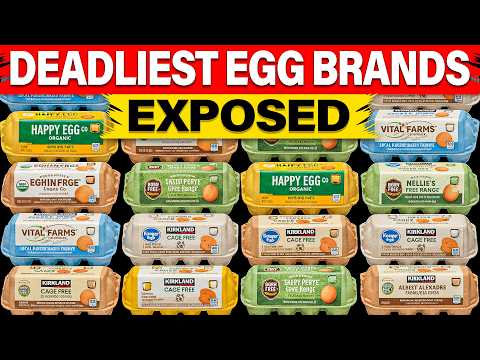
This article exposes 10 major egg brands that mislead consumers with marketing and labeling, revealing that many premium-priced eggs offer no nutritional or welfare benefits over cheaper options. It explains the realities behind labels like pasture-raised, organic, free-range, and omega-3 claims, and highlights two brands—Alexandra Family Farm and local pasture-based producers—that genuinely provide superior eggs worth their price.
Eggs are a staple in many households, often seen as a healthy and affordable source of nutrition. However, the egg industry is rife with marketing tactics that can mislead consumers into paying premium prices for products that do not deliver on their promises. This article dives deep into the realities behind 10 popular egg brands, exposing the truth about their farming practices, nutritional value, and labeling claims. It also highlights two brands that genuinely earn their premium price through honest farming and superior eggs.
Consumers often pay significantly more for eggs labeled as pasture-raised, organic, free-range, or omega-3 enriched, believing these labels guarantee better animal welfare and superior nutrition. Independent lab testing and USDA audits, however, reveal that many of these claims do not hold up under scrutiny. The difference between an $11 carton and a $4 carton often lies not in farming practices or nutrition but in marketing.
Known as the "gold standard" in the industry, Vital Farms markets itself with imagery of happy hens on rolling green pastures. However, video footage from contracted supplier farms shows crowded, industrial conditions far from the pastoral promise. Independent nutritional testing found no meaningful difference in omega-6 to omega-3 ratios, yolk density, or nutrient content compared to conventional eggs priced at a third of the cost. The premium paid is for a story, not a superior product.
Pete and Gerry's packaging evokes trust with family farm photographs and the organic label. However, organic certification for eggs only covers feed grown without synthetic pesticides and does not guarantee outdoor access or natural living conditions for hens. The eggs come from a network of contracted farms with varying standards, and the omega-3 profile reflects confinement conditions. Consumers paying extra for organic eggs expecting better welfare or nutrition are misled.
Happy Egg Co. uses cheerful packaging with smiling cartoon hens and the word "happy" prominently displayed. The label "free range" legally requires only 2 square feet of outdoor access per bird, which is often inaccessible to most hens. The yolks are pale, indicating confinement rather than true pasture foraging. The brand sells a feeling of happiness, not a genuinely better egg.
Eggland's Best features a bold red seal stamped directly on the eggs, implying certification and quality. However, this seal is self-issued by the company with no independent third-party verification. While they do add nutrients to hen feed, independent testing shows no significant improvement in the omega-6 to omega-3 ratio compared to conventional eggs. Consumers seeking trustworthy quality are paying for a logo, not a guarantee.
Organic Valley has a strong reputation in dairy but does not extend the same standards to its egg operations under the Born Free brand. These eggs are cage-free but produced at industrial scale with no outdoor access or natural behaviors for hens. Families trusting the Organic Valley name for eggs are making assumptions the brand exploits without correction.
Walmart's Great Value eggs come with no story, certification, or farm information. They are produced in battery cage systems at the legal minimum space of 67 square inches per bird—smaller than a sheet of printer paper. The sourcing is undisclosed, and the conditions meet only federal minimums. The low price reflects the cheapest production methods.
Nellie's packaging suggests a small family farm with humane certification. However, the certification standards are low, allowing for minimal outdoor access that most hens do not use. The conditions inside the facilities do not match the pastoral imagery. The certification was chosen because it fits the business model, not because it ensures high welfare.
Christopher Eggs markets "vegetarian fed" hens, implying a cleaner, healthier product. However, chickens are naturally omnivores, and animal protein is essential for nutrient-rich eggs. Removing animal protein results in less nutritious eggs with pale, watery yolks. The vegetarian fed label is a nutritional downgrade disguised as a benefit.
These store brands position cage-free eggs as a middle ground for bulk buyers. Cage-free means no cages but still involves industrial-scale confinement with no outdoor access or natural light. The stocking density is roughly equivalent to a sheet of paper per bird. The upgrade is in wording only, not in farming practices.
These eggs claim omega-3 enrichment, attracting athletes, diabetics, and health-conscious consumers. The omega-3 comes from flaxseed in hen feed, which contains ALA—a plant-based omega-3 that humans convert to usable DHA and EPA at less than 10% efficiency. The actual health benefit is negligible compared to eating wild-caught salmon. The label is technically true but functionally misleading.
Operating on certified regenerative organic land in Northern California, Alexandra Family Farm integrates cows and chickens in a rotating pasture system designed around animal needs rather than minimal regulations. Hens forage naturally, eating insects and grubs, producing eggs with deep orange, nutrient-rich yolks. Independent lab testing ranks these eggs among the highest for omega-6 to omega-3 ratios, beneficial for inflammation and cardiovascular health.
Small-scale pasture-certified producers and local farmers markets offer eggs where the label matches reality. Hens have genuine outdoor access, and farmers can specify bird density per acre. These eggs have the deep orange yolks indicative of a natural diet and superior nutrition. Backyard chicken keeping is also a viable option, with costs potentially under $2.00 per dozen over five years.
The egg industry has long relied on marketing stories and minimal legal definitions to sell premium-priced eggs that often do not deliver superior nutrition or animal welfare. Consumers deserve transparency and honesty. Alexandra Family Farm and local pasture-based producers set the standard for what eggs should be—nutritious, ethically produced, and truthfully marketed. Making informed choices can lead to healthier families and a more accountable food system.
Stay informed, read labels critically, and choose eggs that truly earn your trust and your money.