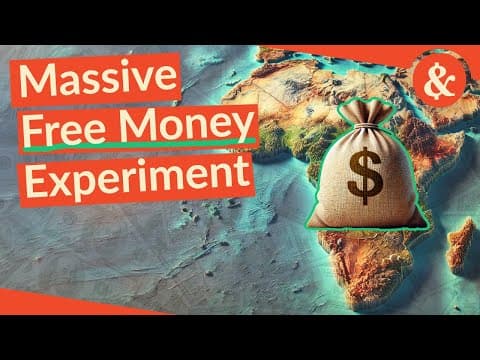
In 2014, a groundbreaking cash transfer experiment in Siaya County, Kenya, tested economic theories by distributing $10 million to impoverished households. The results challenged traditional views on inflation and development aid, demonstrating that direct cash transfers can significantly boost local economies without causing inflation, thereby reshaping the future of economic assistance.
In 2014, Siaya County in rural Kenya became the site of one of the largest cash transfer experiments in history, distributing millions of dollars to one of the poorest regions on Earth. This initiative aimed not only to alleviate poverty but also to test the economic theories of two of the most influential economists: Milton Friedman and John Maynard Keynes.
The experiment was designed to explore whether giving away substantial amounts of free money could lift people out of poverty in the long term, as Keynes would have predicted, or if it would lead to inflation, as Friedman theorized. The program involved GiveDirectly, a charity that distributed over $10 million, representing about 15% of the area's GDP, directly to eligible households.
Macroeconomics, which studies the performance of entire economies, often relies on the scientific method to test hypotheses through experiments. However, conducting macroeconomic experiments poses significant challenges due to the scale required. Traditional randomized controlled trials (RCTs) used in smaller social sciences are difficult to implement on a macroeconomic scale.
The cash transfer was structured as an unconditional payment of approximately $1,000, distributed in three installments. The researchers employed a two-level randomization process:
This design allowed researchers to analyze the effects of cash transfers on both treated and untreated villages, providing a comprehensive view of the economic impact.
Friedman's theory posited that an increase in the money supply would lead to inflation. However, the results from the experiment contradicted this expectation. The researchers found that the cash injection did not cause significant inflation in treated villages compared to control villages. This outcome suggested that the local economy had enough slack to absorb the increased demand without raising prices.
While there was a slight increase in working hours among recipients, the change was not statistically significant. The researchers discovered that many local businesses operated below capacity, meaning that the additional demand from cash recipients did not lead to inflationary pressures. Instead, the economy expanded to meet the new demand, demonstrating that the local economy was constrained by demand rather than supply.
John Maynard Keynes theorized that an initial injection of money could lead to a larger overall increase in economic activity. The study found that for every dollar distributed by GiveDirectly, the local GDP increased by approximately $2.50. This finding highlighted the effectiveness of cash transfers in stimulating economic growth, particularly in poorer communities where recipients are likely to spend the money locally.
The results of this experiment have significant implications for the future of development aid. Traditional aid programs often face scrutiny for their inefficiency and the limited impact of funds reaching those in need. In contrast, direct cash transfers have proven to be a more effective method of aid distribution, benefiting not only the recipients but also the broader community through increased economic activity.
The success of GiveDirectly's cash transfer program suggests a shift towards simpler, more direct methods of providing aid. By sending money directly to the poorest individuals, organizations can ensure that funds are used effectively and transparently. This approach minimizes administrative costs and maximizes the impact of donations.
The cash transfer experiment in Siaya County has not only provided valuable insights into macroeconomic theory but has also demonstrated a viable path forward for development aid. As we reflect on the findings, it is clear that cash transfers can lead to significant improvements in the quality of life for recipients and their communities. This experiment challenges long-held beliefs about inflation and economic assistance, paving the way for a more effective approach to combating poverty.
As we approach the holiday season, consider supporting initiatives like GiveDirectly that empower individuals and communities through direct cash transfers. Your contributions can make a lasting difference in the lives of those in need.