Crocodilians have survived two mass extinctions by adapting their diets and lifestyles. From diverse Triassic ancestors to semi-aquatic predators today, their history reveals strategies for survival amidst ecological upheaval. Understanding these adaptations can inform conservation efforts as modern crocs face new threats from climate change and habitat loss.
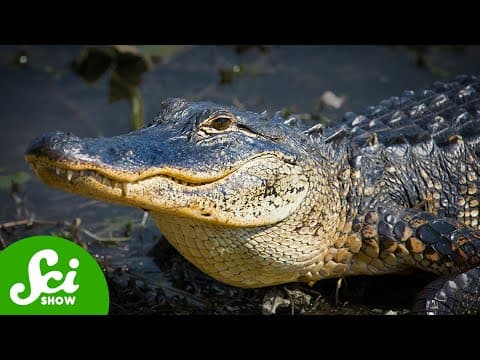
Crocodilians, including crocodiles, alligators, caimans, and gharials, have a lineage that has existed for hundreds of millions of years, surviving two significant mass extinctions that wiped out the dinosaurs and many other species. While modern crocs may appear similar to their ancient ancestors, they have undergone significant evolutionary changes and adapted different survival strategies over time.
Crocodilians are part of an ancient group known as Pseudosuchia, which originated during the Triassic Period over 200 million years ago. During this time, they were among the most diverse and successful terrestrial animals. The Triassic pseudosuchians included a variety of forms:
In the Triassic, these crocodile cousins thrived alongside early dinosaurs and ancestral mammals, often dominating their ecological niches. However, this era ended with a mass extinction event around 200 million years ago, triggered by volcanic activity and climate upheaval as the supercontinent Pangaea began to break apart.
The mass extinction led to the disappearance of many large predators and herbivores, leaving ecological gaps that dinosaurs would later fill. The only surviving pseudosuchians were a small group known as crocodylomorphs. A study conducted in 2025 analyzed fossil jaws and teeth from over a hundred croc species, both living and extinct, to understand their survival.
The findings revealed that the Triassic survivors were primarily omnivores or insectivores, characterized by a lack of dietary specialization. This adaptability allowed them to thrive in a deteriorating ecosystem, as being a non-picky eater was crucial during times of scarcity.
As the Triassic transitioned into the Jurassic and Cretaceous periods, crocodylomorphs evolved into a more diverse array of descendants. Notable groups included:
The Age of Dinosaurs was also a time of significant diversification for ancient crocs, but this era came to a catastrophic end 66 million years ago with another mass extinction event, likely caused by an asteroid impact.
During the Cretaceous extinction, only some crocs survived, and they did so by employing different strategies than their Triassic ancestors. The survivors were primarily semi-aquatic species, which had developed jaws and teeth suited for a varied diet, similar to modern alligators and crocodiles that can consume a wide range of prey.
Research indicates that species with generalized diets had higher survival rates during the Cretaceous extinction. Additionally, crocodilians reach sexual maturity quickly and lay numerous eggs, enabling rapid population recovery after catastrophic events. Their habitats in freshwater ecosystems provided refuge from environmental changes, as these areas could support diverse food sources, including decaying matter.
After the Age of Dinosaurs, crocodilians did not diversify as extensively as before. They remained primarily semi-aquatic generalists, with some land-dwelling carnivorous species emerging. However, the last 60 million years have posed challenges for crocs, as mammals have increasingly occupied ecological niches on land and in the sea, and global temperatures have gradually decreased, making conditions less favorable for cold-blooded reptiles.
Today, the remaining crocodilians continue to embody the legacy of their Cretaceous ancestors, but their future is uncertain. Human activities are damaging habitats, climate change is altering ecosystems, and species extinction rates are alarmingly high.
The history of crocodilians illustrates that survival strategies can vary significantly between mass extinctions. As we face another global ecological crisis, understanding how ancient crocs endured past calamities may provide insights into conservation efforts. By studying the resilience of these remarkable reptiles, researchers hope to find ways to help them navigate the challenges of the modern world and ensure their survival for future generations.