This article explores the concept of the multiverse as explained by physicist David Deutsch, detailing the quantum mechanics experiments that suggest the existence of parallel universes. It also delves into philosophical and consciousness-related implications, including experiences with altered states and the holographic nature of reality.
The universe we perceive is just one small facet of a much larger reality. According to quantum mechanics, reality consists of many universes, collectively known as the multiverse. These universes are all equally real and originated very similarly but diverged due to interactions and interference among them.
David Deutsch, a theoretical physicist and pioneer of quantum computing, has been a leading figure in exploring the multiverse concept. He builds on the work of Hugh Everett III, who proposed that every quantum event results in multiple outcomes occurring simultaneously, though our consciousness experiences only one linear outcome.
Quantum mechanics makes incredibly accurate predictions about physical phenomena, but explaining these predictions requires accepting that our observable universe is not the whole of reality. Instead, there is a multiplicity of universes where all possibilities exist simultaneously.
For example, when faced with a choice, such as going left or right while walking, all possible choices occur in different universes. Rather than the universe splitting at each decision, all universes already exist, and our experience is simply moving through one of these paths.
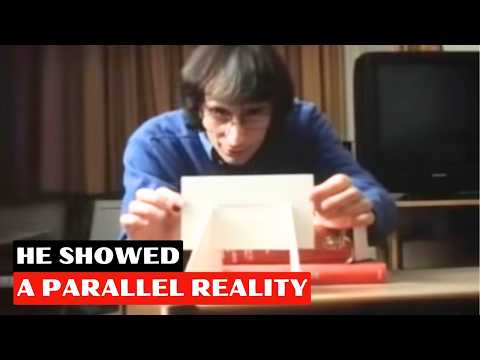
One of the most famous experiments demonstrating quantum mechanics is the double slit experiment. When light passes through two slits, it creates an interference pattern characteristic of waves. Surprisingly, even when photons pass through one at a time, the interference pattern remains, suggesting that each photon interferes with itself.
David Deutsch interprets this as evidence that photons are influenced by counterparts in parallel universes. These counterparts, though invisible, interact with our universe, causing the interference pattern. This implies the existence of many parallel universes, each contributing to the observed phenomena.
The act of measurement in quantum experiments affects the outcome. When we observe which slit a photon passes through, the interference pattern disappears, and the photon behaves like a particle. This suggests that consciousness plays a central role in shaping reality by selecting among multiple possibilities.
This idea resonates with ancient concepts like the law of attraction, which propose that our beliefs and perceptions influence the reality we experience. Our mental state could determine the path we take through the multiverse.
Throughout history, many individuals have reported experiences of other realities or dimensions. Science fiction writer Philip K. Dick famously claimed to have accessed other realities, believing his stories were inspired by leaks from these alternate worlds.
Similarly, altered states of consciousness induced by meditation or psychedelics have been reported to reveal deeper layers of reality. These experiences often include visions of symbolic patterns and geometries consistent across cultures.
Independent researcher Danny Gooler discovered a repeatable phenomenon where individuals under the influence of DMT, a powerful psychedelic, observe a defracted laser projected onto a surface. Instead of a simple beam, they see a moving code of symbols resembling Hebrew letters, numbers, or Japanese characters.
Hundreds of people report seeing the same patterns, suggesting that DMT reveals an underlying structure of reality rather than creating hallucinations. The laser acts as a probe illuminating this hidden code.
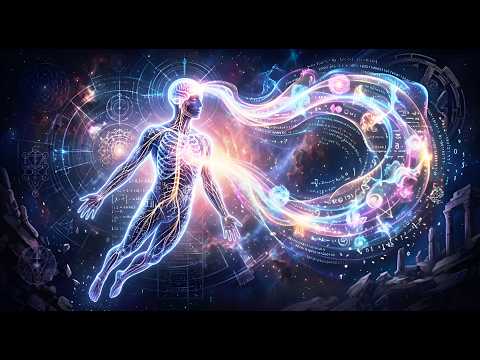
Itsak Bentov described reality as a hologram composed of interference patterns, many resembling ancient alphabets like Hebrew and Sanskrit. These patterns represent a modular consciousness that contains all creators and the entire manifest creation.
According to Bentov, the universe is an evolving holographic structure where consciousness is the fundamental substrate. This aligns with the multiverse theory and the idea that reality is a complex, interconnected system influenced by consciousness.
The convergence of physics, consciousness studies, and ancient wisdom suggests that reality is not fixed or independent of observation. Instead, it is a dynamic holographic system where multiple universes coexist and interact.
Understanding this could empower us to influence our own reality by shifting our perceptions and beliefs. While much remains to be explored and verified, these ideas challenge traditional views and open new possibilities for science and philosophy.
The journey into the multiverse and the nature of reality continues, inviting us to expand our understanding and explore the profound mysteries of existence.