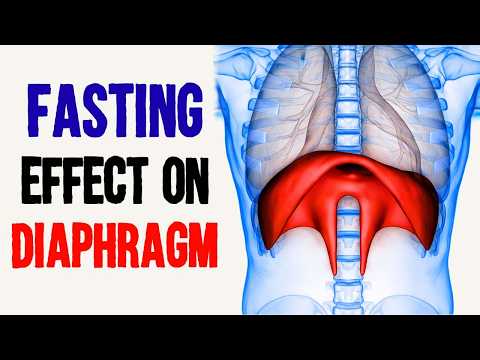
Fasting not only affects fat and blood sugar but also benefits the diaphragm, the essential muscle behind every breath. By reducing abdominal pressure during fasting, the diaphragm moves more freely, allowing deeper, more efficient breathing. Additionally, fasting shifts muscle fuel to fat, which suits the diaphragm's slow-twitch fibers, enhancing its function and supporting better nervous system regulation through the vagus nerve.
Right now, as you read this, you are breathing. You probably weren't even thinking about it until now. You take about 20,000 breaths every single day, without ever having to remind yourself. This incredible feat is made possible by one muscle: the diaphragm.
The diaphragm is a dome-shaped sheet of muscle located just below your lungs, separating your chest from your belly. Every time you breathe in, it pulls downward, creating space for your lungs to expand and fill with air. When you breathe out, it relaxes and moves back up. This muscle works continuously, about 20,000 times a day, every moment of your life, whether you are sleeping, eating, laughing, or sitting quietly.
The diaphragm is vital for survival. Unlike the heart, which can sometimes be restarted if it stops, if your diaphragm becomes paralyzed, you cannot breathe on your own and would need a machine to breathe for you. There is no backup muscle that can replace the diaphragm.
About 55% of the diaphragm's muscle fibers are slow-twitch fibers, which are endurance fibers built for long, steady, continuous work. These fibers are packed with mitochondria, tiny energy-producing structures that allow them to generate power for hours without fatigue. Slow-twitch fibers prefer to run on fat and oxygen rather than sugar, making them fuel-efficient engines designed to work nonstop.
Most people think about fasting in terms of fat loss, blood sugar regulation, or mental clarity, but rarely about breathing. However, fasting affects the diaphragm in significant ways.
After a meal, your stomach expands to hold the food, pushing upward against the diaphragm. This reduces the space the diaphragm has to pull downward during inhalation, limiting lung expansion. As a result, you take shorter, faster breaths to compensate, which can cause a heavy or breathless feeling after eating.
A 2024 study published in Respiratory Medicine examined diaphragm movement in 40 men, half with healthy weight and half overweight. The overweight group showed less diaphragm movement during inhalation, requiring more breaths to get the same amount of oxygen. This measurable restriction highlights how abdominal pressure limits diaphragm function.
When you fast and your stomach empties, the pressure on the diaphragm eases, allowing it to move downward more fully. This results in deeper, more complete breaths without conscious effort. This mechanical benefit means less pressure equals more room equals more efficient breathing.
Many intermittent fasting practitioners report feeling lighter, less congested in the chest, and more comfortable during physical activity while fasting. This may be partly due to the diaphragm working without a full stomach in the way.
The slow-twitch fibers in the diaphragm are designed to burn fat, not sugar. During fasting, the body shifts from burning sugar to burning fat, producing ketones that muscles and the brain can use as fuel. This shift aligns perfectly with the diaphragm's fuel preference, potentially allowing it to run more smoothly and efficiently.
Research from the American Journal of Physiology found that after about 72 hours of fasting, lung tissue shifts to primarily burning fat, as indicated by a drop in the respiratory quotient (RQ) from 0.75 to 0.68. This shows that the lungs and breathing muscles actively participate in the metabolic shift during fasting.
The vagus nerve, one of the longest nerves in the body, runs very close to and through the diaphragm. It is the main communication line between the brain and internal organs like the heart, lungs, and gut. When the vagus nerve functions well, it promotes a calm, regulated state in the body, lowering heart rate, improving digestion, and reducing stress.
Deep, free diaphragm movement stimulates the vagus nerve through rhythmic signals, helping maintain nervous system balance. This explains why slow, deep breathing reduces anxiety—a practice used for thousands of years across cultures.
When the stomach is full and presses against the diaphragm, deep breaths happen less often, reducing vagus nerve stimulation. This may contribute to feelings of heaviness or tension after large meals. Fasting restores diaphragm movement, increasing vagus nerve stimulation and promoting a relaxed, regulated state.
While there is no single large clinical trial directly measuring diaphragm function during intermittent fasting, multiple fields of research—breathing mechanics, muscle physiology, and metabolic science—consistently support the connection between fasting and improved diaphragm function.
Less abdominal pressure allows deeper breathing, the metabolic shift supplies ideal fuel for diaphragm fibers, and freer diaphragm movement enhances vagus nerve signaling.
Intermittent fasting is not suitable for everyone. Pregnant or breastfeeding women, individuals with eating disorders, insulin-dependent diabetes, chronic kidney disease, serious heart conditions, those underweight, or undergoing chemotherapy should avoid fasting without medical supervision.
If you experience dizziness, heart palpitations, or confusion during fasting, stop and seek medical advice.
Fasting offers more than just digestive rest or fat loss; it provides your diaphragm with the space to function optimally. This quiet benefit may explain why many fasting practitioners feel physically lighter and mentally clearer.
Your diaphragm is the engine behind every breath, working tirelessly every moment of your life. By giving your body a window without food, you support this essential muscle in a simple yet profound way—allowing you to breathe easier, one quiet breath at a time.
If this perspective changes how you view fasting, you now appreciate the vital role of the diaphragm and the subtle, powerful benefits fasting can provide beyond the usual conversations about weight and metabolism.