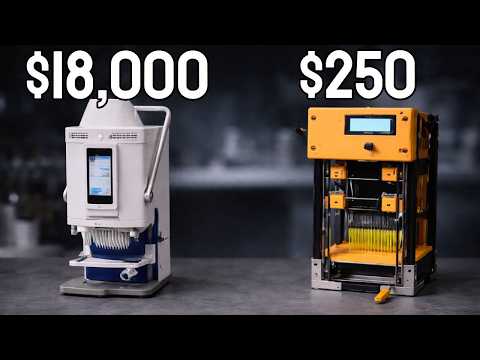
This article explores the journey of creating a low-cost multi-channel pipette, a device typically costing $18,000, using affordable materials and simple manufacturing techniques. The design leverages 3D printing, laser cutting, and off-the-shelf components to enable simultaneous liquid handling in 96 wells, significantly reducing costs and increasing accessibility for medical and scientific applications.
Frugal science is an innovative approach focused on recreating essential medical and laboratory tools at a very low cost. The goal is to make these tools accessible to more people worldwide, especially in resource-limited settings. A classic example of frugal science is the paper centrifuge, which costs less than a dollar compared to traditional centrifuges that can cost thousands. This simple device can separate blood from plasma in under 90 seconds and is used to quickly and cheaply diagnose diseases like malaria.
Inspired by this impactful engineering approach, I decided to tackle a device that sells for $18,000 and see if I could build it for 100 times cheaper.
A multi-channel pipette is a laboratory tool used to simultaneously transfer liquids into multiple wells, typically in an 8x12 tray format, which means 96 wells at once. This is especially useful when testing hundreds of patient samples for viruses or screening compounds for drug development. Using a single pipette for each sample is time-consuming, and in medical contexts, time can mean the difference between life and death.
I wanted the device to be reproducible using standard off-the-shelf components that can be bought in bulk. To keep the process accessible, I limited myself to two manufacturing techniques: 3D printing and laser cutting. Although laser cutting might sound complex, many affordable services can deliver these parts.
The device needs to suck up and dispense liquid through tubes. Since the chemistry trays have 96 wells, the pipette must operate identically across all 96 channels. Having 96 separate actuators is unrealistic, and using one pump for all tubes would not ensure equal suction across all channels.
The solution was to use a plunger mechanism for each tube, connecting all plungers to a plate that moves them simultaneously up and down. To ensure perfect parallel movement, I took inspiration from 3D printers, using Nema motors and threaded rods. The motor spins the rod connected to a nut, which moves up or down when held in place. Four motors provide symmetry and assurance for even movement.
Initially, I considered using a threaded rod with an O-ring for sealing, but the friction was too high. Syringes turned out to be the ideal solution because they provide a perfect seal, are easy to source, and do not contaminate the liquid.
The syringe plungers were attached to threaded rods using 3D printed parts. Testing showed the plunging mechanism worked as expected.
The entire plunger assembly needs to be raised and lowered to accommodate the multi-well plate. Commercial devices use linear rails and screw clamps, but I preferred moving the pipettes instead of the multi-well.
I designed a lever connected to linkages and gears to generate linear motion. This mechanism ensures identical motion at all four corners of the plate, allowing it to move up and down smoothly with minimal backlash.
The mechanisms were initially floating in space, so I built a housing using 2020 aluminum extrusions, which are inexpensive and commonly used in 3D printers. T-nuts lock into the grooves of the extrusions, allowing flexible attachment of brackets and components.
Linear rails with slides were installed to allow the plunger plates to slide up and down relative to each other and the housing.
Adhesives like CA glue or epoxy do not work well with polypropylene syringe barrels, so I designed a clamping mechanism to hold them in place. However, this approach was time-consuming and caused plate warping.
I switched to a press-fit solution by 3D printing tubes that hold the barrels snugly. This method provided enough grip to prevent movement during operation.
After installing 96 threaded rod plungers, I encountered friction due to tiny misalignments causing plungers to press against barrel sides. This made the design cumbersome and inefficient.
I reverted to using original syringe plungers but had to sand them down from 9.5 mm to 8 mm diameter to fit the 9 mm spacing of the barrels. This modification allowed the plungers to sit flush without overlapping.
The electronics were housed in a separate box mounted on the device. The user interface was kept minimal and intuitive, focusing on two main functions: aspirate (suck up liquid) and dispense (release liquid).
Limit switches were added to calibrate the position of the plates.
Laser-cut steel parts replaced some 3D printed components for durability. To ensure a good seal between syringe tips and pipette tips, heat shrink tubing was added to the syringe tips to match diameters.
Pipette tips were loaded into the machine in pre-arranged boxes for efficiency.
The device was tested by aspirating 150 microliters and dispensing 50 microliters three times. The mechanism worked as expected.
Dispensing 30 microliters into each well of a 96-well plate resulted in even distribution. Although precise measurement tools were limited, weight measurements across rows and columns indicated consistent volumes.
To demonstrate the device's utility, I filled each row with different concentrations of one reagent and each column with another. The resulting color combinations in the wells showed the device's capability for high-throughput screening.
The entire build cost approximately $250, even with small quantity purchases. Bulk buying would reduce costs further.
While this device does not replace high-end lab equipment, it significantly lowers the barrier to entry for essential laboratory tools, making medical testing and research more accessible worldwide.
This project showcases how frugal science and innovative engineering can democratize access to critical medical devices. By leveraging affordable materials and accessible manufacturing techniques, it is possible to create functional, low-cost alternatives to expensive laboratory equipment, potentially saving lives by speeding up diagnostics and research.
I welcome feedback and ideas to improve and expand this approach to other medical and scientific tools.