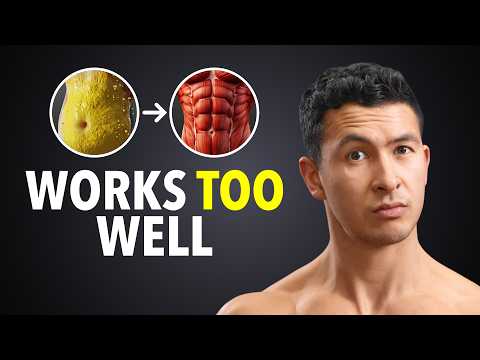
Luke and Nicole started with high body fat percentages and followed a science-backed plan involving diet, strength training, and cardio to achieve visible abs in 60 days. Despite challenges like shift work and hunger, they lost significant fat, gained muscle, and improved strength, demonstrating that with the right approach, abs can be achieved faster than commonly thought.
Achieving six-pack abs is a common fitness goal, but for most people, it can take anywhere from six months to over a year to see clear definition. Luke and Nicole, a couple with starting body fat percentages of 29.2% and 33% respectively, embarked on a challenging yet science-backed plan designed to get them visible abs in a fraction of the usual time. Their journey not only defied expectations but also provided valuable insights into fat loss, muscle gain, and sustainable fitness.
For most men, clear ab definition begins below 20% body fat, with a fully visible six-pack appearing around 15% or lower. Women typically need to reach between 25% and 18% body fat for their abs to pop. However, only about 2% of the population ever gets lean enough for truly visible abs, largely because people underestimate how much fat they need to lose.
Luke and Nicole initially guessed their body fat percentages to be in the low to mid-20s, but precise measurements revealed Luke at 29.2% and Nicole at 33%. Women naturally carry about 10% more body fat than men, so Nicole's 33% is roughly equivalent to a man's 23%.
To see visible abs, Luke needed to reduce his body fat to 20%, requiring a loss of about 20 pounds of pure fat. Nicole needed to reach 25% body fat. Research suggests the optimal fat loss rate to preserve muscle is about 0.5% to 1% of body weight per week. Luke aimed for 0.9% (about 1.5 pounds per week), targeting 20% body fat in roughly 90 days and 15% in 140 days. Nicole's plan was adjusted similarly based on her numbers.
Interestingly, if Luke built muscle while dieting, his body fat percentage could drop faster, potentially revealing visible abs in as little as 60 days.
Most people think cutting calories means eating less food, but with the right food choices, you can eat more volume for fewer calories. Luke targeted 2,000 calories per day (a 500-calorie deficit), and Nicole aimed for 1,600 calories (a 300-400 calorie deficit). Both worked rotating day and night shifts, making consistency challenging. Their diet included quick, healthy snacks and satisfying meals to maintain energy and curb hunger.
Contrary to popular belief, getting abs isn't about endless ab circuits or cardio. Strength training is crucial because it signals the body to preserve muscle and burn fat. Luke and Nicole followed a 4-day workout split targeting all major muscle groups, including two upper body and two lower body workouts per week. This approach helped them gain muscle even while in a calorie deficit.
Instead of intense cardio like sprints, they focused on walking to increase daily calorie burn without burnout. They increased their daily steps from 5,000 to 10,000, adding roughly 200 calories burned per day.
Both Luke and Nicole faced challenges such as hunger, cravings, and the difficulty of maintaining a calorie deficit during holidays and shift work. Nicole struggled more with hunger and water retention, especially around her menstrual cycle, which affected her weight measurements and motivation.
Sleep was another critical factor. Research shows that sleep deprivation can significantly reduce fat loss and increase muscle loss due to hormonal imbalances. To combat this, they used sleep aids like masks and earplugs and prioritized rest, even if it meant missing workouts.
After 45 days, Luke's body fat dropped from 29.2% to 22.5%, and Nicole's from 33% to 27%. Both had visible improvements in their abdominal definition. They also gained muscle mass—Luke gained 2.5 pounds, and Nicole gained 1.5 pounds—explaining the rapid drop in body fat percentage.
Despite the progress, Nicole felt discouraged comparing herself to Luke's more defined abs. It's important to remember that men generally have 40-50% more muscle mass, including in the abs, which can make their six-packs more prominent. Both benefited from adding direct ab training exercises like weighted cable crunches and reverse crunches.
As they approached their goals, hunger and irritability increased, highlighting that aggressive fat loss isn't sustainable for everyone. To maintain their progress and avoid rebound weight gain, they spent 30 days stabilizing their weight by adding calories back to their diets and staying active.
Successful long-term maintenance involves staying active and regularly tracking body weight to monitor trends.
Luke and Nicole improved their strength significantly. Luke increased his push-ups from 40 to 59 and pull-ups from 14 to 21. Nicole improved her push-ups from 4 to 18 and pull-ups from 3 assisted to 8.
By the end of the program, Luke reduced his body fat to 15.6%, losing 25 pounds of fat and gaining 5 pounds of lean mass. Nicole reached 19.5% body fat, losing 20 pounds of fat and gaining 3 pounds of lean mass. Their transformations were among the most dramatic seen by their coach.
They credited their success to the customized workout app that provided clear guidance and calorie tracking, making the process manageable and motivating.
Luke and Nicole's journey proves that with a well-structured, science-backed plan focusing on diet, strength training, and manageable cardio, visible abs can be achieved much faster than commonly believed. Their story also highlights the importance of patience, consistency, and adapting to individual challenges like shift work and hormonal fluctuations.
Achieving abs is tough, but with the right approach, it is possible to see significant results in as little as 60 days.