Our perception of reality is limited by our biology; our eyes detect less than 1% of the light and energy around us, and our brain constructs the visual world through electrical signals, essentially creating a controlled hallucination. Different animals perceive different realities, and much of the universe remains invisible to us, challenging our understanding of what is truly real.
Have you ever felt that the world isn't quite what it seems? The reality we experience daily is not the full picture of what exists around us. This article explores the fascinating scientific truths about how our brain builds reality and reveals the hidden layers of the universe that we cannot perceive.
Look around your room right now. You see walls, maybe a lamp, perhaps a window. You think you're seeing everything. But in truth, you are blind to almost everything around you. Scientists have measured that your eyes detect less than 1% of all the light and energy that exists.
Imagine trying to understand an entire movie by watching just one single frame. Right now, invisible waves are passing through your body. Wi-Fi signals move through your chest, radio waves from hundreds of stations cross your head, your phone sends invisible signals through the air, and heat radiates from your skin. All of this is real and happening, yet you see none of it.
Some animals can see things you cannot. Bees see ultraviolet patterns on flowers, like secret landing strips. Snakes detect heat coming off your body. Sharks sense electricity in the water. Each animal lives in a different world, perceiving things others cannot.
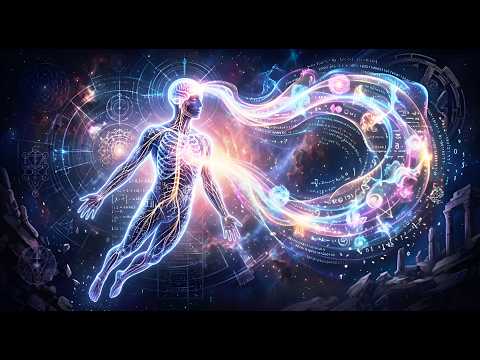
You live in your own "human bubble," which is smaller than you think. If you could suddenly see everything, every Wi-Fi signal would look like colored light, every cell phone would glow, walls would shine with heat, and the sky would be filled with layers of invisible waves all visible at once. It would look like chaos, and you might go insane trying to make sense of it all.
To protect you from sensory overload, your brain filters out everything except the tiny bit you need to survive. It focuses on whether something is a threat, food, or a friend. The rest gets blocked out.
But this raises a profound question: if you're blind to so much, what else are you missing? What exists beyond your biological equipment's ability to detect?
The world you see isn't the real world; it's the world your biology shows you. You're like someone watching TV and thinking the screen is reality. But reality is so much bigger than the screen.
As you close your eyes tonight, remember this: the darkness you see might be closer to the truth than the bright world you saw today. Because at least in darkness, you're honest about how little you can actually see.
What if your brain is lying to you right now? Your brain has never seen anything—not once, not ever. It sits inside your skull in total darkness. No light gets in there. It's like being locked in a windowless room your entire life.
So how do you see?
Your eyes aren't like cameras. They don't send pictures to your brain. Instead, they send electrical signals—tiny zaps of electricity. Your brain receives these signals and has to guess what they mean.
Here's the wild part: your brain makes it all up. The colors you see, the shapes, the sense of things being near or far—your brain invented and calculated all of these. Everything you think you're seeing is actually a painting your brain created based on electrical signals.
Scientists call this a "controlled hallucination." A hallucination is when you see something that isn't real. And that's what all vision is. The only difference is that normal vision is guided by information from your eyes, but it's still your brain making up what you experience.
If our perception is a controlled hallucination and our senses detect only a tiny fraction of reality, what does that mean for our understanding of the universe?
It means that the reality we experience is a simplified, filtered version designed for survival, not for comprehending the full complexity of the universe.
This realization can be both humbling and awe-inspiring. It invites us to question our assumptions and remain curious about the vast unknown that lies beyond our senses.
The world you see is not the full reality but a biological construct created by your brain. Your eyes detect less than 1% of the light and energy around you, and your brain interprets electrical signals to create the visual experience.
Different animals perceive different realities, and much of the universe remains invisible to us. As you prepare to fall asleep tonight, consider the possibility that the darkness you see is closer to the truth than the bright world you experienced today.
Understanding these mind-bending scientific truths can change how we view ourselves and the universe, opening doors to deeper curiosity and wonder about the nature of reality itself.