This guide explains how to add your music to YouTube's Content ID system using DistroKid, detailing the costs, potential earnings, and challenges, especially for genres like hip-hop and electronic music.
In this tutorial, we will explore how to add your music to the YouTube Content ID database using DistroKid. This process allows you to earn revenue whenever someone uses your songs in their YouTube videos. Let's dive into the steps and considerations involved in this process.
YouTube's Content ID system is designed to help creators protect their copyrighted material. When you add your music to this system, you can earn money every time someone plays or uses your songs in their videos. This can be a great way to monetize your music, but there are some important factors to consider.
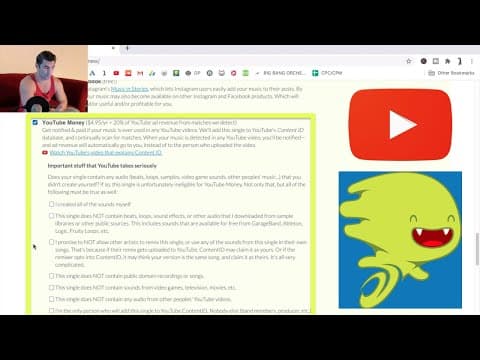
To begin, log into your DistroKid account and navigate to the uploading section. After entering all necessary information about your music, look for the Extras section. Here, you will find the option for YouTube Money.
Adding your music to the YouTube Content ID system through DistroKid costs $5 per year. Additionally, DistroKid takes 20% of all YouTube ad revenue generated from matches they detect. This means that while you may be investing $5, the revenue share could impact your overall earnings, especially if you are not a well-known artist.
The question arises: can you make back the $5 investment? While it is possible, it is challenging to predict how much revenue you will actually earn. For emerging artists, the chances of recouping this cost may be slim unless your music gains significant traction on YouTube.
One crucial aspect to note is that the genre of your music can affect your ability to monetize through YouTube Content ID. For instance, if you select genres like hip-hop or electronic, you may find that the YouTube Money option disappears. This is due to the prevalence of royalty-free samples in these genres, which complicates the detection process.
When artists use royalty-free samples from platforms like Splice, it can create confusion for YouTube's Content ID system. If multiple artists use the same vocal sample, the system struggles to determine which song should be matched to which video. This is particularly problematic in genres like hip-hop and electronic music, where many artists may use the same samples.
In summary, while adding your music to YouTube's Content ID system through DistroKid can provide a revenue stream, it comes with its own set of challenges. The costs, potential earnings, and genre-specific issues should all be carefully considered before proceeding. If you decide to sign up, follow the steps outlined above to get started.
Ultimately, whether or not this option is worth it depends on your individual circumstances as an artist. If you have further questions or need assistance, feel free to reach out for more guidance.