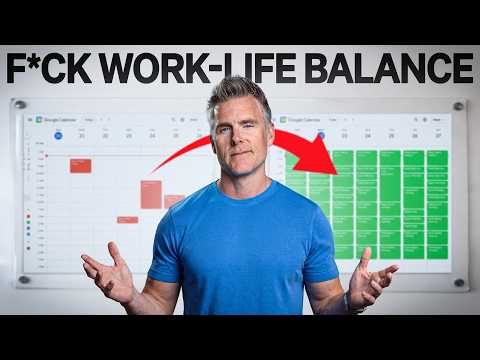
This article reveals a practical system to integrate work, family, health, and hobbies into your life by shifting from work-life balance to work-life integration, buying back your time through delegation, preloading your year with priorities, designing your perfect week, and adopting a new identity focused on making good decisions rather than just working hard.
Many people struggle with feeling like there is never enough time to accomplish everything they want—work, family, health, hobbies, and more. However, it is possible to make time for everything by adopting a system that integrates all aspects of life rather than trying to balance them as opposing forces. This article explores a comprehensive approach to reclaiming your time and designing a life where everything fits.
The common advice to achieve work-life balance is misleading. Balance implies that work and life are opposites, so focusing on one means neglecting the other. Instead, the concept of work-life integration is more effective. When you are healthier, you perform better at work. Being present with your family enhances creativity and focus. Hobbies refresh and energize you, sharpening your thinking.
The key is to be deliberate about who you spend time with and how you integrate activities. For example, combining work meetings with physical activity or social time can make your schedule more enjoyable and less of a sacrifice. The question to ask is not "How do I balance it all?" but rather, "How do I design a life where it all fits?"
Most people feel overwhelmed because their calendar controls them, not the other way around. Spending your best hours on low-value tasks leads to stagnation. The issue is not a lack of time but a lack of prioritization.
The principle of buying back your time involves delegating tasks that drain you so you can focus on what only you can do. For example, a business owner overwhelmed by emails can hire someone to manage them, freeing up hours each week and increasing productivity and revenue.
To apply this:
This process not only frees your time but also creates opportunities for others.
Before planning your weeks or days, zoom out and design your year by placing the most important events and commitments first. This includes:
By putting these "big rocks" in your calendar first, you ensure that your priorities are protected and not crowded out by less important tasks.
Instead of starting each week blank and reacting to incoming requests, design a week that, if followed exactly, would leave you feeling productive and energized. Consider these five strategies:
Managing your energy is more important than managing time. A well-designed week balances productivity with recovery.
Your value is not in how hard you work but in the quality of your decisions. A clear mind and a well-designed system enable better choices that compound over time.
Shift from being a doer to a director. Avoid filling every hour with execution; instead, reserve time for thinking, leading, and strategic planning. Regularly compare your current calendar with your ideal one and adjust your identity and habits accordingly.
Your calendar should evolve as you grow. Aim for your calendar to be 80% different in six months if you are progressing. Redesign your schedule every few months to reflect your changing priorities and goals.
You don't need more time; you need to stop filling your time with tasks that don't require your unique skills. By integrating work and life, buying back your time, preloading your year, designing your perfect week, and adopting a new identity focused on making good decisions, you can make time for everything that matters.
What would you do with an extra 10 hours a week? Reflect on this question and start designing your life intentionally today.