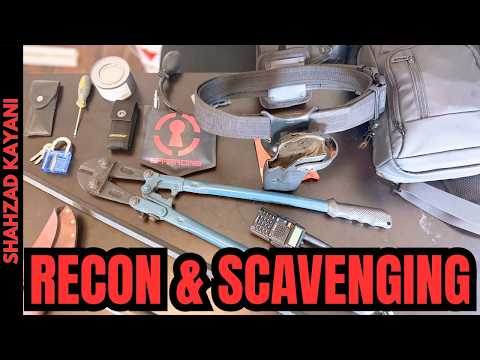
In a post-apocalyptic or long-term emergency scenario where supplies are running low, going out to scavenge for essentials becomes necessary. This guide provides a detailed overview of how to prepare a recon and scavenging kit, conduct reconnaissance, and safely gather supplies from abandoned locations.
Understanding Reconnaissance and Scavenging
Reconnaissance (or reconnoitering) involves gathering information about an area, observing it, and ensuring it is safe before attempting to enter and collect supplies. It is crucial to distinguish scavenging from looting; scavenging targets abandoned places and does not involve breaking into occupied homes or confronting families.
This information is based on real-world experience from a mentor with a background in airborne reconnaissance and clandestine operations.
The Recon Phase
When identifying a potential supply location such as an abandoned warehouse, the first step is the recon phase:
- Observation: Watch the area from a safe distance (100 to 200 yards) for at least 20 minutes.
- Look for signs of danger: Smoke, movement, people, sounds, or even birds flying away can indicate danger.
- Assess entry and exit points: Ensure the location has at least two ways in and out to avoid being trapped.
- Consider windows and alternative entry routes: Think creatively about how to enter and exit safely.
Team Composition and Communication
- Never go alone: Have at least one person accompany you.
- Ideal team size: Four people — two entering (one primary, one backup) and two keeping watch covering 360 degrees.
- Communication methods: Use ham radios (e.g., BaoFeng UV5R), signal mirrors, whistles, or pre-arranged hand signals.
- Use binoculars: Observers should have good binoculars to monitor the area effectively.
Clothing and Protective Gear
- Clothing: Wear full-sleeve shirts and cargo pants for protection against cuts and scrapes.
- Footwear: Choose shoes with ankle support such as mid-top boots or quality running shoes.
- Gloves: Use heavy-duty leather or mechanics gloves to protect your hands.
- Body armor: Consider wearing level 3A to level 4 body armor to protect vital organs. Level 4 offers protection against armor-piercing rounds but is heavier and more expensive.
- Face masks and goggles: Use N95/KN95 masks or gas masks to protect against smoke, chemicals, or unpleasant odors. Goggles protect eyes from debris and chemicals.
- Flashlight or headlamp: Preferably with a red light mode to preserve night vision and reduce visibility to others.
- Multi-tool: A Leatherman Wave Plus or similar for cutting, sawing, and other tasks.
- Knife: A full tang fixed blade knife like the Gerber Strong Arm or Cold Steel Bushman.
- Weapons: Carry a reliable firearm for self-defense, such as an AR-15, SKS, Ruger 1022, or a shotgun. Ensure you have a sling and sufficient ammunition (around 210 rounds).
- Tourniquets and trauma kit: Carry at least two tourniquets, trauma shears, chest seals, pressure bandages, and basic first aid supplies.
- Food and water: Carry high-energy bars with long shelf life and 1-2 liters of water. Consider a water filter and collapsible water containers.
- Emergency blankets and rain poncho: For warmth and protection against the elements.
- Door wedge alarm: To alert you if someone tries to enter while you are inside.
- Grappling hook and rope: For climbing over walls or obstacles.
- Bolt cutters and crowbar/pry bar: For cutting locks, fences, or prying open doors and windows.
- Lock pick set and Williams key: For quiet entry without causing damage. Practice lock picking beforehand.
- Screwdrivers and hammer: For unscrewing hinges or breaking windows quietly.
- Air shim: To create a gap in doors for lock manipulation.
- Tomahawk or axe: For breaking through wooden doors or cutting wood.
- Orange marker or tape: To mark buildings as cleared, dangerous, or unchecked, and to mark paths.
- Contractor bags: Heavy-duty garbage bags to carry scavenged supplies safely without tearing.
Ethical Considerations
- Scavenge only abandoned places.
- Do not loot occupied homes or confront families.
- Avoid unnecessary confrontations and prioritize safety.
Operational Tips
- Conduct supply runs early in the morning (around 5:00 a.m.) when criminal activity is minimal.
- Limit time outside to 8-12 hours to avoid fatigue and maintain alertness.
- Avoid greed; take only what you need and leave the area promptly.
- Consider burying excess supplies nearby for later retrieval if you cannot carry everything at once.
Conclusion
Preparing a recon and scavenging kit requires careful planning, the right equipment, and a disciplined approach to safety and ethics. By following these guidelines, you can increase your chances of successfully gathering supplies in a post-collapse scenario while minimizing risks.
If you have additional tips or experiences related to recon and scavenging kits, feel free to share them.