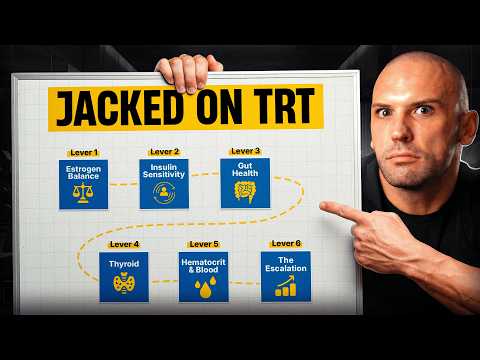
Many men on testosterone replacement therapy (TRT) experience suboptimal results not due to low dosage but because their bodies are not optimized to utilize the hormone effectively. This article explores six critical levers—estrogen balance, insulin sensitivity, gut health, thyroid and cortisol function, hematocrit levels, and a safe dose escalation protocol—that must be managed to run 200-300 mg of testosterone weekly safely and effectively, achieving significant physique transformations with a
Most men on testosterone replacement therapy (TRT) are only getting about 30% of the results they should. This is often not because their dose is too low, but because their bodies are not optimized to use the testosterone they are already taking. If your goal is to run 200-300 mg of testosterone per week to achieve a muscular, movie-star physique without side effects, there are six critical levers you need to dial in before increasing your dose.
My name is Nick Trigilli, a former IB Pro bodybuilder and performance coach. I have helped thousands of men in their 30s, 40s, and 50s lean out, build muscle, and optimize their hormones and performance-enhancing drug (PED) protocols to deliver the physique they desire.
The number one reason men feel terrible on TRT is due to estrogen imbalance. Symptoms such as libido swings, mood swings, water retention, and belly fat often stem from estrogen levels, which can be either too high or too low (often caused by overuse of aromatase inhibitors).
Testosterone converts to estradiol via the enzyme aromatase, and the more body fat you carry, the more aromatase activity you have, leading to faster conversion. This is why managing body fat is crucial.
Men on TRT typically feel best with estradiol levels between 20 and 30 pg/ml on a sensitive assay. Levels above 45-50 pg/ml often cause negative symptoms.
Managing estrogen properly allows testosterone to perform better without increasing the dose.
Insulin resistance is a common reason men see no results from TRT despite normal lab values. Chronically elevated insulin causes cells to become resistant, leading to:
Check fasting insulin (ideally under 5), fasting glucose (under 90), and HOMA-IR (under 1.0). Values above these indicate insulin resistance.
Improving insulin sensitivity increases free testosterone and enhances TRT effectiveness.
The estrobolome is a subset of gut bacteria responsible for metabolizing and clearing estrogen through the digestive tract. Disruption from antibiotics, alcohol, processed foods, and stress can impair this function, causing estrogen to be reabsorbed into circulation.
A congested liver impairs hormone clearance, causing hormone buildup.
Improving gut health makes estrogen management significantly easier.
If estrogen, insulin sensitivity, and gut health are optimized but TRT results are still poor, thyroid and cortisol dysfunction are often the culprits.
Fixing thyroid and cortisol often marks the moment TRT starts working effectively.
Testosterone increases red blood cell production. Excessive hematocrit thickens blood, reducing oxygen delivery and increasing clot risk.
Headaches, migraines, fatigue, brain fog, and high blood pressure.
Managing hematocrit removes a major barrier to safely increasing testosterone dosage.
Ensure all markers (estradiol, insulin sensitivity, thyroid, liver enzymes, hematocrit) are in optimal ranges before increasing dose.
Make a clean jump to 200 mg per week, split into daily or every-other-day injections. Allow 8-10 weeks for adaptation before reassessing.
Monitor estradiol and hematocrit closely.
To build lean muscle and control body fat, consider safe anabolic compounds such as:
Protect hair when using DHT-derived drugs.
Only escalate to 300 mg if 200 mg is insufficient and all markers remain optimal.
Increase gradually: 250 mg for 4-6 weeks, then 300 mg.
At this dose, active estrogen management and more frequent hematocrit monitoring (every 8 weeks) are essential.
With all five levers dialed in, 200-300 mg testosterone produces muscle fullness and density unattainable at lower doses.
The difference between men who achieve impressive results on higher-dose TRT and those who remain stuck is not the dose itself but the optimization of these six levers:
By addressing these factors, higher testosterone doses not only work but deliver the physique you desire.
If you want a personalized protocol built around your specific blood work and goals, consider consulting a specialist to guide you through this process safely and effectively.
Thank you for reading. Which of these levers do you think is holding you back right now?