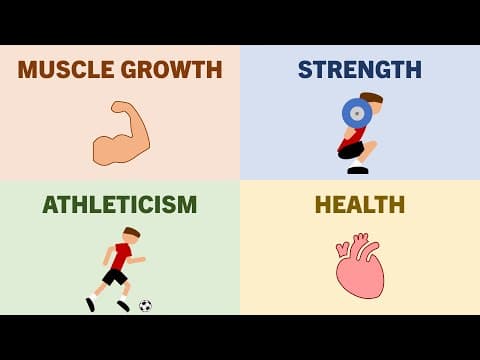
This article explores how to effectively train for various fitness goals, including body composition, performance, and health. It provides detailed strategies for muscle growth, fat loss, strength training, sport performance, and enhancing health and longevity through exercise and nutrition.
Training for fitness can be tailored to meet various goals, which can generally be categorized into three main areas: body composition, performance, and health and longevity. This article will delve into each category, providing insights and strategies for effective training.
Body composition refers to the makeup of the body in terms of muscle mass and fat mass. Most individuals aim to either increase muscle mass or reduce body fat. Here’s how to achieve these goals:
Muscle growth, or hypertrophy, is primarily achieved through myofibrillar hypertrophy, which involves an increase in the number of myofibrils within each muscle fiber. This results in larger muscle fibers and, consequently, a bigger muscle belly. There is also a lesser-known process called sarcoplasmic hypertrophy, which increases the volume of the sarcoplasm (the fluid and organelles in muscle fibers) without increasing myofibrils. While this can lead to larger muscles, it may not proportionately increase strength.
Fat loss involves reducing adipose tissue, which is often desired for aesthetic reasons, as it reveals muscle definition. Achieving fat loss requires a combination of nutrition and physical activity.
Performance training focuses on improving specific athletic outputs, such as lifting heavier weights or running faster. Here, we will discuss two main performance goals: strength and sport performance.
Strength training aims to lift more weight in specific exercises. Key adaptations for strength include:
Sport performance training involves developing skills specific to a sport, alongside physical attributes like speed, power, and strength.
Training for health and longevity focuses on enhancing overall well-being and quality of life. Key strategies include:
Engaging in resistance training helps maintain muscle mass and bone density. Training two to three times per week for 45 to 60 minutes can maximize health benefits.
This type of training improves the efficiency of the cardiovascular and respiratory systems. Low to moderate intensity cardio two to three times per week is generally sufficient for health benefits.
Maintaining a healthy body composition is crucial for health outcomes. Aim for a body fat percentage of 10-20% for males and 18-28% for females to optimize health markers.
While training for specific goals, it is essential to recognize the overlap between them. Individuals can train for multiple goals simultaneously, but focusing intensely on one may lead to trade-offs in others. Adjusting training priorities based on personal goals and life stages can help achieve a balanced approach to fitness. By understanding and implementing these strategies, individuals can effectively train for their desired outcomes, whether it be body composition, performance, or overall health.