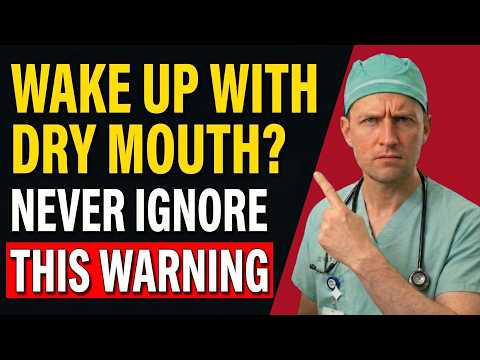
Waking up with a dry mouth is common among adults over 60 but is often a warning sign of underlying health issues such as medication side effects, sleep apnea, blood sugar problems, dehydration, or autoimmune conditions like Sjögren's syndrome. Understanding these causes and taking specific steps can help address the root problem and improve overall health.
Imagine waking up early in the morning with your mouth feeling as if you swallowed chalk dust. Your tongue sticks to the roof of your mouth, and your lips feel parched, as if you've crossed a desert. This dry mouth sensation is not just an annoying symptom of aging but a significant warning from your body.
Saliva is much more than just spit. Your body produces between 1 and 1.5 liters of saliva daily. It coats your teeth like armor, neutralizes acids that cause tooth decay, carries enzymes that begin digestion, and contains antibacterial compounds that fight infections in your mouth and throat. Essentially, saliva is a first line of defense for your entire body.
When you wake up with a dry mouth, it means this defense system has gone offline overnight, which is not trivial.
A landmark study published in the journal Oral Diseases found that nearly half of adults over 65 experience chronic morning dry mouth (xerostomia). More importantly, in over 80% of these cases, dry mouth is a symptom of an underlying issue, not the problem itself.
Think of waking up with a dry mouth as a smoke detector going off—it signals a fire somewhere in your body.
More than 400 prescription and over-the-counter medications list dry mouth as a side effect. Common culprits include:
Taking multiple medications compounds the effect. Research shows seniors taking five or more medications have nearly twice the rate of significant dry mouth compared to those taking fewer.
Case Example: Gerald, a 71-year-old retired postal worker, had severe morning dry mouth for two years. He was on six prescriptions, three supplements, and two OTC products. Four of these reduced saliva production. Adjusting the timing of two medications reduced his dry mouth severity significantly within three weeks.
Action Step: List all medications and supplements you take and discuss with your pharmacist or doctor about their impact on saliva production.
OSA affects tens of millions of Americans, many unaware they have it. It occurs when soft tissue in the throat collapses during sleep, blocking the airway. The body responds by briefly waking to reopen the airway.
This causes mouth breathing, which dries out saliva overnight. Dry mouth is a symptom, but untreated OSA increases risks of stroke, irregular heart rhythms, cardiovascular events, and cognitive decline.
Signs to Watch For:
If you notice these signs with dry mouth, ask your doctor about a sleep study. Home sleep studies are available and often covered by Medicare.
Approximately 38 million Americans have diabetes, with nearly one in four undiagnosed. Elevated blood sugar causes kidneys to work overtime, pulling fluid from tissues and causing systemic dehydration, including reduced saliva.
Persistent dry mouth can precede a diabetes diagnosis by a year or more.
Additional Symptoms:
Action Step: If you have these symptoms, get a fasting glucose and HbA1c test to check your blood sugar levels.
As we age, the brain's thirst signals weaken, and kidneys become less efficient at conserving water. Older adults may not feel thirsty even when dehydrated.
Diuretics for blood pressure can worsen fluid loss. The result is chronic dehydration, often unnoticed except for morning dry mouth.
Practical Fix:
Sjögren's syndrome is an autoimmune disease where the immune system attacks moisture-producing glands, especially salivary and tear glands.
Symptoms include:
It predominantly affects women over 55, with diagnosis often delayed 2.5 to 5 years because symptoms are mistaken for normal aging.
Action Step: If you have these symptoms, ask your doctor about Sjögren's syndrome. A simple blood test can screen for it.
Important Notes:
Morning dry mouth is common but not normal or harmless. It can signal medication side effects, sleep apnea, blood sugar issues, dehydration, or autoimmune disease. Each cause is identifiable and manageable.
By paying attention to this symptom and following the action steps, you can uncover underlying health issues and improve your quality of life.
If you found this information helpful, share it with someone over 60 who experiences morning dry mouth. Your awareness could make a significant difference in their health journey.