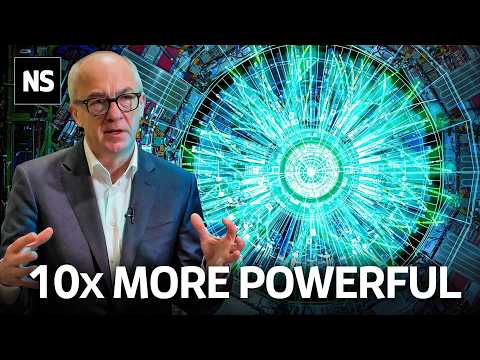
CERN, home to the Large Hadron Collider (LHC), is at the forefront of particle physics, exploring fundamental questions about the universe such as dark matter and the nature of the Higgs boson. With upcoming upgrades to the LHC and plans for future colliders, CERN continues to push technological boundaries and foster international collaboration to unlock the secrets of the cosmos.
CERN, the world's largest particle physics laboratory, is a hub of scientific discovery and technological innovation. Situated beneath the Swiss and French Alps, CERN operates the Large Hadron Collider (LHC), a 27-kilometer ring accelerator that propels protons to near-light speeds to explore the fundamental nature of the universe.
CERN's mission is straightforward yet profound: to understand how the universe works. The LHC accelerates protons in opposite directions around its massive ring, using powerful superconducting magnets to steer them at 99.999991% the speed of light. These protons collide at specific points, creating conditions that allow scientists to study the quantum mechanical events that follow.
This process helps researchers investigate the fundamental particles and forces that constitute the universe. The LHC is the world's largest and most powerful collider, enabling experiments that were previously impossible.
Currently, CERN is preparing for a significant upgrade to the LHC, known as the High Luminosity LHC (HL-LHC). This upgrade involves replacing approximately 1.2 kilometers of the collider's ring with advanced superconducting magnets made from niobium-tin, a technology that did not exist when the LHC was first built.
The HL-LHC will be ten times brighter than the current collider, producing ten times more data. This enhancement will allow scientists to explore the universe with unprecedented precision and depth.
Testing of these new magnets is conducted in the SM18 facility on the surface, where it is easier to manage the complex superconducting systems operating at 1.9 Kelvin (-271.25°C). The upgrade is a massive engineering and technological challenge, representing the largest project CERN has undertaken in the past two decades.
Since CERN's inception, particle physics has experienced remarkable breakthroughs. Notable discoveries include:
These discoveries have filled significant gaps in our understanding of the universe, marking what some call a golden age of particle physics.
Despite these advances, many profound questions remain unanswered:
Scientists at CERN are optimistic that future experiments, including those with the HL-LHC and potential new colliders, will provide answers to these mysteries.
CERN also operates the Antimatter Factory, which produces and studies antimatter particles such as antiprotons and antihydrogen atoms. These experiments test fundamental symmetries in physics, such as CPT symmetry, by comparing the properties of matter and antimatter with extreme precision.
A recent development involves transporting antimatter around the CERN site to conduct experiments in environments free from magnetic and electrical disturbances, enhancing measurement accuracy. This technique could eventually allow antimatter to be studied in specialized laboratories across Europe.
While some critics question the need for ever-larger colliders, CERN's leadership emphasizes that high-energy colliders are essential tools for probing the unknown aspects of particle physics. The Higgs boson, in particular, is a unique particle whose properties can reveal new physics beyond the Standard Model.
The Future Circular Collider (FCC) is a proposed next-generation collider with a circumference over three times that of the LHC. It aims to explore the electroweak scale with unprecedented precision and could eventually be upgraded to a hadron collider to reach even higher energies.
The FCC has received strong scientific consensus as the best machine to advance particle physics, despite its high cost, which is expected to be shared among multiple countries over 15 years.
Investments in CERN and particle physics have historically led to significant technological advancements with broad applications. For example, the World Wide Web was developed at CERN to facilitate data sharing among physicists and has since transformed global communication.
Accelerator technologies developed at CERN have also contributed to medical advances, such as proton therapy for cancer treatment, and have enabled research in other scientific fields like structural biology.
CERN was founded to foster collaboration among European countries after World War II and continues to be a beacon of international scientific cooperation. It hosts scientists from over 110 nationalities, working together towards common goals in a politically neutral environment.
This spirit of collaboration is especially important in today's fragmented global political climate, demonstrating how science can unite people across borders.
CERN remains at the cutting edge of exploring the universe's fundamental questions. With ongoing upgrades to the LHC, ambitious plans for future colliders, and a commitment to international collaboration, CERN is poised to continue its legacy of discovery and innovation. The pursuit of understanding dark matter, the nature of the Higgs boson, and other cosmic mysteries promises to keep CERN at the forefront of science for decades to come.