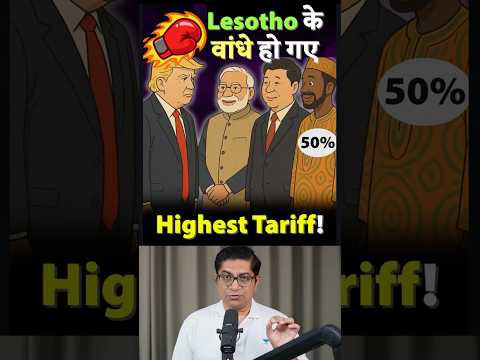
Lesotho, a landlocked country in Southern Africa, has been hit with a 50% tariff by the Trump administration, the highest imposed on any nation. This decision threatens local jobs and raises questions about trade relations, particularly with the U.S. and its impact on Lesotho's economy.
In a surprising move, the Trump administration has imposed a staggering 50% tariff on Lesotho, making it the highest tariff rate applied to any country. This decision has significant implications for the small African nation, which is entirely surrounded by South Africa and is classified as a landlocked country.
Lesotho is located in the southern region of Africa, entirely encircled by South Africa. Its landlocked status means it does not have direct access to the ocean, which can complicate trade logistics. Understanding its geographical position is crucial for grasping the economic challenges it faces, especially in light of recent tariff changes.
The imposition of a 50% tariff by the Trump administration is primarily a response to trade practices that the U.S. government deems unfair. Lesotho has been exporting jeans and diamonds worth approximately $240 million to the United States, primarily through companies like Levi's and Wrangler. Trump has accused Lesotho of imposing a 99% tax on American goods, which has led to this punitive tariff.
However, the government of Lesotho has contested this claim, stating that they are unaware of any such tax rates being applied to American products. This tariff increase poses a significant threat to the livelihoods of approximately 12,000 African workers in Lesotho, as the cost of goods in the U.S. is likely to rise, leading consumers to seek cheaper alternatives.
In light of these challenges, Lesotho's leaders have expressed their determination to seek new markets for their exports. They aim to diversify their trade relationships beyond the United States to mitigate the impact of the tariff. This proactive approach is essential for sustaining the economy and protecting jobs in the face of adverse trade policies.
For students preparing for competitive exams like UPSC and SSC, understanding the geographical and economic context of Lesotho is vital. Knowledge of its location, trade dynamics, and the implications of international tariffs can be crucial for exam questions related to geography and current affairs. While detailed geographical features such as rivers and mountains may not be necessary for memorization, the broader economic implications of such tariffs are significant.
The 50% tariff imposed on Lesotho by the Trump administration highlights the complexities of international trade and its direct impact on local economies. As Lesotho navigates this challenging landscape, the response from its government and the potential for new trade partnerships will be critical in determining the future economic stability of the nation. Understanding these dynamics is not only important for academic purposes but also for grasping the interconnectedness of global economies.