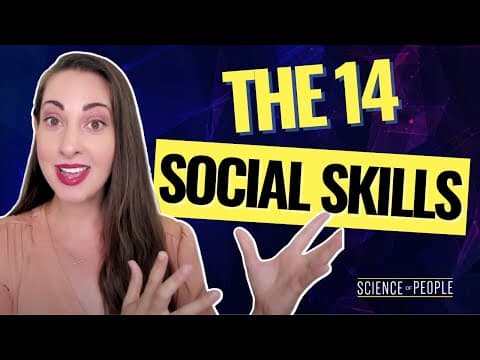
This blog post explores 14 distinct types of social skills that are crucial for effective communication and relationship-building. Each skill is defined, and readers are encouraged to identify their strengths and areas for improvement.
Social skills are the tools we use to communicate, relate, and build relationships with others. As someone who has struggled with social skills, I have always been curious about the different types of social skills that exist. In this post, we will explore 14 distinct social skills, helping you identify your strengths and areas for improvement.
A linchpin is the glue that holds a social group together. If you find yourself saying yes to the following statements, you might be a linchpin:
Being a linchpin means you are a gatherer of ideas and people, fostering strong relationships within groups.
Conversationalists excel at engaging in discussions. If you can relate to these statements, you may be a conversationalist:
Conversationalists are adept at small talk and can easily connect with anyone, making them valuable in social settings.
If you have a knack for humor, you might be a comedian. Consider these statements:
Being funny is a unique social skill that can help ease tension and make others feel comfortable.
Speakers are captivating and enjoy being in front of an audience. If you resonate with these statements, you may be a speaker:
This skill is essential for effective communication in various settings, from meetings to public speaking.
Influencers have the ability to persuade others. If you identify with these statements, you might be an influencer:
This skill is particularly useful in business, where convincing others is often necessary.
Listeners are empathetic and attentive. If you find yourself agreeing with these statements, you may be a listener:
Listening is a crucial social skill that fosters deeper connections.
Magnets are charismatic and approachable. If you relate to these statements, you might be a magnet:
Magnets naturally attract others, making them valuable in social situations.
Storytellers have a talent for sharing engaging narratives. If you can relate to these statements, you may be a storyteller:
Storytelling is a powerful social skill that can enhance communication and engagement.
Nurturers are empathetic and caring. If you resonate with these statements, you might be a nurturer:
While nurturing is a valuable skill, it’s important for nurturers to set boundaries to protect themselves.
Decoders are perceptive and insightful. If you identify with these statements, you may be a decoder:
Decoders excel at reading between the lines and understanding nonverbal cues.
Leaders empower and guide others. If you resonate with these statements, you might be a leader:
Leadership is about taking the pulse of a group and guiding them toward a common goal.
Connectors are skilled at networking and building relationships. If you relate to these statements, you may be a connector:
Connectors are essential for creating robust networks and fostering collaboration.
Dream builders are problem solvers and encouragers. If you identify with these statements, you might be a dream builder:
Dream builders are often seen as cheerleaders, providing support and motivation to those around them.
Chameleons are adaptable and versatile. If you resonate with these statements, you may be a chameleon:
Chameleons can fit into almost any social situation, making them valuable team members.
Understanding the different types of social skills can help you identify your strengths and areas for improvement. Each skill contributes to your overall charisma and ability to connect with others. By honing these skills, you can enhance your social interactions and build stronger relationships. Consider exploring resources like online courses to further develop your social skills and reach your full potential.