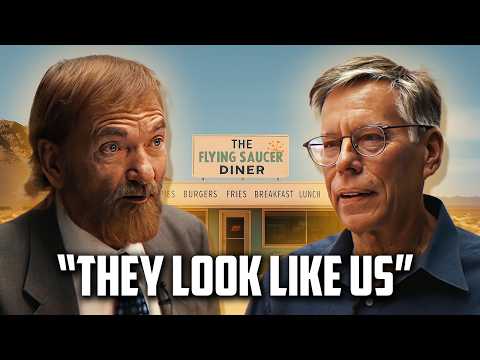
Michael Masters, a biological anthropologist, presents a compelling theory that many UFOs and aliens are not extraterrestrials but rather time-traveling descendants of humans. Drawing from evolutionary biology, archaeology, and cultural encounters, he explains how future humans might evolve physically and technologically, addressing current human vulnerabilities and societal changes. This theory also explores the implications of reproduction challenges and the potential for a unified human mind.
Michael Masters, a biological anthropologist with a background in evolutionary anatomy and archaeology, has become known for his intriguing theory that many UFOs and aliens are actually our time-traveling future human descendants. This perspective offers a fresh lens through which to view the phenomena of unidentified flying objects and extraterrestrial encounters.
Masters' expertise lies in anthropology and biological anthropology, focusing on evolutionary anatomy and biomedicine. He has conducted archaeological research in various locations, including Montana and Southern France. His scientific background informs his unique approach to the UFO and alien question.
Masters advocates the idea that many aliens described in encounters resemble hominins—creatures closely related to humans—and specifically resemble what future humans might look like if current evolutionary trends continue. He notes that these beings often have large heads, big eyes, and childlike features, which align with the concept of self-domestication and feminization in human evolution.
He also suggests that the iconic saucer-shaped crafts reported in UFO sightings could be time machines, further supporting the time-travel hypothesis.
Masters discusses the robustness of ancient humans such as Neandertals, who were stronger and had larger visual cortices than modern humans, possibly giving them superior eyesight, including night vision. He highlights archaeological findings, such as the use of teeth as tools and the development of advanced stone tools like Mousterian hand axes.
Despite their strength and capabilities, Neandertals were eventually replaced by Homo sapiens, who are currently the most physically feeble humans to have existed. Masters points out that even within the last century, human health markers such as testosterone levels and sperm counts have declined significantly.
Masters emphasizes that modern humans face numerous biological challenges, including reduced fertility, increased miscarriages, and lower sperm counts globally. He connects these trends to the concept of self-domestication, where humans are becoming more feminized and less physically robust.
He also discusses societal shifts, such as the questioning of gender roles and the potential for artificial wombs and genetic engineering technologies like CRISPR. These advancements could lead to engineered humans, possibly without traditional biological parents.
The theory explains why aliens are often depicted as having no muscle, large heads, and big eyes, resembling a blend of male and female traits. Masters notes that many alien encounters involve beings interested in human reproduction, such as extracting gametes or implanting fetuses, which could be related to future humans addressing reproductive challenges.
He references Whitley Strieber's experiences, where the beings appeared to have a gender essence despite their ambiguous appearance.
Masters touches on the human tendency to form tribes and other groups, often leading to conflict. He suggests that if future humans have evolved to share a collective mind and uniform appearance, many of these conflicts could be resolved.
He also mentions that these beings often communicate telepathically or telekinetically, indicating advanced cognitive abilities.
Masters shares a personal story about his father, a veterinarian in Northeast Ohio, who witnessed a bright light hovering above their truck in Amish country. This event, which occurred before Masters was born, sparked his interest in UFOs and extraterrestrial phenomena.
He also recounts his archaeological work in Southern France, where he and his team discovered several rare Mousterian hand axes, doubling the known number in Europe and earning them celebratory drinks.
Michael Masters' theory that aliens are time-traveling future humans offers a scientifically grounded and thought-provoking explanation for many UFO and alien phenomena. By combining evolutionary biology, archaeology, and cultural insights, he presents a vision of humanity's future that addresses current vulnerabilities and societal changes. This perspective challenges traditional extraterrestrial hypotheses and invites us to reconsider our place in time and space.
This theory continues to gain attention and invites further exploration into the mysteries of human evolution and the nature of UFO encounters.