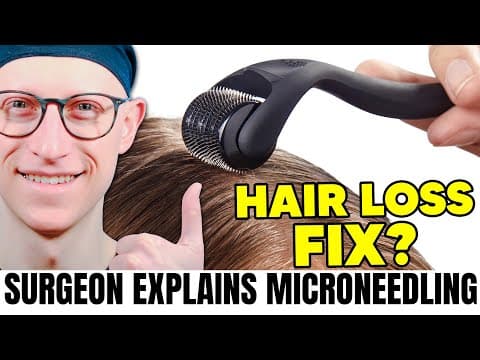
Microneedling, also referred to as derma rolling, has gained popularity as a method for hair restoration. Dr. Gary, a double board-certified facial plastic surgeon and hair restoration specialist, discusses the efficacy of microneedling for hair regrowth, its mechanisms, and how to safely implement it at home.
What is Microneedling?
Microneedling, or percutaneous collagen induction therapy, involves using multiple fine needles to create micro-punctures in the skin. This therapy emerged in the 1990s, initially demonstrating effectiveness for treating scars and skin laxity. Over time, its applications have expanded to include:
- Flap and graft survival in reconstructive surgeries
- Treatment of hyperhidrosis (excess sweating)
- Delivery of drug therapies
- Skin rejuvenation
- Hair restoration for various types of alopecia
Mechanisms of Hair Regrowth
Microneedling promotes hair regrowth through two primary mechanisms:
- Increased Growth Factors: The micro-injuries stimulate the body’s healing response, increasing local growth factors. When combined with platelet-rich plasma (PRP), the benefits are amplified as the platelets release additional growth factors.
- Activation of Stem Cells: Microneedling activates stem cells located in the hair bulge area, which can lead to the production of new hair follicles.
Research has shown that microneedling can increase the thickness of hair shafts and convert miniaturized hairs into more mature terminal hairs.
Indications for Microneedling
Microneedling is particularly effective for:
- Androgenic Alopecia: Commonly known as male or female pattern hair loss.
- Alopecia Areata: A condition characterized by patchy hair loss.
- Telogen Effluvium: A temporary hair loss condition often triggered by stress or hormonal changes.
Delivery Methods
There are various methods for delivering microneedling:
- Dermal Rollers: These devices roll over the scalp to create micro-punctures. However, they can risk breaking hair strands.
- Derma Pens: These devices puncture the skin vertically, minimizing hair breakage and are generally recommended over dermal rollers.
Needle Depth and Frequency
The depth of the needles used in microneedling can vary:
- Studies have utilized needle lengths from 0.6 mm to 2.5 mm.
- For at-home treatments, a depth of up to 1 mm is typically recommended to avoid pain and potential scarring.
- As hair loss progresses, shorter needle lengths (0.5 to 1 mm) may be more appropriate due to scalp thinning.
Application Guidelines
- Pain Management: Topical anesthetics or injected anesthesia may be used to numb the area, especially for deeper treatments.
- Disinfection: The scalp should be disinfected before treatment to minimize infection risk.
- Desired Endpoint: The goal is to achieve pinpoint bleeding and mild to moderate redness, indicating effective treatment.
- Washing Hair: It is generally safe to wash hair six hours post-treatment.
Treatment Frequency
The frequency of microneedling treatments can vary:
- Some studies suggest weekly treatments, while others recommend intervals of up to eight weeks.
- A gradual approach is advisable, starting with monthly applications and increasing frequency as tolerated.
Combining Treatments
Microneedling can be effectively combined with other treatments:
- Minoxidil (Rogaine): Studies indicate that combining microneedling with minoxidil can yield better results than using minoxidil alone.
- PRP: Combining microneedling with PRP has shown superior results for patients with androgenic alopecia.
- Steroids: For localized conditions like alopecia areata, steroids can be used in conjunction with microneedling.
Potential Side Effects
While microneedling is generally safe, potential side effects include:
- Itching and prolonged redness
- Initial hair shedding
- Infection risk due to skin punctures
- Reactions to local anesthesia
- Scarring if not performed correctly
At-Home Microneedling Protocol
For those considering at-home microneedling, Dr. Gary recommends:
- Start with a Dermapen: This device is preferred for its vertical stamping action.
- Begin with Shallow Depth: Start with 0.5 mm to minimize pain and risk.
- Limit Initial Applications: Begin with one application and gradually increase to two or three as comfort allows.
- Monthly Frequency: Start with monthly treatments, adjusting as needed based on results and tolerance.
- Consult a Doctor: Regular check-ins with a healthcare provider are essential to monitor progress and avoid complications.
Conclusion
Microneedling is a viable and scientifically supported method for hair restoration, particularly when combined with other therapies like PRP and minoxidil. While at-home microneedling can be effective, it is crucial to follow safety guidelines and consult with a medical professional to ensure optimal results. With patience and proper technique, individuals can see significant improvements in hair regrowth over time.