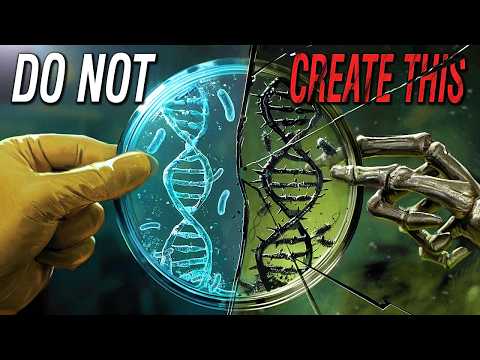
The emergence of synthetic biology raises concerns about creating 'mirror life,' organisms with opposite chirality that could pose existential risks. Scientists warn that these synthetic organisms could disrupt ecosystems and human health, leading to catastrophic consequences. A recent report urges caution, suggesting that without compelling evidence against these risks, research into mirror life should cease.
The development of nuclear weapons during the Manhattan Project marked a pivotal moment in human history, where scientific advancement collided with ethical considerations. As scientists grappled with the implications of their work, a similar tension is emerging today with the advent of synthetic biology. This field has the potential to create life forms that could pose existential threats, particularly through the concept of 'mirror life.'
To understand the implications of mirror life, we must first explore the origins of life on Earth. Billions of years ago, the planet was a hostile environment, devoid of oxygen and bombarded by extraterrestrial forces. In this primordial soup, the building blocks of life, such as amino acids, began to self-replicate. Over time, these molecules evolved into complex structures, with DNA and proteins becoming the blueprints of life.
A crucial aspect of these biological molecules is chirality, a property of asymmetry. For instance, DNA is composed of right-handed nucleotides, while proteins are made from left-handed amino acids. Mirror life would consist of organisms built from molecules with opposite chirality, fundamentally altering their interactions with existing life forms.
Advancements in synthetic biology are rapidly progressing, with scientists predicting that within the next decade, they will have the capability to create nanomachines capable of synthesizing mirror life. While some researchers believe that creating these organisms could yield significant scientific insights, the potential risks are alarming.
In December 2024, a group of over 40 prominent biologists released a report detailing the existential risks associated with mirror life. They argue that the creation of such organisms could lead to catastrophic ecological consequences. Unlike natural bacteria, which have evolved to maintain a balance within ecosystems, mirror life could disrupt this equilibrium.
Single-celled organisms, such as bacteria, can reproduce exponentially under ideal conditions. If a synthetic mirror bacterium were to replicate without constraints, it could theoretically outnumber all particles in the observable universe within days. This unchecked growth could lead to a scenario where mirror life overwhelms existing ecosystems, leading to irreversible ecological harm.
One of the most concerning aspects of mirror life is its potential to evade interactions with existing biological systems. Since all life on Earth has evolved to recognize and interact with molecules of a specific chirality, mirror life could colonize environments and organisms without facing natural checks and balances. This could result in the rapid colonization of human bodies, leading to severe health consequences.
The 2024 report emphasizes that without compelling evidence that mirror life would not pose an existential threat, research in this area should cease. Unlike the development of nuclear technology, which had potential benefits alongside its risks, the arguments for pursuing mirror life are far less compelling. The potential for catastrophic outcomes far outweighs the scientific curiosity driving this research.
The ethical implications of creating mirror life are profound. As scientists reflect on the lessons learned from the Manhattan Project, the question arises: should we pursue knowledge that could lead to our own destruction? The risks associated with mirror life are not merely theoretical; they could manifest in ways that fundamentally alter life on Earth.
As we stand on the precipice of a new era in synthetic biology, the warnings from the scientific community cannot be ignored. The potential for mirror life to disrupt ecosystems and threaten human existence is a call to action for researchers, policymakers, and society at large. The pursuit of knowledge must be balanced with a responsibility to safeguard our planet and its inhabitants.
In the words of physicist Richard Feynman, the knowledge gained from scientific advancements can change our perception of reality and the future. As we navigate these uncharted waters, we must consider whether some knowledge is better left undiscovered.
Join the discussion on the implications of mirror life and the responsibilities of scientific inquiry. What are your thoughts on the risks and benefits of pursuing such research?