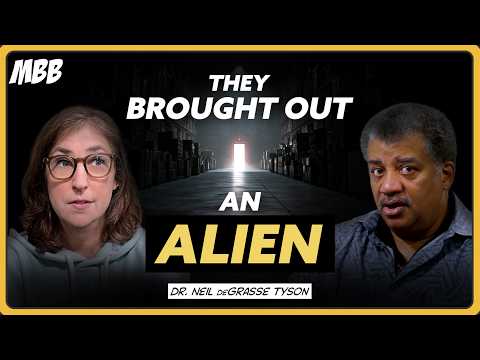
Neil deGrasse Tyson discusses the prevalence of religious belief in America, its decline with higher education, and the nuanced relationship between science and faith. He highlights the historical impact of religion on scientific progress, the separation of church and state, and the cultural implications of religious beliefs on scientific literacy and discovery.
In America, approximately 90% of the population identifies as religious when asked a clear and unambiguous question: "Is there a God that listens to your prayers?" This definition excludes superficial church attendance, focusing instead on a personal belief in a deity actively involved in one's life.
Interestingly, this percentage drops significantly among those with higher education. For individuals with advanced degrees such as master's or doctorates, where critical questioning of existing knowledge is encouraged, the percentage of religious believers falls to about 60%. Among scientists, including biologists, chemists, engineers, and mathematicians, the figure further decreases to 40%. However, this drop is more accurately from 60% to 40%, since all scientists typically hold advanced degrees.
Among elite scientists, members of the National Academy, the number of those who believe in a personal God drops dramatically to 7%. This statistic was highlighted in a headline by the British journal Nature, stating that 93% of elite scientists reject God. Tyson finds the 7% who still pray to a personal God among the most accomplished scientists particularly intriguing and deserving of further study.
Philosophers, who essentially invented atheism, show an even lower percentage of religious belief, with less than 1% identifying as religious, excluding theologian philosophers.
Tyson touches on the issue of religion in public education, particularly in America where the principle of separation of church and state is foundational. He recounts a case in New Jersey where a middle school history teacher told students that not accepting Jesus as Lord and Savior would condemn them to hell, also making scientifically inaccurate claims such as Noah having dinosaurs on his ark and dismissing the Big Bang and evolution as mere theories.
Tyson emphasizes that the real issue is not the separation of church and state but the need to separate scientifically illiterate individuals from teaching positions. He points out that being religious is not synonymous with scientific illiteracy, as 40% of American scientists pray to a personal God, but scientific literacy requires understanding facts such as humans and dinosaurs not coexisting.
The public discourse around science and religion is often marked by conflicting messages, such as billboards promoting the Big Bang Theory alongside God, or slogans like "God spoke and bang, it happened." Tyson also references failed predictions of Judgment Day, highlighting the persistence of faith despite disproven claims.
Tyson discusses the historical golden age of Islam, during which significant advancements in algebra, mathematics, agriculture, and engineering were made, with many stars named in Arabic reflecting this legacy. However, the rise of scholars like Al-Ghazali, who codified Islamic behavior and declared the manipulation of numbers as the work of the devil, led to a decline in scientific inquiry within the Muslim world.
This decline has had lasting effects, as evidenced by the disparity in Nobel Prizes awarded to Jews versus Muslims. Jews, numbering around 15 million worldwide, have won 25% of all Nobel Prizes in the sciences, while Muslims, numbering approximately 1.3 billion, have won only two or three, with one being a Pakistani physicist rather than Middle Eastern.
Tyson reflects on the lost potential for scientific discovery due to this lack of participation from a significant portion of the global population.
Neil deGrasse Tyson's insights reveal a complex interplay between religion, education, and science. While religious belief remains prevalent, higher education and scientific training tend to reduce its prevalence. The historical and cultural contexts of religion have influenced scientific progress, sometimes hindering it. Understanding these dynamics is crucial for fostering scientific literacy and encouraging broader participation in scientific discovery worldwide.
This exploration invites readers to consider how education, belief, and culture shape our understanding of the universe and our place within it.