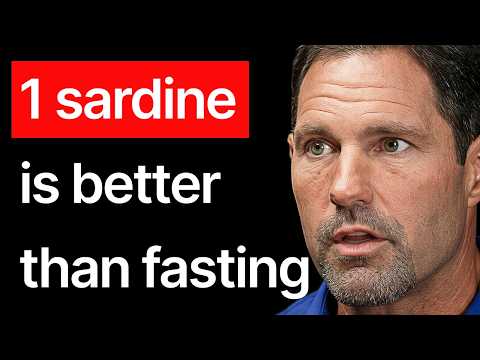
Dr. Dominic D'Agostino, a neuroscientist, reveals how sardine fasting—a protocol involving eating sardines while fasting—can suppress insulin, reduce visceral fat, double autophagy speed, protect brain health, and boost the immune system. Combined with resistance training and a ketogenic diet, sardine fasting offers a nutrient-rich, muscle-sparing alternative to water fasting with lasting metabolic benefits.
Dr. Dominic D'Agostino, a renowned neuroscientist trusted by NASA and the Department of Defense to optimize human performance, shares groundbreaking insights into a unique fasting protocol known as "sardine fasting." This method not only aids in weight loss but also enhances autophagy, protects brain health, and boosts the immune system.
Sardine fasting involves consuming sardines during a fasting period, which leads to extreme suppression of the hormone insulin. This suppression triggers the body to burn visceral fat—the fat surrounding internal organs—first. Sardines are rich in omega-3 fatty acids (DHA and EPA), which reduce inflammation and have protein-sparing effects, helping preserve muscle mass during fasting.
Unlike water-only fasting, sardine fasting provides essential micronutrients and protein, preventing nutrient deprivation and hormonal imbalances often seen in prolonged fasts.
Autophagy is the body's process of cleaning out damaged cells and regenerating new ones. It is a consequence of maintaining low insulin levels, which can be achieved through fasting, caloric restriction, or time-restricted feeding.
Dr. D'Agostino explains that sardine fasting creates a caloric deficit while providing sufficient nutrients, allowing autophagy to occur without the negative effects of nutrient deprivation. This method can mimic the benefits of a 3 to 5-day water-only fast but with better preservation of energy levels and muscle mass.
Sardine fasting leads to rapid loss of visceral fat due to insulin suppression and the fat-burning effects of omega-3 fatty acids. Dr. D'Agostino's personal experience showed a reduction in body fat from 10% to 8.9% while increasing muscle mass through resistance training.
The protein and omega-3 content in sardines help preserve muscle mass during fasting. Resistance training further supports muscle retention and bone health.
Sardine fasting significantly lowers insulin levels (measured at 1.9 in Dr. D'Agostino's tests) and triglycerides (in the 30s), indicating improved metabolic flexibility and cardiovascular health.
Maintaining a glucose-ketone index between 1 and 4 for 72 hours indicates entry into autophagy. Sardine fasting can achieve this state, promoting cellular repair and longevity.
Ketosis, induced by sardine fasting and ketogenic diets, supports brain energy metabolism, reduces neuroinflammation, and enhances neurotransmitter systems. Clinical trials are exploring ketogenic therapies for Alzheimer's, Parkinson's, depression, anxiety, and other neurological disorders.
Ketosis enhances the adaptive immune system, helping the body fight infections and inflammation. Dr. D'Agostino uses fasting situationally to quickly reduce inflammation and recover from illnesses.
Despite consuming multiple servings of sardines daily, Dr. D'Agostino's heavy metal levels remain low due to careful sourcing and effective detoxification pathways.
Starting a ketogenic or fasting regimen requires adequate intake of sodium, potassium, calcium, and magnesium to avoid symptoms like brain fog and dizziness.
While LDL cholesterol may increase on a ketogenic diet, Dr. D'Agostino emphasizes that high-sensitivity C-reactive protein (hsCRP) is a better predictor of cardiovascular health. His hsCRP levels are consistently low, indicating low inflammation.
Avoid ultra-processed keto-labeled foods, excessive dairy, and nuts, as they can hinder weight loss and ketosis in some individuals.
Dr. D'Agostino shares the story of Dr. Fred Hatfield, a powerlifter who used ketogenic therapies and sardine fasting to achieve remission from metastatic prostate cancer. Research shows that cancer cells struggle to survive in a ketone-rich, low-glucose environment, making ketogenic diets a promising adjunct therapy.
Clinical trials are ongoing to explore ketogenic diets combined with immune therapies for various cancers.
Sardine fasting is a scientifically backed, nutrient-rich fasting protocol that can help suppress insulin, reduce visceral fat, enhance autophagy, protect brain health, and boost the immune system. When combined with a ketogenic diet and resistance training, it offers a sustainable and effective approach to improving metabolic health and longevity.
For those interested in exploring this further, Dr. D'Agostino recommends regular blood work to monitor biomarkers and adjusting the diet as needed.
For more information, visit keoutrition.org and the Metabolic Health Initiative podcast.