Recent explorations in Türkiye's Lake Van region uncover underwater ruins, ancient temples, and sacred symbols that challenge traditional historical timelines. These findings suggest a lost civilization with advanced knowledge of sacred geometry and esoteric wisdom, predating known cultures like the Urartians. Collaborative efforts with archaeologists aim to deepen understanding and reshape our view of ancient human history.
Recent archaeological expeditions in Türkiye, particularly around Lake Van, have unveiled remarkable evidence of lost civilizations that could fundamentally alter our understanding of ancient human history. These discoveries include the deepest confirmed underwater ruins in the world, ancient temples adorned with sacred geometry, and symbols that resonate with esoteric knowledge found across the globe.
The project, spanning over a year and a half of planning and multiple filming trips, has taken researchers to various significant sites including Peru, Bolivia, Pennsylvania, and most notably Türkiye. The heart of the documentary focuses on the discoveries made in Türkiye, where the team explored remote and largely uncharted areas around Lake Van.
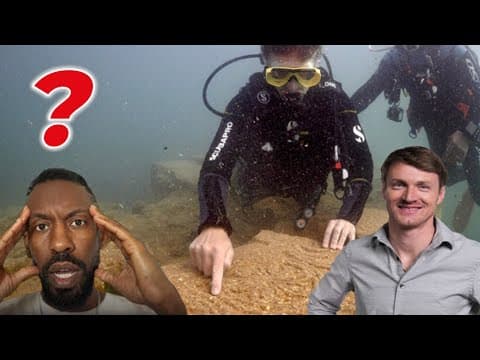
Lake Van is one of the deepest lakes globally, with some debate suggesting it may be deeper than currently recorded. The lake's underwater ruins, discovered in 2017, are scattered across a half-kilometer area and lie at depths between 40 and 100 feet. These ruins include temples, megalithic walls, and structures that hint at a civilization far older and more advanced than previously understood.
A key geological feature near Lake Van is Mount Nemrut, a massive caldera volcano whose eruption around the end of the Pleistocene epoch (approximately 14,500 to 11,800 years ago) likely caused significant environmental changes. This eruption blocked the Mirod River, the lake's only outlet, causing Lake Van's water levels to rise dramatically and submerge the ancient ruins.
This timing aligns with a period known as the Younger Dryas, characterized by extreme climatic volatility, including plasma-like events, earthquakes, volcanism, and tsunamis. The correlation between the volcanic eruption and the submersion of the ruins provides a potential dating framework for these ancient structures.
Traditional archaeology attributes many structures around Lake Van to the Urartian civilization, an Iron Age culture active around 2,800 years ago. However, evidence suggests that the Urartians may have encountered and repurposed remnants of a much older civilization, possibly predating them by over 5,000 years.
This older civilization appears to have had a profound understanding of sacred geometry, esoteric symbolism, and advanced masonry techniques. Unlike the warlike Urartians, who left behind shields and weapons in their art, the older culture's symbols emphasize spiritual and cosmic concepts.
The underwater ruins include a perfectly circular temple constructed from basalt blocks, featuring capstones engraved with sacred symbols resembling the "flower of life." This symbol, along with others found at nearby sites such as Kev Kallesi and Ionis, suggests a sophisticated knowledge of geometry and cosmology.
The name "Ionis," associated with one of the most sacred sites, translates to "sacred flower," reinforcing the spiritual significance of these symbols. The juxtaposition of masculine, angular basalt structures on mountains and feminine, circular temples by the lake shore reflects a deliberate architectural and symbolic polarity.
A critical piece of evidence in dating these sites is the presence of Kuneiform inscriptions, traditionally used to attribute construction to Urartian kings like Rousa II. However, detailed analysis reveals that these inscriptions were added after the original structures were built, as they carefully avoid weathered and damaged areas of the stone.
This suggests that the Urartians inherited and modified pre-existing temples rather than constructing them from scratch. The original builders remain unknown but are likely part of the lost civilization that mastered sacred geometry and esoteric knowledge.
Evidence of extreme heat damage, such as vitrification of basalt and milky discoloration of alabaster floors, points to catastrophic events possibly linked to solar coronal mass ejections (CMEs) and volcanic eruptions. These events could have led to the destruction and eventual abandonment of these ancient sites.
The region's seismic activity, including a damaging earthquake in 2011, continues to threaten the preservation of these invaluable cultural treasures.
The research team has established collaborative relationships with local archaeologists, municipal authorities, and other stakeholders. This cooperation aims to respect and protect the sites while advancing scientific understanding through modern techniques like sonar scanning and targeted excavations.
The project plans to extend its investigations to other parts of the world, including Cambodia, to explore potential connections between these ancient symbols and structures globally.
The discoveries challenge the conventional historical narrative that ancient civilizations developed independently and sequentially. Instead, they suggest a lost global network of knowledge and culture that influenced regions as diverse as South America, Southeast Asia, and the Middle East.
Symbols and architectural motifs found at Lake Van bear striking similarities to those at Pumapunku and Tiwanaku in Bolivia, as well as temples in Cambodia and India. This points to a shared esoteric tradition that transcended geography and time.
The project highlights the challenges of shifting established archaeological paradigms. Gatekeepers within the academic community often resist reinterpretations that contradict long-held beliefs. However, the team remains optimistic that ongoing research and collaboration will usher in a new era of understanding.
The exploration of Lake Van and surrounding ancient sites in Türkiye reveals a lost civilization with profound knowledge of sacred geometry, spirituality, and advanced construction techniques. These findings not only deepen our understanding of human history but also connect disparate cultures across the globe through shared symbols and knowledge.
As research continues, these discoveries promise to reshape our perception of ancient civilizations and inspire a renewed appreciation for humanity's shared heritage.
This comprehensive investigation into lost civilizations underscores the importance of interdisciplinary collaboration, respect for cultural heritage, and open-minded inquiry in uncovering the mysteries of our past.