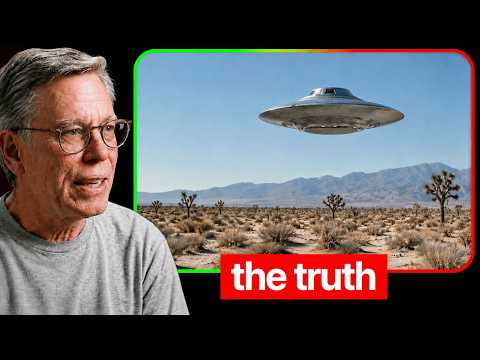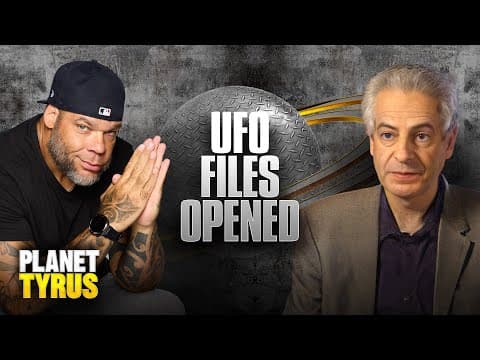
Nick Pope, former UK Ministry of Defense official, shares his experiences investigating UFOs, discussing sightings, government secrecy, ancient astronaut theories, and the evolving public perception of unidentified aerial phenomena. He emphasizes the importance of scientific inquiry and open-mindedness in understanding these mysteries.
Welcome to an in-depth exploration of UFO phenomena with Nick Pope, a former UK Ministry of Defense official who specialized in investigating unidentified flying objects. Nick Pope's unique career and insights shed light on the mysteries surrounding UFOs, government secrecy, and the evolving public discourse on this fascinating subject.
Nick Pope worked for the British Ministry of Defense (MoD) from 1985 to 2006. During much of the early 1990s, he was assigned to the so-called "UFO desk," where his responsibilities included handling UFO reports and assessing any potential defense or national security implications. His role made him the eyes and ears of the British government regarding unidentified aerial phenomena.
Initially skeptical, Nick approached the subject with an open mind. His work involved sifting through numerous reports, distinguishing credible sightings from misidentifications or hoaxes, and maintaining a cautious stance due to the sensitive nature of the topic.
Nick recounts a pivotal moment in 1993 when a wave of sightings involving huge triangular craft flying slowly over the UK could no longer be dismissed. These sightings were witnessed by dozens, including military personnel and police officers, and involved direct overflights of military bases. The physical evidence, such as elevated radioactivity levels at the Rendlesham Forest landing site, challenged the official stance that UFOs were of "no defense significance."
This experience transformed Nick's perspective, moving him from skepticism to a belief that there is something genuinely unexplained in our skies.
The British government, like many others, historically downplayed UFO phenomena, partly due to embarrassment and the desire to avoid public hysteria. Nick explains that the official line was to minimize the subject's importance, both to the public and within government circles.
He reflects on whether the public could handle the truth about extraterrestrial life, noting that even during the COVID-19 pandemic, society struggled with managing a real and present threat. This raises questions about how humanity might react to confirmation of alien visitation.
Nick discusses the intriguing similarities in ancient architecture and artwork across distant civilizations, such as the pyramids in Egypt and structures in Mexico. These similarities suggest a possible common influence, which some interpret as evidence of ancient extraterrestrial visitors.
While Nick supports the idea that ancient civilizations might have been visited by non-human intelligences, he remains cautious about more speculative theories, such as humans having alien DNA. He emphasizes the need for scientific validation and is skeptical of claims lacking empirical evidence.
Nick highlights the importance of credible evidence, such as radar tracking, infrared footage, and pilot testimonies. He references the famous USS Nimitz "Tic Tac" encounter, where US Navy pilots observed a craft exhibiting extraordinary speeds and maneuvers beyond current human technology.
He also notes the challenges in investigating sightings, including distinguishing between advanced human technology (like drones) and genuinely unknown phenomena.
Nick suggests that if extraterrestrials are observing Earth, they likely do so discreetly, akin to wildlife documentaries where animals are observed without interference. This could explain the lack of overt contact or aggression.
He dismisses aggressive alien invasion scenarios as unsupported by evidence, noting that UFOs tend to flee when pursued.
The rise of smartphones has increased the number of UFO sightings captured on video, yet social media's constant stream of content may dilute serious attention to the phenomenon. Nick encourages people to "look up" and pay attention to the universe beyond everyday distractions.
Nick has authored several books blending real UFO material with fiction, including Operation Thunderchild and Operation Lightning Strike. His latest book, Blood Brothers, is a thriller unrelated to UFOs, focusing on special forces and intelligence.
He continues to engage with the media and public, aiming to keep the UFO subject in the spotlight as congressional hearings and government task forces work towards transparency.
For those who witness UFOs, Nick advises recording the event and reporting it to appropriate organizations. Military personnel can report to the Pentagon's AARO unit, while civilians can contact groups like the Mutual UFO Network (MUFON). Sharing sightings with the media can also help raise awareness.
Nick emphasizes the importance of maintaining an open yet critical mind. He acknowledges the vast unknowns and cautions against absolutism or conspiracy theories without evidence.
He also highlights the emotional impact on witnesses, noting that reactions range from fear to awe, and suggests this human element deserves more attention.
Nick Pope's experiences and insights provide a grounded yet open-minded perspective on UFOs. His work underscores the need for scientific inquiry, transparency, and public engagement in unraveling one of humanity's greatest mysteries.
For more information, Nick Pope can be found on his website nickpope.net and on social media platforms, where he shares updates and commentary on UFO-related developments.
This exploration into UFO phenomena invites us all to remain curious and thoughtful as we seek to understand our place in the cosmos.