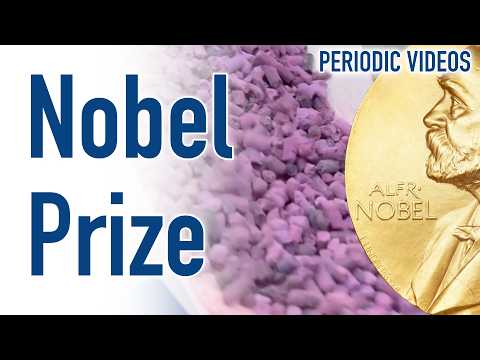
The 2025 Nobel Prize in Chemistry was awarded to Susuma Kitagava, Richard Robson, and Omar Yagi for their pioneering work on metal-organic frameworks (MOFs). These compounds, characterized by their unique porous structures, have significant potential in applications such as carbon capture and water harvesting. This blog post explores the significance of their discoveries, the science behind MOFs, and their future implications in various industries.
The 2025 Nobel Prize in Chemistry has been awarded to three distinguished scientists: Susuma Kitagava from Kyoto University, Richard Robson from the University of Melbourne, and Omar Yagi from the University of California at Berkeley. Their groundbreaking work on metal-organic frameworks (MOFs) has opened new avenues in chemistry and material science, particularly in applications related to environmental sustainability.
The announcement of the Nobel Prize is always a moment of anticipation in the scientific community. This year was no different, as many were eager to guess the recipients based on the clues provided during the broadcast. The excitement was palpable, especially for those working in the field of MOFs, as the prize recognized a significant advancement in this area.
Metal-organic frameworks are a class of compounds characterized by their unique structures, which consist of metal ions linked by organic molecules. These frameworks are notable for their high porosity, meaning they contain a significant amount of empty space within their structure. In fact, up to 90% of the volume of a MOF can be empty space, which is a stark contrast to many traditional materials.
The structure of MOFs can be likened to a climbing frame, where the metal ions act as joints and the organic molecules serve as the rods connecting them. This design allows for a highly organized arrangement that can be tailored for specific applications. The metal ions used in MOFs can vary widely, including common elements like zinc and iron, which are favored for their availability and cost-effectiveness.
The organic linkers often feature functional groups, such as carboxylates, which help stabilize the structure through ionic interactions with the metal ions. This combination of metals and organic components results in a versatile material that can be engineered for various uses.
Richard Robson was the first to conceptualize the creation of MOFs in the 1980s. Inspired by the structure of diamond, he sought to develop a compound that maintained a similar arrangement but with larger spaces between the components. His pioneering work laid the foundation for the development of MOFs as we know them today.
Following Robson's initial discoveries, Susuma Kitagava made significant advancements by creating similar structures that incorporated water molecules within the framework. This innovation allowed for a more flexible structure, enabling other molecules to enter and exit the framework, enhancing its functionality.
Omar Yagi has been instrumental in expanding the range of MOFs and their applications. His research has led to the development of compounds capable of extracting water from the atmosphere, which has profound implications for water supply in arid regions. His work exemplifies the practical applications of MOFs in addressing global challenges.
The potential applications of MOFs are vast, particularly in environmental sustainability. They are being explored for their ability to capture carbon dioxide from industrial emissions, which could play a crucial role in mitigating climate change. Additionally, MOFs are being developed for water harvesting, providing a solution for communities facing water scarcity.
As the field of MOFs continues to grow, there is a push for their commercialization. Researchers are working on scaling up production to meet the increasing demand for these materials in various industries. For instance, companies are developing systems that utilize MOFs to filter gases, effectively reducing harmful emissions from power plants.
The recognition of MOFs through the Nobel Prize highlights their significance in modern chemistry and their potential to address pressing global issues. As research progresses, we can expect to see more innovative applications of MOFs, particularly in energy storage, gas separation, and environmental remediation.
The 2025 Nobel Prize in Chemistry not only honors the achievements of Susuma Kitagava, Richard Robson, and Omar Yagi but also shines a light on the transformative potential of metal-organic frameworks. Their work exemplifies the intersection of fundamental science and practical application, paving the way for future advancements that could significantly impact our world.