In a conversation with Lex Fridman, Pavel Durov explores the concept of manifesting reality through thought and effort. He emphasizes the importance of setting goals, maintaining a positive mindset, and coupling optimism with logical action. Durov also delves into the idea of quantum immortality and the many worlds interpretation of quantum mechanics, suggesting that our collective consciousness shapes the universe we experience.
In a recent conversation on the Lex Fridman Podcast, Pavel Durov, the founder of Telegram, shared his insights on the intriguing topic of manifesting reality through the power of thought. This discussion delves into the interplay between belief, effort, and the nature of our universe.
Durov begins by addressing the concept of manifesting one’s reality through thought. He acknowledges that many people believe in the power of positive thinking and goal setting. According to him, while it is essential to maintain a positive and confident mindset, it is equally important to couple this optimism with logical action.
"It’s very hard to believe that you can just manifest things into being without applying effort in the direction that seems to be logical," he states. This perspective emphasizes that while thoughts can influence our reality, they must be accompanied by tangible efforts to achieve desired outcomes.
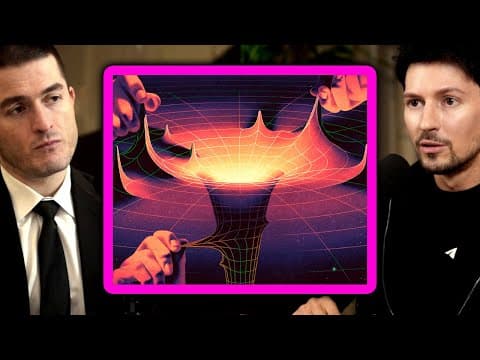
Durov elaborates on the idea that prolonged effort, combined with positive focus, can lead to success. He suggests that by imagining our world as a high-dimensional universe, humans possess the ability to navigate through it using belief, positive emotion, and logical thinking.
He notes, "Over many, many days, it is possible to imagine our world as a high-dimensional universe where humans have the ability to navigate through it with the power of belief." This notion hints at a deeper, perhaps esoteric understanding of reality, where our thoughts and actions collectively shape the probabilities around us.
Fridman and Durov discuss the concept of collective intelligence, where the combined efforts and thoughts of 8 billion people contribute to the world we experience. Durov visualizes this as a field that we can influence through our focus and actions, making certain outcomes more likely.
He expresses admiration for the idea that humanity experiences this reality together, even if each individual perceives their own unique universe. This leads to a fascinating thought: perhaps every second, the universe splits into countless versions, each representing different possibilities and outcomes.
The conversation takes a philosophical turn as Durov introduces the concept of quantum immortality, a thought experiment stemming from the many worlds interpretation of quantum mechanics. He explains that, according to this theory, conscious beings cannot experience their own death; instead, they branch into multiple realities where different outcomes occur.
Durov reflects on the idea that there are many universes where he, or anyone else, may have died, yet in this particular universe, he continues to exist. This leads to the intriguing notion of quantum immortality, where consciousness persists across different realities, allowing individuals to experience life in various forms.
As the conversation wraps up, both Durov and Fridman express gratitude for their shared experiences and the opportunity to discuss such profound topics. Durov acknowledges the importance of platforms that allow for free expression and the sharing of ideas, emphasizing the collective journey of humanity.
In summary, Pavel Durov’s insights on the power of thought, the necessity of effort, and the philosophical implications of quantum mechanics provide a thought-provoking exploration of how we shape our reality. Through a combination of belief, action, and collective consciousness, we navigate the complexities of existence in a universe filled with infinite possibilities.