The 2025 Nobel Prize in Physics was awarded to John Clark, Michael H. Devay, and John M. Martinez for their groundbreaking work on quantum tunneling, demonstrating quantum effects at macroscopic scales. Their research reveals how quantum mechanics operates beyond the atomic level, impacting technology and our understanding of the universe.
The 2025 Nobel Prize in Physics has been awarded to John Clark, Michael H. Devay, and John M. Martinez for their experimental work that reveals the fascinating world of quantum mechanics extends beyond the realm of atoms and particles, reaching sizes more familiar to human experience. This groundbreaking discovery centers around a fundamental and peculiar aspect of quantum mechanics known as quantum tunneling.
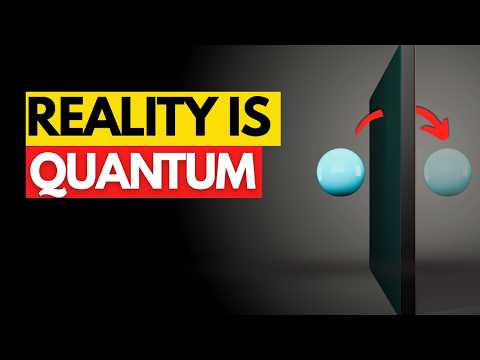
To grasp the concept of quantum tunneling, consider a simple analogy: if you throw a ball against a wall, it bounces back. However, when we transition to the quantum realm and replace the ball with an electron, the scenario changes dramatically. Imagine the wall is extremely thin; there exists a small probability that the electron can pass through the wall and appear on the other side without ever being detected inside the wall. This phenomenon illustrates the bizarre nature of quantum mechanics.
In quantum mechanics, particles are not merely tiny billiard balls with defined edges. Instead, they are better understood as waves. A particle's position is described by a wave function, a mathematical representation that indicates where the particle is most likely to be found. The height of the wave correlates with the probability of detecting the particle in that location. Notably, the wave function never completely reaches zero, implying that there is always a slight chance of finding the particle in unexpected places.
When this probability wave encounters a barrier, part of it reflects back, while another part can seep through, allowing the particle to appear on the other side as if by magic. This principle has significant implications, especially in the context of electrons traveling through wires. If there is a break in the wire, there is a small chance that an electron could jump across the gap and continue its journey as if the wire were intact. This phenomenon is becoming increasingly relevant as we engineer computer chips at smaller scales, where unintended electron jumps can occur.
For much of the 20th century, quantum effects were thought to be confined to the microscopic realm, affecting only electrons, photons, and atoms. However, in the 1980s, a team at the University of California, Berkeley, led by John Clark, Michael Devay, and John Martinez, sought to explore whether these strange behaviors could manifest at a macroscopic scale.
They focused on a specific form of quantum tunneling known as the Josephson junction, which consists of two superconducting wires separated by an insulating barrier. In a typical wire, electrons, which are negatively charged, repel each other and scatter off atoms, leading to electrical resistance. However, in superconductors, when cooled to extremely low temperatures, electrons behave differently. They form pairs known as Cooper pairs, which can move through the superconductor without resistance, described by a collective wave function.
When this wave function encounters the insulating barrier of the Josephson junction, it can extend into the barrier, overlapping with the wave function on the other side. This overlap allows Cooper pairs to tunnel through, resulting in a steady supercurrent with zero voltage, a hallmark of superconductivity. This effect was first recognized by Brian Josephson, who received the Nobel Prize in 1973.
The Berkeley team aimed to investigate whether the entire wave function representing billions of Cooper pairs could tunnel through the barrier as a single quantum object, a process they termed macroscopic quantum tunneling. To conduct their experiment, they needed to measure minute changes in current and voltage across the junction. They utilized a dilution refrigerator to cool the junction to just a few tens of millikelvin, temperatures colder than interstellar space, and surrounded the setup with layers of magnetic shielding and microwave filtering.
Initially, as they passed a precisely controlled current through the junction, everything behaved as predicted by superconductivity, with a steady supercurrent flowing and no voltage produced. However, as the current increased to a critical value, a surprising spike in voltage appeared. This spike indicated that the collective quantum state had escaped its confinement and was tunneling across the junction.
The challenge in visualizing this microscopic quantum tunneling process lies in its complexity. The voltage spike signifies that the wave function's overlap has changed, driving the voltage. This observation suggests that the macroscopic wave function is moving, distinguishing it from individual Cooper pairs simply tunneling across the junction.
A crucial question arises: how can we confirm that this is indeed a quantum tunneling process? Classical physics can sometimes explain similar phenomena, particularly at higher temperatures where random thermal energy can jolt the wave function over the barrier, a process known as thermal activation. However, as temperatures decrease, the escape rate becomes independent of temperature, indicating that this behavior cannot be explained by classical systems. This observation confirms that the quantum properties of the universe extend to scales beyond individual particles.
The implications of this discovery are profound. Back in 1935, Erwin Schrödinger famously illustrated the absurdity of quantum theory with his thought experiment involving a cat in a box. Yet, thanks to the work of Clark, Devay, and Martinez, we now understand that quantum effects can indeed manifest at macroscopic scales. While it may not be the zombie cat envisioned, this research lays the groundwork for advancements in superconducting qubits, which are essential for quantum computing.
This discovery has garnered significant attention and celebration, as it underpins much of what quantum mechanics and quantum computation rely upon today. It is essential to recognize that this achievement was the result of decades of curiosity-driven research, testing theories against the behavior of the universe until definitive proof was obtained.
In conclusion, the 2025 Nobel Prize in Physics awarded to John Clark, Michael H. Devay, and John M. Martinez highlights a pivotal moment in our understanding of quantum mechanics. Their work not only expands our knowledge of the quantum world but also paves the way for future technological advancements in quantum computing and beyond.