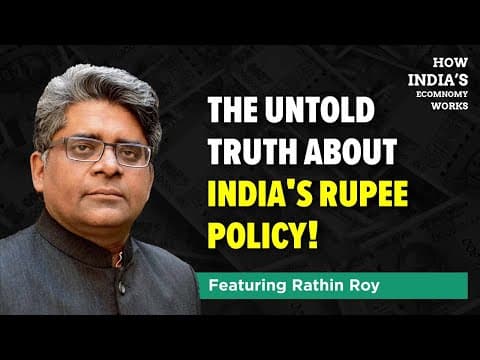
This blog post explores the recent changes in India's rupee management policy by the Reserve Bank of India (RBI), examining the implications of these changes on the economy, the role of capital controls, and the potential influence of oligarchs on currency stability.
In recent discussions surrounding India's economy, a significant topic has emerged regarding the Reserve Bank of India's (RBI) management of the rupee's exchange rate. Journalist and author Puja Mehta hosts a conversation with economist Dr. Rathin Roy, who sheds light on the complexities of India's rupee policy and the implications of the RBI's actions over the past few years.
For two years, the rupee was remarkably stable, prompting the International Monetary Fund (IMF) to reclassify India's exchange rate regime from floating to a stabilized arrangement. However, this stability has come under scrutiny, especially as the rupee has recently lost value against the dollar. Dr. Roy highlights that the RBI has spent approximately $220 billion defending the rupee, raising questions about whether these actions were primarily for economic stability or to benefit select business groups.
Dr. Roy explains that India operates under capital controls, which are essential for managing the flow of foreign exchange. Unlike countries without such controls, India must carefully regulate its currency to prevent panic-induced capital flight. The RBI's approach has been to maintain a stable rupee to avoid volatility, which can deter foreign investment.
The discussion reveals a notable shift in the RBI's policy regarding the rupee. Previously, the RBI aimed for an orderly depreciation of the rupee in line with the current account deficit. However, recent interventions have led to a more tightly managed currency, which some economists argue is not sustainable. Dr. Roy points out that the RBI's actions may have been influenced by the need to protect certain oligarchs who borrow abroad, suggesting a potential conflict of interest in the RBI's currency management.
The implications of the RBI's currency management are significant. Economists express concern that the current approach may not align with the fundamentals of the economy. The rupee's overvaluation and the ongoing current account deficit indicate that a correction is necessary. Dr. Roy emphasizes that while the RBI's interventions have aimed to stabilize the currency, they may inadvertently lead to greater volatility in the future.
A critical point raised in the conversation is the potential influence of India's oligarchs on the RBI's policy decisions. Dr. Roy suggests that if the RBI's recent stability measures were indeed aimed at protecting these business elites, it raises ethical questions about the central bank's role in the economy. The concern is that such favoritism could undermine the broader economic stability that the RBI is supposed to uphold.
As the rupee faces new challenges, the RBI's management strategy will be crucial in determining the future of India's economy. The balance between maintaining currency stability and ensuring fair economic practices remains delicate. The ongoing dialogue among economists, policymakers, and the public will be essential in shaping a transparent and effective currency management policy that serves the interests of all stakeholders, not just a select few.
In summary, the RBI's recent actions have sparked a debate about the true motivations behind its currency management strategies, highlighting the need for a more equitable approach that prioritizes the overall health of the Indian economy.