The pineal gland, once called the 'third eye,' regulates sleep, mood, and consciousness but is calcified in 90% of adults due to fluoride, blue light, and toxins. This calcification disrupts circadian rhythms, leading to poor sleep and cognitive decline. Science-backed methods like sunlight exposure, fluoride avoidance, meditation, and nutrition can reverse calcification and restore pineal function.
Ancient mystics referred to a mysterious part of the brain as the "seat of the soul." Modern neuroscience identifies this as the pineal gland, a tiny, pea-sized structure buried deep within the brain. Despite its small size, the pineal gland profoundly influences sleep, mood, and even perception of reality.
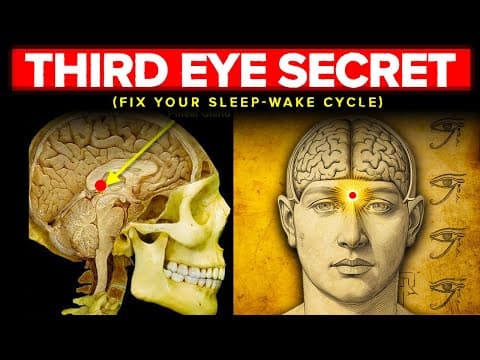
The pineal gland is located at the geometric center of the brain, nestled between the two hemispheres. It is shaped like a pine cone and about the size of a grain of rice. This small gland acts as the body's master timekeeper.
Research reveals a concerning trend: up to 90% of adults have a calcified pineal gland. Calcification means the gland accumulates calcium phosphate crystals, impairing its function. By age 17, about 40% of the pineal gland shows significant calcification, and by age 70, nearly 100% is affected.
This calcification is linked to several modern lifestyle factors:
The pineal gland produces melatonin, the hormone that regulates the sleep-wake cycle. When calcified, its ability to produce melatonin and regulate circadian rhythms diminishes, leading to:
Emerging research even suggests that the pineal gland influences consciousness itself.
Dr. Rick Strassman, a neuroscientist, calls the pineal gland "The Spirit Gland" due to its unique properties. Unlike most brain structures, it lies outside the blood-brain barrier, allowing direct access to the bloodstream.
The gland produces melatonin, which controls circadian rhythms and sleep.
It influences mood by converting serotonin.
The pineal gland produces dimethyltryptamine (DMT), a neurochemical linked to dreaming, near-death experiences, and altered states of consciousness.
The gland contains photoreceptor cells similar to those in the eyes, responding to light signals transmitted from the retina through the hypothalamus.
Ancient cultures from Egypt to India recognized the pineal gland's spiritual significance, referring to it as the "third eye." Their meditative and experiential practices mapped this region, intuitively understanding its connection to light, consciousness, and circadian biology.
Fluoride accumulates in the pineal gland at higher concentrations than any other soft tissue, forming calcium phosphate crystals that impair function.
Exposure to blue light after sunset suppresses melatonin production by up to 85%, disrupting the gland’s function.
These accelerate calcification and impair gland function.
Here are four science-backed methods to restore pineal gland health:
The pineal gland is not just a mystical concept but a biological structure essential for regulating sleep, mood, and consciousness. Modern lifestyles have led to widespread calcification, impairing its function. However, through sunlight exposure, fluoride avoidance, meditation, and proper nutrition, it is possible to reverse calcification and restore the gland’s optimal function. Optimizing the pineal gland reconnects us to the natural rhythms that humans have evolved with for millennia, enhancing mental clarity, emotional balance, and overall well-being.