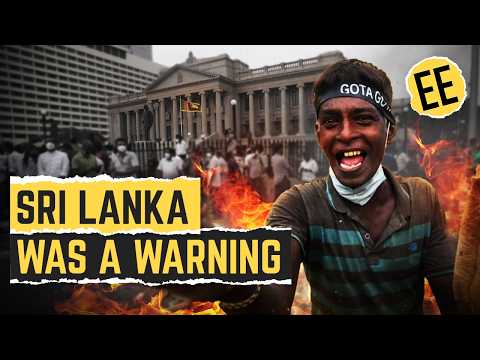
Sri Lanka's recovery from its 2022 financial crisis shows signs of improvement, including a stronger currency and a primary budget surplus. However, the population faces worsening living conditions due to austerity measures, raising questions about the effectiveness of such policies and the need for alternative recovery strategies.
In 2022, Sri Lanka was making headlines for all the wrong reasons. The country faced a massive financial and political crisis due to shrinking exports and climbing debt from foreign loans. What once seemed to be a dream success story of a rural economy on its way to modern industrialization turned into a nightmare, indicating that the country faced an uphill battle. However, a quick glance at Sri Lanka's recovery suggests that things might be looking up. The currency has strengthened, GDP is inching back, and the government has achieved a small primary budget surplus, which is crucial for paying off debt rather than merely managing it. Additionally, Sri Lanka secured a bailout from the International Monetary Fund (IMF) to assist with outstanding debts and negotiated with foreign investors to make debt repayment more feasible.
While these developments might suggest a positive trajectory, the reality for Sri Lankans is starkly different. Many citizens are experiencing worsening living conditions, with some leaving the country altogether. This raises an intriguing question: how can a country show signs of economic recovery while its people are worse off? This blog post explores Sri Lanka's recovery, the negative impacts of austerity measures on its population, and whether such consequences are unavoidable.
Sri Lanka's recovery has been facilitated by the IMF, which is often seen as a last resort for countries in economic distress. The IMF provides short-term capital to countries facing a balance of payments crisis, where they lack funds for essential imports or to pay off external debts. After 2022, Sri Lanka negotiated a support package worth $2.9 billion from the IMF. However, this assistance comes with conditions, requiring the country to commit to economic reforms aimed at maintaining stability.
The IMF's program for Sri Lanka focused on addressing the nation's significant budget deficit through severe austerity measures. These measures included:
These reforms, combined with a resurgence in tourism and remittances post-COVID-19 lockdowns, led to positive economic indicators. The World Bank reported consistent growth over four quarters, a reduction in inflation from 70% to single digits, and an appreciation of the currency by 11%. In 2023, Sri Lanka even achieved a surplus in its current account balance for the first time since 1977.
Despite these economic improvements, the benefits of austerity measures have not been felt by the general population. The poverty rate in Sri Lanka has doubled from 2019 to 2023, with urban areas experiencing a tripling of poverty levels. A quarter of Sri Lankan families are food insecure, child malnutrition has increased, and school attendance has declined. Many patients are opting out of necessary medical treatments due to the costs, and a significant number of medical professionals are leaving the country.
Austerity measures disproportionately affect the poor. For instance, the increase in value-added tax (VAT) to 18% has hit low-income households hard, as they spend a larger portion of their income on essentials. In contrast, wealthier individuals may only feel inconvenienced by the tax hike. Furthermore, cuts in government spending often target programs that support the most vulnerable populations. The removal of subsidies on fuel and electricity has left many without transportation and has caused over a million households to lose access to electricity due to unaffordable bills.
The social discontent stemming from these austerity measures poses significant risks to political stability in Sri Lanka. Political stability is crucial for maintaining development, and civil unrest can lead to political upheaval. The recent election saw voters electing a third-party candidate who promised to renegotiate the IMF's bailout conditions, reflecting the population's frustration.
Moreover, the current economic climate has led to a decline in school attendance among youth, which could affect future literacy and education rates. The mass exodus of skilled workers dissatisfied with the economic situation further complicates the recovery process.
While austerity measures can help stabilize an economy in crisis, they often come at a significant human cost. Looking at other countries' responses to economic crises can provide insights into alternative approaches. For example, after the 2008 mortgage crisis, the United States opted for a strategy that involved substantial government spending to stabilize the financial system. This approach included tax rebates for individuals and reduced tax burdens on businesses, ultimately leading to a profit from the bailouts.
Similarly, Portugal faced a situation akin to Sri Lanka's after the Great Recession. Initially, Portugal implemented austerity measures but later shifted to a strategy that included subsidies, tax credits, and funding for businesses, attracting significant foreign investment and creating jobs.
As Sri Lanka navigates its recovery, it must consider options for generating monetary inflows beyond taxes, particularly through exports. Currently, the export market is narrow, dominated by clothing and tea, with untapped potential worth about $10 billion and the possibility of creating 142,000 new jobs. Addressing these challenges is crucial for sustainable economic development.
In conclusion, while Sri Lanka's recovery from its financial crisis shows promising signs, the negative impacts of austerity measures on its population cannot be overlooked. The divergence between economic indicators and the lived experiences of citizens highlights the need for a more balanced approach to recovery that prioritizes both economic stability and the well-being of the population. As Sri Lanka moves forward, it must learn from past mistakes and consider alternative strategies that foster long-term growth and stability.