The podcast discusses the looming threat of stagflation, highlighting the Federal Reserve's lack of a contingency plan to address rising inflation and unemployment simultaneously. It examines recent economic data indicating a weakening economy, rising consumer credit, and the implications of tariffs, while also emphasizing the importance of gold as a hedge against inflation.
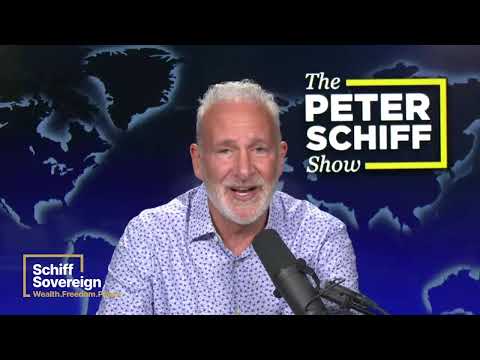
In a recent episode of the Peter Schiff Show, the discussion centered around the alarming trend of stagflation, a situation where inflation rises alongside unemployment, creating a challenging economic environment. This phenomenon poses a significant threat to the Federal Reserve, which currently lacks a viable strategy to combat it.
The podcast opens with a stark reminder of the volatility in the markets, particularly in commodities like soybeans, where fortunes can change rapidly. Schiff emphasizes the importance of understanding the economic implications of recent policy decisions, particularly regarding tariffs and their potential impact on inflation and consumer behavior.
Recently, President Trump announced a postponement of tariffs on goods from Canada and Mexico, which were initially set at 25% and 10% respectively on Chinese goods. Schiff interprets this as a retreat from a trade war that never truly began, suggesting that the administration's decision was influenced by the negative reaction of the stock market to the proposed tariffs. He argues that tariffs are essentially a tax on American consumers, not on foreign producers, and that they would lead to higher prices across the board.
Schiff highlights that the economic data released throughout the week points towards stagflation. He notes that the Federal Reserve has no contingency plan for this scenario, as their tools for combating inflation (raising interest rates) are counterproductive in a weak economy. The Fed's response to stagflation is essentially to hope it does not occur, which Schiff criticizes as a lack of preparedness.
Several key economic indicators were discussed:
Schiff criticizes the Fed for not preparing for stagflation in their stress tests, which only considered scenarios of falling inflation and interest rates. He argues that the real threat lies in a scenario where both inflation and interest rates rise simultaneously, which would lead to a financial crisis. The Fed's current policies, including low interest rates and quantitative easing, are inadequate to address the looming threat of stagflation.
The podcast also touches on international economic issues, particularly in Japan, where rising bond yields could lead to a financial crisis. Schiff warns that if Japan begins to sell its U.S. Treasury holdings to manage its debt, it could have significant repercussions for the U.S. economy.
In light of the rising inflation and economic uncertainty, Schiff advocates for investing in gold as a hedge against inflation. He notes that while retail investors are selling their gold holdings, central banks are increasing their purchases, indicating a shift in market sentiment. Schiff believes that gold prices could soar in the near future, potentially reaching $3,000 an ounce.
The podcast concludes with a call to action for listeners to consider the implications of the current economic landscape and the potential for stagflation. Schiff emphasizes the importance of being prepared for economic volatility and suggests that investing in gold and gold mining stocks could be a prudent strategy in these uncertain times.
As the economic data continues to unfold, the threat of stagflation looms larger, and the Federal Reserve's inaction may leave the economy vulnerable to a crisis that could have far-reaching consequences.