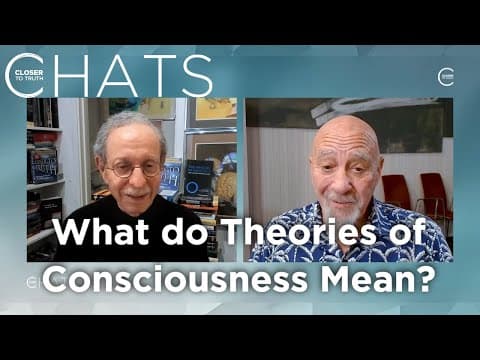
Stuart Hameroff discusses the landscape of consciousness theories, highlighting the strengths of the Orchestrated Objective Reduction (Orch OR) theory developed with Roger Penrose. He critiques other major theories like Integrated Information Theory and Global Neuronal Workspace for lacking biological basis and testability. Hameroff presents experimental evidence supporting quantum effects in microtubules related to consciousness and explores consciousness as a fundamental property possibly pred
Consciousness remains one of the most profound and elusive subjects in science and philosophy. Stuart Hameroff, a prominent anesthesiologist and consciousness researcher, offers insights into his theory of consciousness, known as Orchestrated Objective Reduction (Orch OR), developed with physicist Roger Penrose. In this discussion, Hameroff situates Orch OR within the broader landscape of consciousness theories, critiques competing models, and presents experimental evidence supporting his approach.
Hameroff acknowledges the vast number of consciousness theories—over 350—and notes the difficulty in reviewing all of them comprehensively. He references a notable initiative, the Templeton World Charity Foundation's adversarial collaboration project, which invited five leading theories to design experiments that could potentially disprove or prove one theory over another. Orch OR was among these theories.
Hameroff expresses skepticism about Integrated Information Theory (IIT), a popular theory that attempts to quantify consciousness through a mathematical measure called phi. He argues that IIT lacks biological grounding and testable predictions. Despite criticism from 125 neuroscientists labeling IIT as pseudoscience, proponents continue their research and funding efforts. Hameroff suggests IIT is more a theory of numbers than a biological theory of consciousness.
The collaboration aimed to test quantum effects in microtubules at room temperature and observe their inhibition by anesthesia. While the IIT proponents proposed testing in live monkeys, Hameroff opposed this due to the complexity and ethical concerns, emphasizing the need for controlled optical bench experiments. Ultimately, the collaboration failed to reach an agreement on experimental design.
Despite the collaboration's challenges, Hameroff and his team conducted two experiments funded by Templeton, both of which supported the Orch OR theory.
The initial experiment at Princeton demonstrated quantum effects in microtubules at ambient temperature. Using ultraviolet light, the study observed exciton cascades moving along microtubules, which were inhibited by anesthetics. This finding suggests a quantum process within microtubules linked to consciousness.
Conducted at the University of Central Florida by RSD Delgario, this experiment involved visible photons causing delayed luminescence in microtubules. The luminescence persisted for seconds and was also inhibited by anesthesia. This experiment is considered more physiologically relevant since visible photons are naturally present in the brain, produced by mitochondria and microtubules themselves.
Both experiments provide evidence for quantum processes in microtubules that correlate with consciousness and anesthesia effects.
Hameroff critiques other leading theories such as Global Neuronal Workspace (GNW) and Higher-Order Thought (HOT) theories. He points out that these theories primarily focus on the neurogeographic location of consciousness within the brain—whether in the frontal or parietal regions—but do not specify the underlying physiological mechanisms.
He argues that these theories rely heavily on neuroimaging techniques like fMRI and EEG, which measure blood flow or electrical activity but do not directly reveal the nature of consciousness. For example, a 2012 study by Robin Carhart-Harris showed that subjects under psilocybin experienced vivid hallucinations despite reduced brain activity on fMRI scans, challenging the assumption that increased brain activity correlates with consciousness.
Hameroff suggests that consciousness is a low-energy quantum process occurring in microtubules, which may not be detectable by conventional neuroimaging.
Hameroff expands the concept of consciousness beyond humans, proposing that consciousness can occur in any microtubule-containing organism, including plants and single-celled organisms like paramecia. He notes that plants exhibit behaviors inhibited by anesthesia, such as phototropism and the Venus flytrap's snapping mechanism, implying a form of consciousness at a much lower frequency than humans.
He estimates that humans may experience around 10 million conscious events per second, whereas plants might have a few per minute. This gradation suggests consciousness exists on a spectrum, with intensity related to the frequency of conscious moments.
In a more radical hypothesis, Hameroff and his colleague Dante Loretta propose that consciousness preceded life itself. They suggest that quantum processes in aromatic rings, possibly originating from space, sparked life in the primordial soup. This idea aligns with some philosophical views that consciousness is a fundamental property of the universe, existing before biological life.
Hameroff humorously references a conversation with Deepak Chopra, who suggested that consciousness existed before life and created life as a vehicle due to boredom.
Stuart Hameroff's Orch OR theory offers a biologically grounded, quantum-based explanation of consciousness centered on microtubules within neurons. Supported by experimental evidence demonstrating quantum effects inhibited by anesthesia, Orch OR challenges other leading theories that lack biological specificity or testability.
By extending consciousness to plants and even pre-life quantum processes, Hameroff presents a broad and provocative view of consciousness as a fundamental aspect of reality. While some of these ideas remain controversial and speculative, they contribute to the ongoing quest to understand one of the most profound mysteries of existence.
This exploration of consciousness theories highlights the importance of integrating biology, physics, and philosophy to unravel the nature of conscious experience.