Recent groundbreaking research has transformed our understanding of cholesterol management, revealing that ultra-low LDL cholesterol levels are safe and significantly reduce cardiovascular risk. Studies like FOURIER, VESALIUS CV, and ISCEV demonstrate that earlier and more aggressive LDL lowering, even below previous targets, prevents heart attacks and strokes. Affordable treatments like statins and ezetimibe remain underused despite their proven benefits.
In 2006, researchers in Dallas discovered a woman who challenged everything we thought we knew about cholesterol. At 32 years old, a healthy aerobics instructor with no health problems, her LDL cholesterol was measured at an astonishingly low 14 mg/dL — far below the average healthy adult range of 100 to 130 mg/dL, and even below the 70 mg/dL considered excellent for high-risk patients.
Helen Hobbs, a researcher at UT Southwestern, was intrigued by this anomaly. Alongside Jonathan Cohen, she was running the Dallas Heart Study, collecting DNA and medical records from thousands of residents to identify patterns. They found that some individuals had mutations in the PCSK9 gene that effectively shut down its function. These people had dramatically lower LDL cholesterol and an 88% reduction in coronary heart disease risk.
The aerobics instructor had mutations in both copies of her PCSK9 gene, producing no PCSK9 protein, yet she was perfectly healthy. This natural experiment suggested that blocking PCSK9 could safely and dramatically lower LDL cholesterol.
Pharmaceutical companies quickly developed drugs to mimic this effect. Amgen created evolocumab, a protein that neutralizes circulating PCSK9, preventing it from destroying LDL receptors in the liver. Early trials showed LDL cholesterol dropped by 81% on top of statin therapy, offering a new option for patients struggling with high cholesterol despite maximum statin doses.
Lowering LDL cholesterol numbers is one thing; preventing heart attacks is another. The FOURIER trial, involving over 27,000 patients with existing heart disease, showed that evolocumab reduced heart attacks, strokes, and cardiovascular deaths by 20% when added to statins.
However, critics noted that all participants already had heart disease, raising questions about whether aggressive LDL lowering benefits healthier patients.
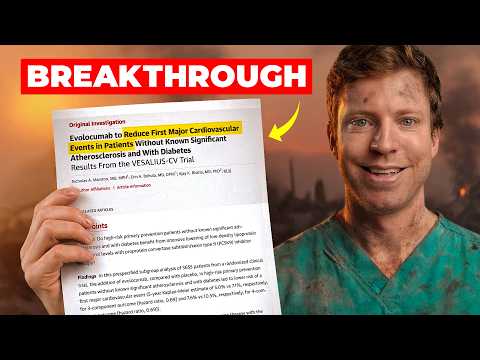
The VESALIUS CV trial studied over 12,000 patients with pre-existing atherosclerosis or high-risk diabetes but no prior heart attacks or strokes. After 4.6 years, evolocumab reduced cardiovascular events by 25%, confirming that early LDL lowering prevents first heart attacks.
A subgroup analysis of diabetic patients without visible atherosclerosis showed a 31% reduction in heart attacks, strokes, and cardiovascular deaths, and a 24% lower risk of all-cause mortality. This suggests that aggressive LDL lowering is beneficial even before plaque develops.
Despite their effectiveness, PCSK9 inhibitors like evolocumab are expensive injections costing thousands annually. Insurance often denies coverage, especially for primary prevention in diabetic patients without prior events.
For most patients, achieving aggressive LDL targets means using affordable, off-patent drugs like statins and ezetimibe. Ezetimibe reduces cholesterol absorption in the gut and is cheap and widely available, yet only 6% of patients with cardiovascular disease use it.
The ISCEV trial, conducted in South Korea with 3,048 patients with established cardiovascular disease, compared LDL targets of below 55 mg/dL versus the standard 70 mg/dL over 3 years. The intensive group achieved a median LDL of 56 mg/dL, while the standard group had 66 mg/dL.
Results showed a 33% relative risk reduction in cardiovascular events in the intensive group. Non-fatal heart attacks were more than halved, and revascularization procedures were significantly reduced. No safety concerns were observed.
Dr. Christopher Cannon summarized, "55 is our new goal, and we need to really embrace that and work hard to get patients to that new goal."
The PESA study imaged arteries of over 4,000 healthy middle-aged adults and found that nearly half had developed plaque despite no conventional risk factors. Plaque buildup correlated linearly with LDL cholesterol levels, starting at thresholds of 50 to 60 mg/dL — the range now targeted by new guidelines.
Many patients with LDL cholesterol below 70 mg/dL still suffer heart attacks, highlighting that previous targets may have been too high. Despite the availability of effective and affordable treatments like ezetimibe, under-prescription remains a major issue.
Physicians are encouraged to aim for the more aggressive LDL target of 55 mg/dL, combining statins and ezetimibe. For patients who cannot reach targets with these drugs, PCSK9 inhibitors remain an option, though cost is a barrier.
A new oral PCSK9 inhibitor recently demonstrated a 58% LDL reduction in phase 3 trials, potentially removing the injection barrier and improving accessibility.
Dietary components such as soluble fiber (e.g., psyllium husk) also contribute to LDL lowering, though supplements should be considered carefully.
The journey that began with a single woman’s extraordinarily low LDL cholesterol has revolutionized cardiovascular medicine. The evidence is clear: lower LDL cholesterol is better, earlier intervention is more effective, and previous LDL targets are likely too high.
The challenge now lies in translating this science into practice, overcoming cost and prescription barriers, and addressing controversies around diet and cholesterol.
The 60-year cholesterol war is finally over, ushering in a new era of cardiovascular prevention and treatment.