In 2025, renewable energy surpassed coal in electricity generation worldwide, marking a pivotal shift in global energy. Significant scientific advances included discoveries about cancer cell behavior, identification of a Denisovan skull, gene editing in rice and rare diseases, breakthroughs in astronomy with the Vera Rubin Observatory, successful pig kidney transplants, AI achievements in math and chemistry, new gonorrhea treatments, and resolving a muon physics discrepancy within the Standard M
The year 2025 was marked by remarkable scientific achievements across multiple fields, from energy and medicine to astronomy and artificial intelligence. Science magazine named the rise of renewable energy as its Breakthrough of the Year, reflecting a global shift toward affordable and sustainable power sources. Alongside this, numerous other breakthroughs have advanced our understanding of health, human history, and the universe.
In 2025, renewable energy generation overtook coal worldwide for the first time during the first half of the year. This milestone was driven largely by China's decades-long investment in clean technology, making green energy affordable without subsidies. This transition signals a major step toward combating climate change and reducing reliance on fossil fuels.
Scientists uncovered a surprising mechanism by which cancer cells steal mitochondria—the energy-producing organelles—from neighboring nerve cells to fuel their spread. Previous studies showed that severing a tumor's nerve connections could slow or shrink tumors, but the reason was unclear.
Researchers grew cancer and nerve cells together, labeling neuronal mitochondria to track their movement. They observed that nerve cells sent mitochondria to cancer cells via tiny bridge-like structures. In mouse experiments, cancer cells that acquired mitochondria were marked green and found in higher proportions in metastatic sites, despite being only 5% of the original tumor cells.
Understanding this cellular exchange opens new avenues for treatments aimed at preventing neurons from energizing cancer cells.
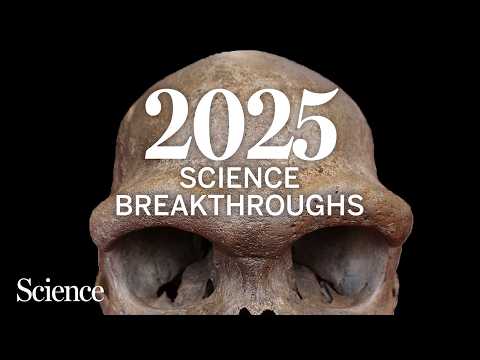
Denisovans, ancient humans closely related to Neanderthals and modern humans, were first identified in 2010 from DNA in bone fragments. However, no complete skulls had been found until researchers linked the "Dragon Man" skull, discovered over 90 years ago in China, to Denisovans through DNA extracted from dental plaque.
This 146,000-year-old skull provides a crucial reference for identifying other Denisovan fossils and may help resolve whether Denisovans constitute a distinct species or a subspecies of Homo sapiens.
Hot nights negatively impact rice by forcing plants to expend more energy to stay cool, reducing grain quality and yield. Scientists studied over 500 rice varieties grown in heat-prone areas and identified a key gene on chromosome 12, named QT12.
QT12 activity increases in response to heat, causing more starch and less protein to accumulate in rice grains. By gene editing or selective breeding to reduce QT12's heat response, researchers produced rice with better taste and higher yields. Incorporating this gene variant into other rice strains could help crops adapt to rising nighttime temperatures.
KJ Muldoon, born with CPS1 deficiency—a rare genetic disorder making protein consumption dangerous due to toxic ammonia buildup—benefited from a breakthrough in gene editing. Scientists used a base editor, a precise form of CRISPR, to correct the single genetic mutation causing the disease.
After receiving nanoparticle infusions carrying the base editor instructions, KJ tolerated more protein and required less medication. While the longevity of this treatment remains uncertain, it has paved the way for clinical trials treating similar genetic disorders.
The Vera Rubin Observatory in Chile saw its first light in June 2025 and will begin comprehensive sky surveys early next year. Equipped with the world's largest digital camera, it will capture detailed images of the entire sky every three days for a decade.
Data will be transmitted via optical fibers to California for analysis using intelligent algorithms to detect astronomical anomalies. This project promises to revolutionize astronomy by mapping the cosmos in 3D, observing cosmic explosions, galaxy evolution, and studying dark energy's role in the universe's expansion.
2025 witnessed successful pig kidney transplants in humans, marking a potential new era for xenotransplantation. A man in New Hampshire received a pig kidney that functioned for nearly nine months, and a similar transplant in China lasted almost as long.
These successes were enabled by gene editing pigs to remove proteins triggering human immune rejection and adding human genes to reduce immune responses. Researchers are exploring improved immunosuppressive drugs and transplanting pig thymus tissue alongside kidneys to extend transplant longevity. Two U.S. companies have received approval for clinical trials, the first for xenotransplantation.
Large language models (LLMs) like ChatGPT reached mainstream use, with Google's DeepMind Gemini earning a gold medal by solving five of six problems at the International Math Olympiad, demonstrating advanced mathematical reasoning previously thought decades away.
Meta's Llama-powered Chemma identified optimal conditions for a complex chemical reaction vital to pharmaceuticals. Google's AI co-scientist suggested potential liver fibrosis treatments from existing compounds.
However, at the Open Agents for Science Conference, AI agents acting as authors and reviewers revealed challenges such as misinterpreted methods, buggy code, and fabricated citations, highlighting the need for human oversight.
Gonorrhea affects over 80 million people annually, with rising antibiotic resistance threatening treatment efficacy. In 2025, the FDA approved the first new gonorrhea treatments in decades.
Unlike cephalosporins, which disrupt bacterial cell walls, the new antibiotics inhibit bacterial reproduction and can be taken orally, improving convenience and compliance. While promising, researchers remain cautious about potential future resistance development.
For decades, a discrepancy in the muon's magnetic properties suggested possible new physics beyond the Standard Model. The muon's magnetism is influenced by particles appearing and disappearing in the vacuum.
In 2025, theorists used lattice gauge theory, a complex numerical method, to calculate the muon's magnetism from first principles. Their results aligned with experimental data, resolving the discrepancy within the Standard Model framework.
The scientific breakthroughs of 2025 spanned energy, health, human origins, space, and artificial intelligence, reflecting a year of transformative progress. As these discoveries and technologies continue to develop, 2026 promises to bring even more exciting advancements that will deepen our understanding of the world and improve lives globally.